

If you enjoy cooking or barbecuing fish, the Canary Islands are a paradise for you. The choice of fish is huge. And there are plenty of places to buy freshly caught fish.
However, there are a few things to bear in mind. Monday isn’t a good day to buy fish. This is because the fishermen don’t head out to the sea on Sundays. The exception is farmed sea bream and sea bass (lubinja). Some shops have no fish on display at the fresh fish counter on Mondays, or when rough seas prevent the fishermen from setting out. This speaks in the retailer’s favour.
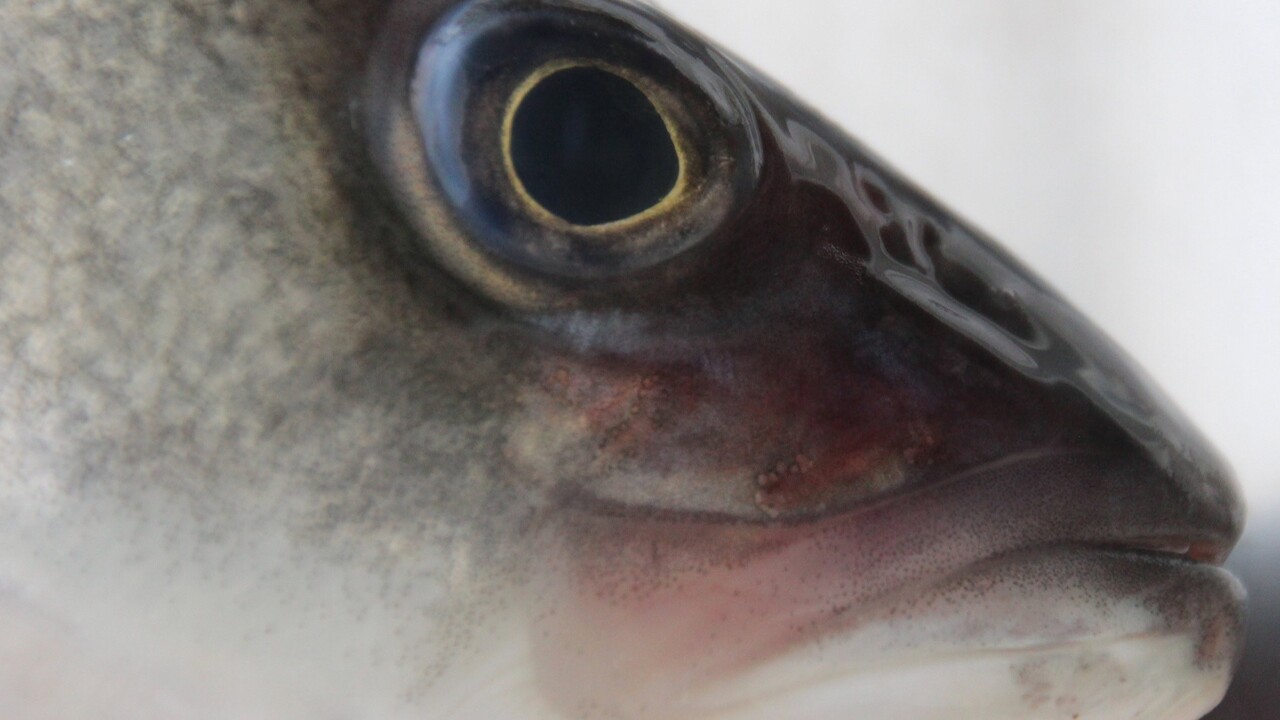
If the fish counter smells of fish, a frozen pizza might well be an option. Fresh fish doesn’t smell; at best, it has a faint scent of the sea. One very easy way to tell if a fish is fresh is to look at its eyes. They should be clear and bulge outwards (convex).
If the eyes are cloudy or milky, or if the eyeballs are even bulging inwards (concave), you should refrain from buying the fish. Another criterion is the colour of the gills. These should be red. A shade similar to red wine is still acceptable, as the colour of a fish’s gills can vary.
Fresh fish – almost always the norm in the Canary Islands!
As soon as the gills start to turn brownish or are even slimy, you should refrain from buying the fish. As you’re not allowed to touch the fish for hygiene reasons, you can certainly ask the shop staff to lift the gill cover. If they refuse, pizza might well be the better choice again. The scales should be shiny. Dry patches or even scales that are standing out are a sign of poor quality.
Just so there’s no misunderstanding: most shops and restaurants offer excellent quality, but not all of them.
Shopping in the Canary Islands: How the fish tastes particularly good
Another distinctive feature of the Canary Islands is that the fish are not gutted immediately after being caught. Most fish are predatory, i.e. carnivores, whose gastric juices are particularly aggressive. The fish therefore does not smell from the head, but from the abdominal cavity.
If asked „Limpio“, which means „clean“, you should reply „no, gracias“. This is because, if the fish is scaled at all, it is only done very superficially, and it is usually not gutted with a sharp knife; instead, the belly is simply slit open with the index finger to remove the innards.
It is then virtually impossible to fillet a fish that has been so badly mistreated without leaving any bones behind. And scaling a fish before gutting it is considerably more thorough and saves time.
By the way, here are two more tips: scaling a fish in a clear plastic bag saves a great deal of cleaning up in the kitchen afterwards. There are special kitchen gadgets for scaling fish. However, two or three bottle caps screwed side by side onto a piece of wood also work perfectly well as a scaling tool.








No comments on this article yet.