

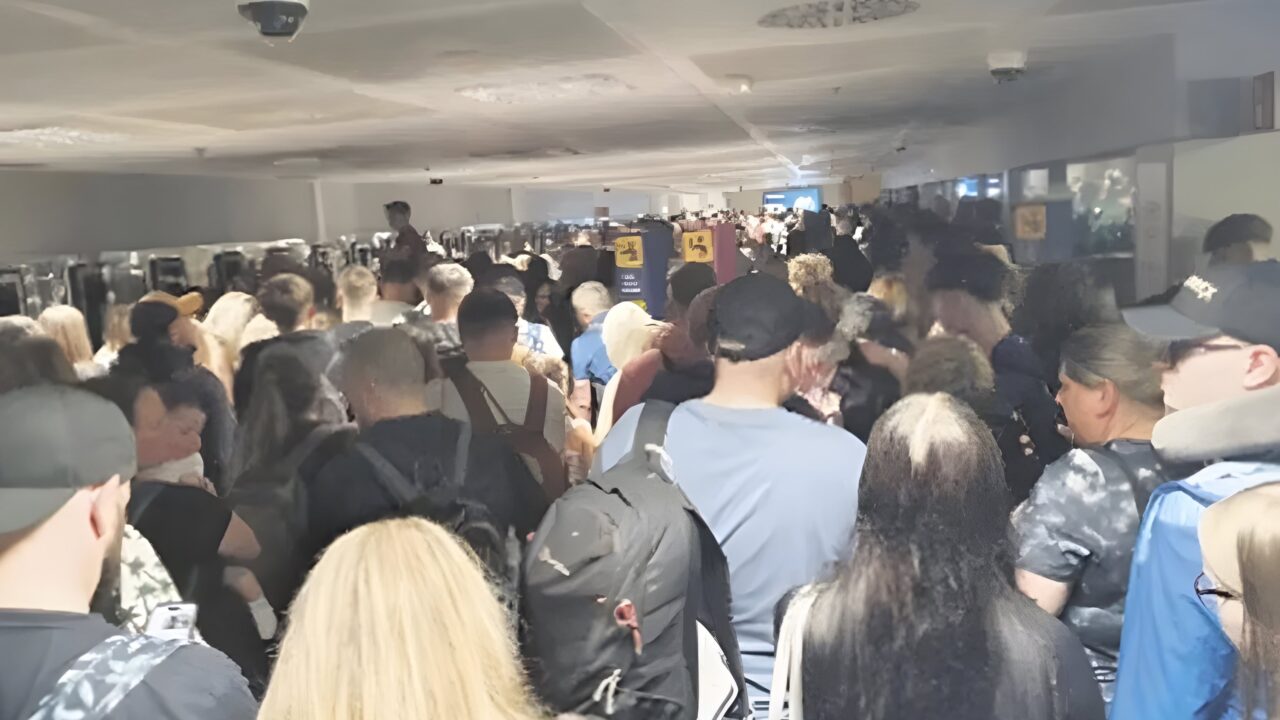
The Canary Islands have failed to understand the economy. Instead, they are learning that, unfortunately, childish behaviour still works surprisingly well and all too often. This leads to baffling behaviour.
It is less than a year since Spain’s airport operator, Aena, announced that it would invest around one billion euros in airports in South America. The company, which is predominantly state-owned, also operates there. At the time, the Canary Islands were up in arms and demanded that they too should receive more money.
Aena did the maths and worked out that it would be a profitable venture – provided the Canary Islands committed to further expanding tourism so that Aena could recoup its investment. Blinded by the prospect of a billion euros, the deal went ahead despite the completely overcrowded airports, tourist hotspots and the islands in general. Nobody was interested in how Aena intended to recoup its investment. Until now.
The Canary Islands are demanding money without offering anything in return
Although Aena is predominantly state-owned, it remains a commercial enterprise. Anyone who invests is looking for a ‚return on investment‘, i.e. a return on the funds previously spent. This ‚ROI‘ must then be significantly higher in order to pay off interest and, above all, to keep investors, supervisory board members and shareholders happy.
The Canary Islands raised a hue and cry. And Aena listened. A concrete offer was made, and the islands accepted it. It is only logical, then, that the airport operator should also revise its own cost calculations after ten years in which almost all prices have soared.
Nevertheless, the Minister for Public Works in the Canary Islands, Pablo Rodríguez, is not above speaking out against this: „Aena is not just any company. It is 51 per cent publicly owned and the Ministry of Transport has a great deal of say in the matter,“ Rodríguez stated defiantly, addressing his colleague, the Minister of Transport, María Fernández.
And it’s also a bit melodramatic when he states that connectivity with the rest of the world is „not a luxury, but a vital necessity for the Canary Islands. It affects daily life, the supply of goods and the economy.“
The Canary Islands start by making a fuss about investment, then become defiant
This perspective reveals all the childish defiance in the argument. After all, if connectivity with the wider world is vital for the islands, it might be wiser to balance it more judiciously with tourism.
The fact that the ports and airports are struggling – apart from minor investment bottlenecks – is not due to general decline, but to the fact that the Canary Islands have recently taken to demanding a new record as soon as one is set.
Island politicians should take a look at what a holiday in the Canary Islands costs today
Anyone who asks commercial enterprises for billions must make concessions in return. The Canary Islands cried out for help, Aena delivered, and the islands willingly accepted the support. Now they are reluctant to shoulder their share of the responsibility.
Incidentally, this is due to a price increase of 68 cents per passenger per flight. Anyone who thinks this will result in fewer visitors coming to the islands hasn’t checked for quite some time what a holiday in the Canary Islands actually costs these days.

No comments on this article yet.