

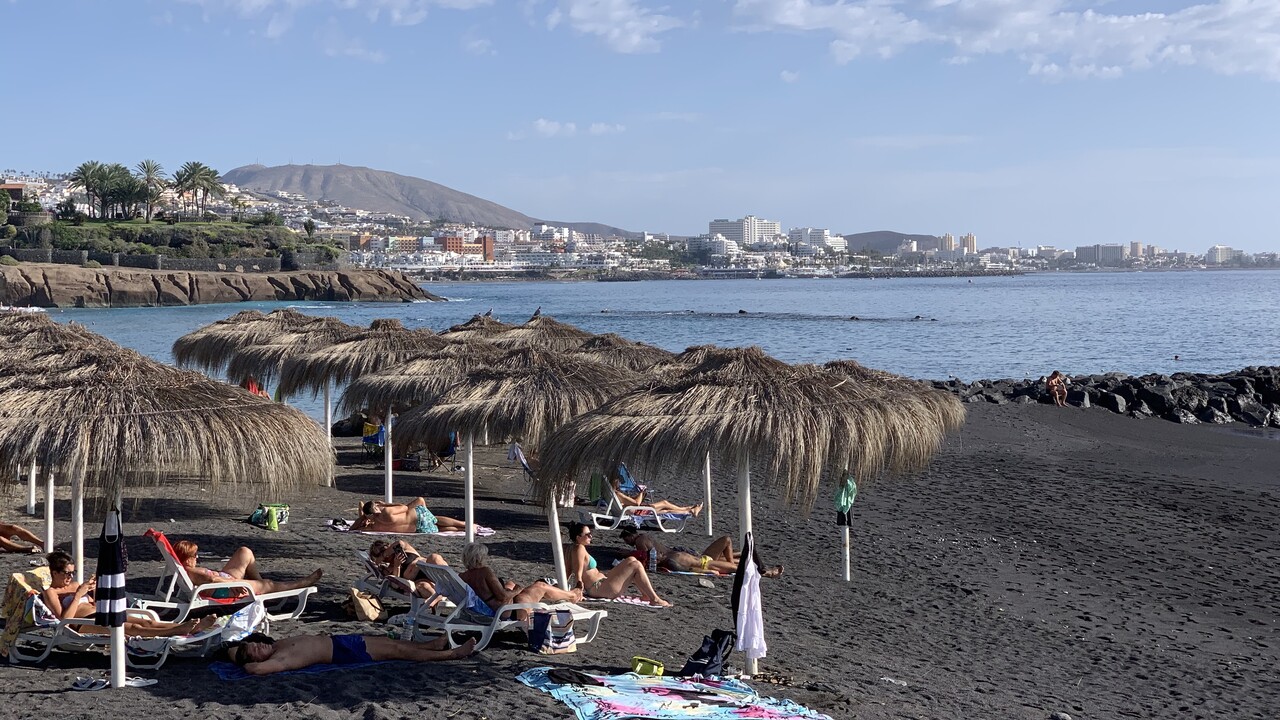
Concerns about a downturn in German tourism are growing in the Canary Islands. In July, just under 9,700 fewer Germans visited the archipelago in the Atlantic Ocean. Although summer is not the peak season in the Canary Islands, local tourism experts see this as a barometer for the more important winter season. And for decades, German nationals have been regarded as welcome guests there.
The latest decline represented a fall of 5.3 per cent in the second-largest market. Germans are traditionally the largest group of holidaymakers after tourists from the UK.
By the end of July, just over 101,000 Germans had come to the Canary Islands on holiday. With the exception of one island, this represented a decline across the board. Whilst fewer Germans are flocking to the Canary Islands, tourists from other countries are stepping in.
La Palma attracts German holidaymakers
Only on La Palma were more Germans recorded than a year earlier. This, in turn, can be explained by the revival of tourism following the volcanic eruption in 2021. Adjusted for this effect, the figures there would also be comparable.
In the years leading up to the pandemic, the Canary Islands‘ tourism sector was always quick to express concern at changes in holidaymaker numbers. Recently, however, partial losses have been met with a shrug of the shoulders. Industry representatives suggest that changes in traditional markets are being offset by new ones.
Canary Islands: fewer Germans and Italians, but more French
The decline in German tourists to the Canary Islands is accompanied by a fall in Italian holidaymakers. The latter had previously emerged as the fourth most important market, but recently saw a drop of 27,500 visitors. This represented a year-on-year decline of 5.5 per cent. The situation is similar for the Nordic countries: Iceland recorded a fall of 26.2 per cent. Denmark, Finland and Norway also sent fewer holidaymakers to the Canary Islands.
However, there is another trend: holidaymakers from France have recently been discovering the Canary Islands in increasing numbers. This year, 40,000 more French holidaymakers travelled to the islands than last year. The Ministry of Tourism attributes France’s rise to become the fifth most important market to a long-running advertising campaign in France.
In addition, Austria, Switzerland and Belgium saw an increase. By contrast, the number of tourists from Hungary, Romania and the Czech Republic fell. Whilst both the increases and decreases were in some cases significant in percentage terms, in absolute terms none of these markets made a significant difference to the Canary Islands‘ overall tourism figures.





«The Canary Islands are losing German visitors - other countries are gaining ground»
No comments on this article yet.