

Anyone wishing to let out a holiday flat in a building or complex in the Canary Islands must comply with strict regulations. The Canary Islands are looking to change some of these rules. The Minister for Tourism, Jéssica de León, has announced a corresponding amendment to the law.
The ‚operating unit‘, known in Spain as the ‚unidad de explotación‘, refers to a unique model for tourist accommodation complexes in the Canary Islands. It applies to apartment complexes, bungalow complexes and aparthotels, and means, amongst other things, that all tourist accommodation units must be managed by the same company.
The Canary Islands now wish to amend this provision. This will allow owners to let out their properties independently, for example via their own websites or through platforms such as Airbnb and Booking. In doing so, the Canary Islands are embracing the modern age. The previous law dated back to 1995. However, there will still be clear rules in future:
Canary Islands open up holiday rentals
Anyone who owns a holiday flat in a block of flats has, until now, been tied to an agent. The law stipulated that holiday lettings registered between 1995 and the present day had to be managed entirely by an administrator. For developments built before 1995, it depended on the distribution of ownership. At that time, at least half plus one flat had to be managed in the same way. However, the legislation is now outdated.
The internet has made it possible to market holiday accommodation independently. Whether through one’s own website or via intermediary portals, the management and marketing of holiday accommodation has become significantly easier. The Canary Islands, through de León and their Ministry of Tourism, now also wish to capitalise on this.
Self-marketing in such establishments has so far been a breach of the law and can be punished with fines, some of which are substantial. The new law is intended to put an end to this. However, there are clear requirements which are to be better monitored under the new tourism laws.
Tourism Act: The Canary Islands introduce a ‚reservation of use‘
As a holiday resort has, until now, had to be run entirely as a single operational unit – that is, purely as a tourism business – the 1995 law stipulated, in principle, that such buildings must be used for tourists‘ holidays, not for permanent residence or for the owners‘ private holidays.
In future, the ‚reservation of use‘ is to be permitted. Owners will therefore be allowed to live in their property themselves for up to six months a year, but in return must make it available for tourist lettings for the other half of the year. In this way, the new law strikes a balance between owner-occupation and tourist lettings.
The current arrangement also means that the costs of letting are recovered via the property manager. This model leads to conflicts in day-to-day operations. Consequently, in future, an operator will continue to maintain the complex and ensure a uniform appearance; however, the owners will be permitted, subject to prior agreement with the operator, to let and manage the letting on their own.
However, the new law is based on the condition that a holiday home was entered in the tourism register before 14 December 2025 and meets all current and future requirements. Among other things, the Canary Islands‘ new Tourism Act provides for inspections designed to ensure that minimum standards are met in tourist accommodation. Once the decree is officially adopted by the Regional Government in the autumn, the new, legally secure framework is set to come into force definitively.




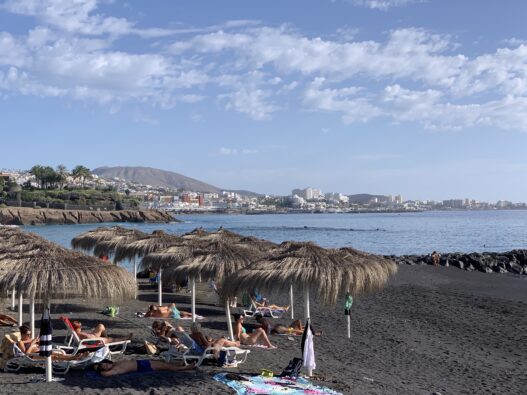


«Canary Islands government unveils plans to streamline holiday lettings»
No comments on this article yet.