

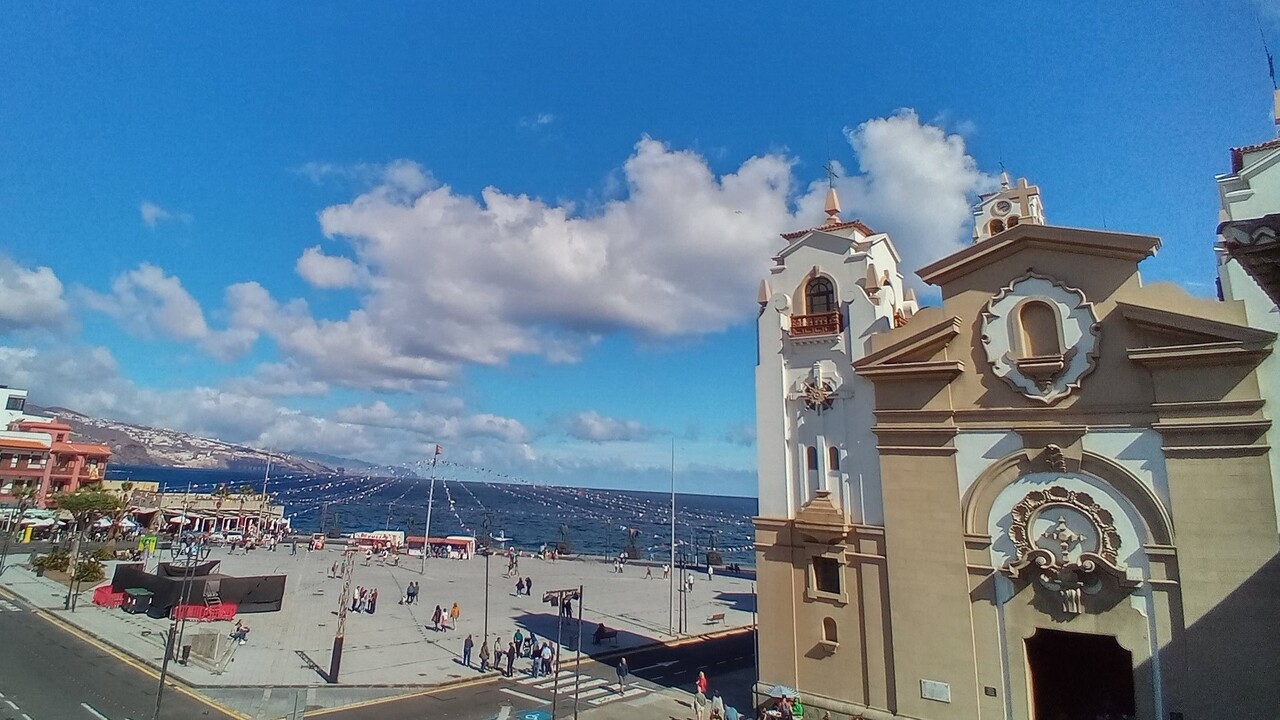
Candelaria is home to the Virgin of Candelaria, the patron saint of all the Canary Islands. On the one hand, Villa Mariana de Candelaria is the religious centre of Tenerife and is regarded as the archipelago’s premier place of pilgrimage; on the other hand, the town is well worth a visit even aside from that. What makes Candelaria so special and what you should see:
Travel Guide: Candelaria, Tenerife
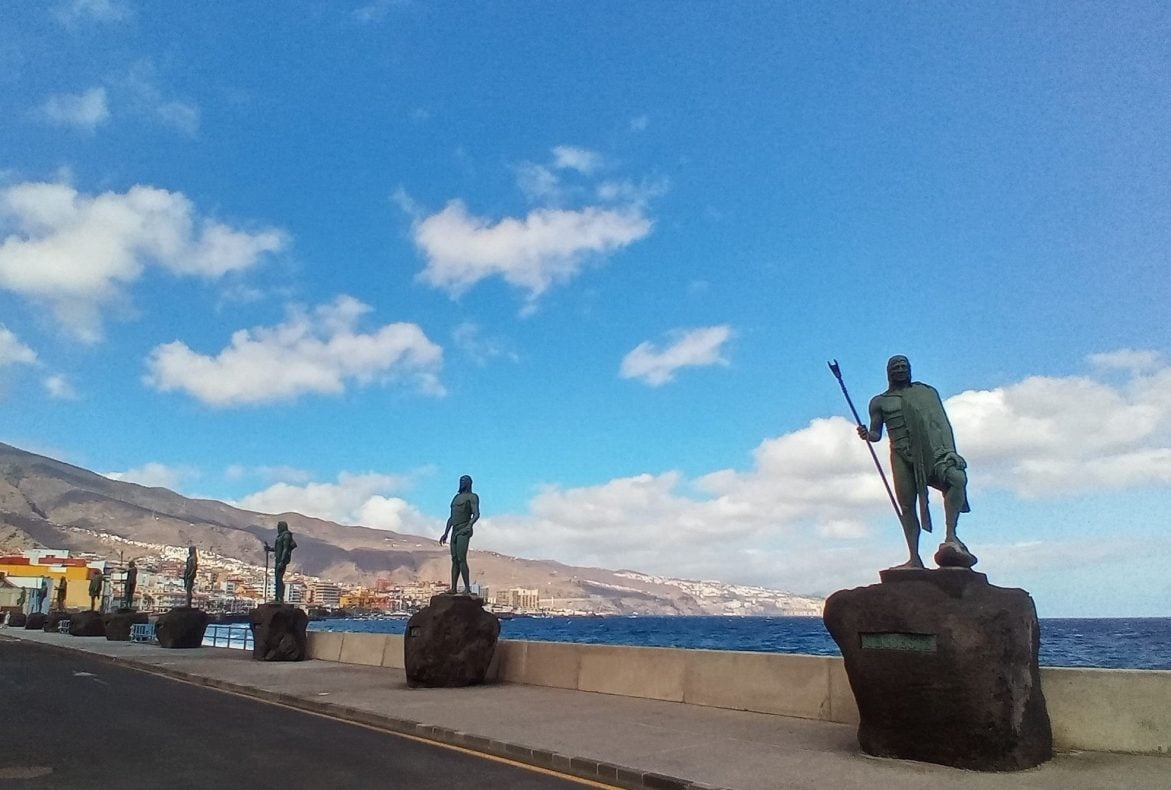
The town is of great cultural, architectural and historical significance. The central square is the Plaza de la Patrona de Canarias, where a monument has been erected to the island’s Guanche kings, featuring nine bronze statues (see photo below).
The basilica on the Plaza de la Patrona de Canarias houses the image of the Virgen de la Candelaria, La Morenita (literally: ‚the little brunette‘, also known as ‚the Black Madonna‘). She is the patron saint of the Canary Islands. Below, we reveal what you should make sure to see:
Celebrations: Fiestas in Candelaria
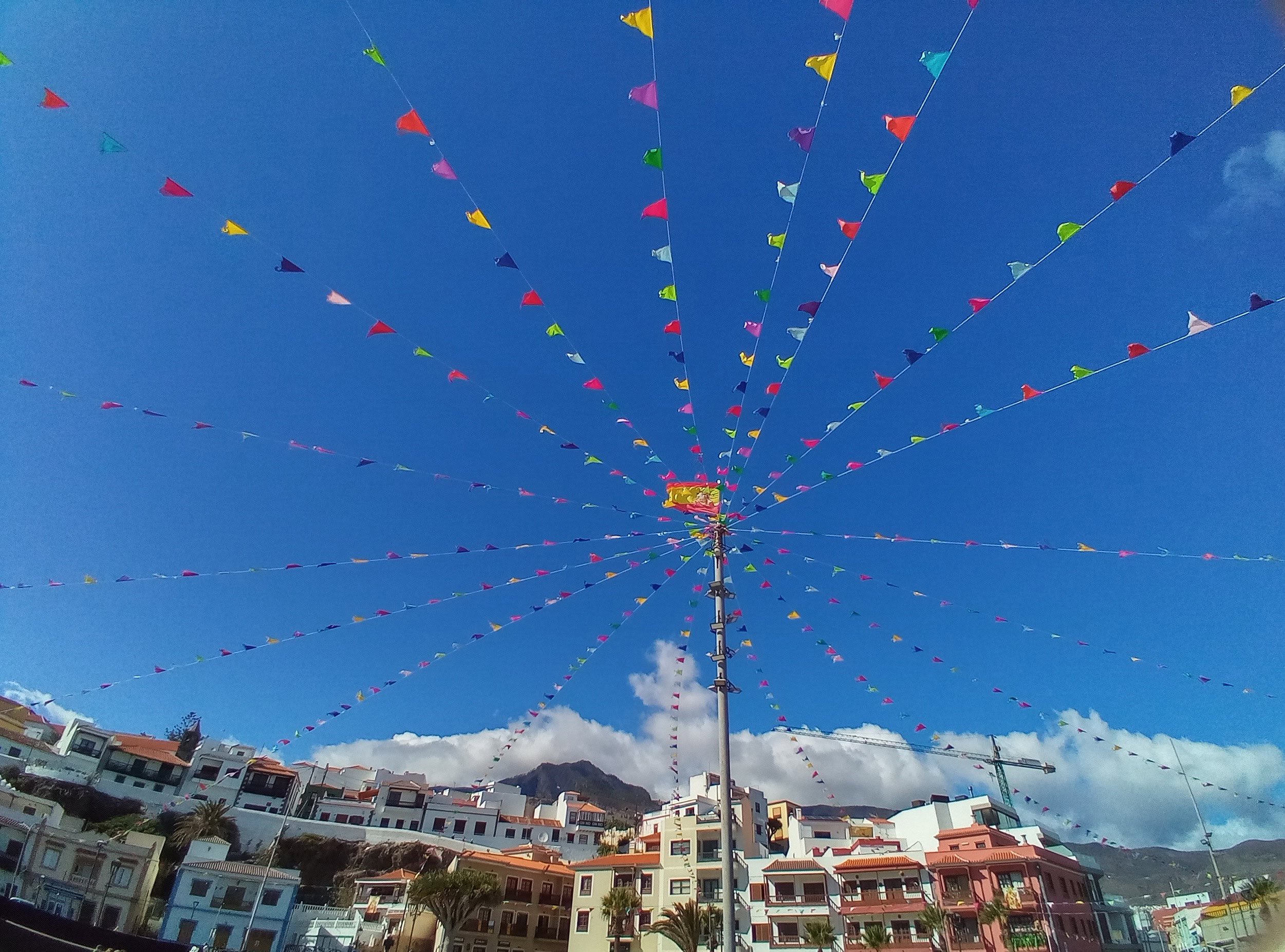
Candelaria is one of the most religious places in the entire archipelago. The majority of the municipality’s population is Catholic. The veneration of Our Lady of Candelaria is at the heart of the religious festivals.
Nuestra Señora de la Candelaria (Our Lady of Candelaria)
Ever since the discovery of the image of the patron saint of the Canary Islands, the Virgin of Candelaria, by the indigenous people in 1392, Candelaria has been the most important religious centre of the Canary Islands. Every year, thousands of pilgrims come to Candelaria to venerate the Virgin of Candelaria, whose image is housed in the Basilica of Nuestra Señora de la Candelaria.

Día de Candelaria (Candlemas)
2 February is a public holiday in the Canary Islands. The ‚Día de Candelaria‘ (‚Day of Light‘), as this festival is known in the Canary Islands, corresponds to the Catholic feast of the Presentation of the Virgin Mary.
The ‚Virgen de la Candelaria‘ or ‚Nuestra Señora de Candelaria‘ is a form of Marian devotion within the Catholic faith and has its origins in Tenerife. The word is derived from ‚candelero‘ (candlestick) or ‚candela‘ (candle), which refers to light: it is the holy light that leads to salvation and enlivens faith in God. Her feast day is celebrated on 2 February according to the liturgical calendar.
The feast of Candlemas holds great significance in both the Catholic and Jewish faiths: the festival commemorates the presentation of the infant Jesus in the Temple and, at the same time, the purification of Mary, for according to Jewish belief, a woman was not considered ‚pure‘ until 40 days after the birth of a son.
The Purification of the Virgin Mary, also known as the Presentation of the Infant Jesus in the Temple, is described in the Gospel of Luke. According to Christian tradition, Mary and Joseph took the child to the Temple in Jerusalem 40 days after Jesus‘ birth to fulfil the Law of Moses. According to Jewish law, Mary underwent a purification ritual in the Temple, which involved offering a sacrifice and presenting the first-born child to the priest. This is why the feast is celebrated on 2 February (40 days after the birth of Jesus).
For the Canary Islands, however, ‚Día de Candelaria‘ holds a very special significance: it was on this day that two Guanche shepherds found the statue of the Virgin of Candelaria on the beach. Later, in the wake of the conquest and Christianisation, the Virgin of Candelaria became the patron saint of the Canary Islands. This marked the beginning of a devotion that has remained alive to this day.
Asunción de la Virgen María (Assumption of the Virgin Mary)
15 August is a public holiday throughout Spain. On both 2 February, the Día de Candelaria, and 15 August, the Feast of the ‚Asunción de la Virgen María‘ (Assumption of the Virgin Mary), pilgrims from all the islands flock to Villa Mariana to celebrate the feast of the patron saint as part of the ‚Caminata a Candelaria‘ (walk to Candelaria).
Every year on 15 August, the ‚Fiesta de la Candelaria‘ is celebrated, dedicated to Our Lady of Candelaria, the patron saint of the Canary Islands. On this important day, the Eucharist is celebrated by the Bishop of Tenerife in the presence of the highest civil authorities. This is followed by a procession carrying the image around the Plaza de la Patrona de Canarias. The feast of the Virgin of Candelaria on 15 August is recognised in Spain as a festival of national tourist interest.
It is therefore well worth making a pilgrimage to Candelaria on 2 February or 15 August to take part in the festivities in honour of the town’s patron saint.
Places of interest in Candelaria
Basilica of Nuestra Señora de la Candelaria
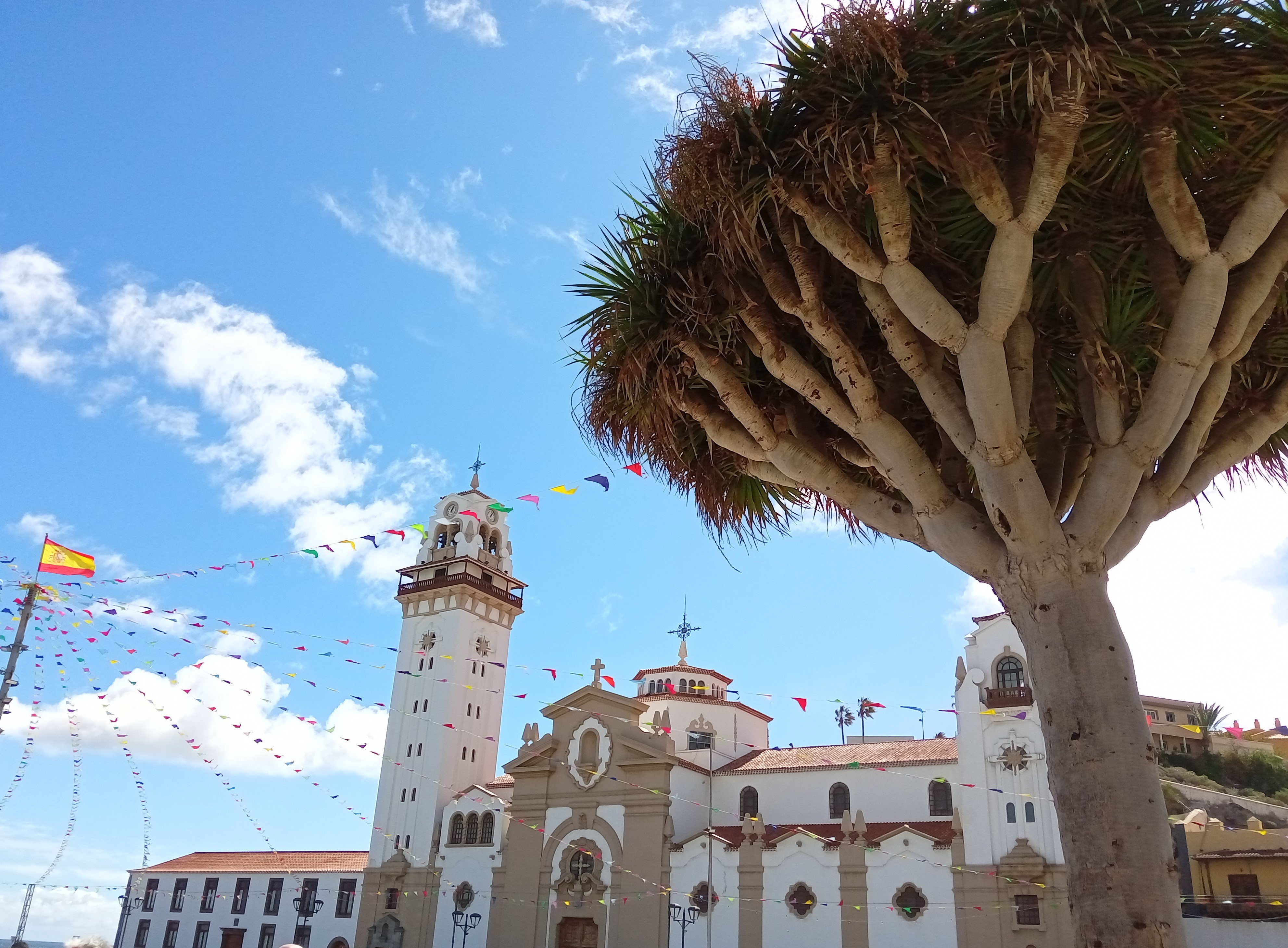
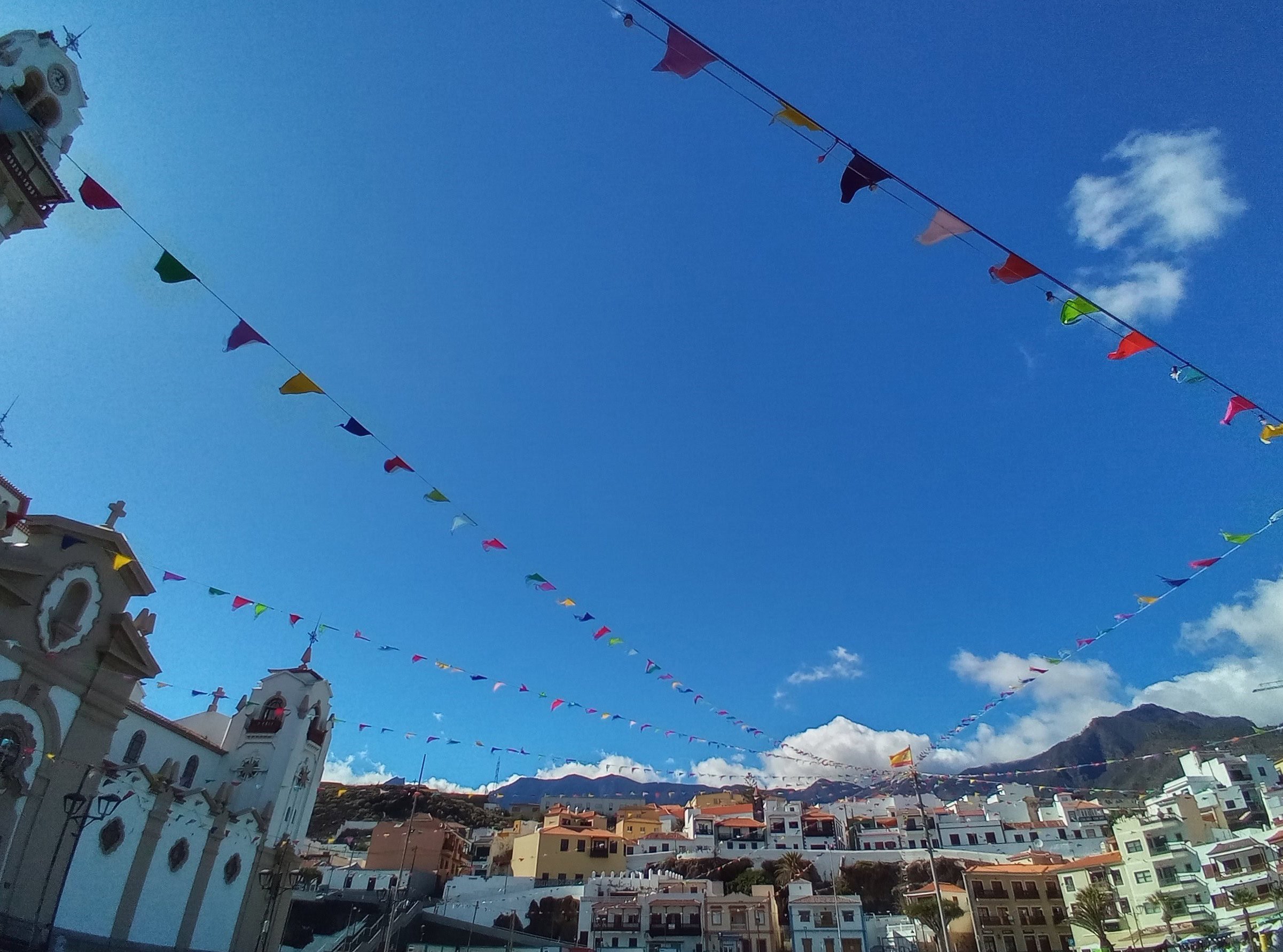
The Basilica of Our Lady of Candelaria is the main attraction in the municipality of Candelaria. Its most striking exterior feature is the bell tower. The coats of arms of the seven Canary Islands can be seen on the basilica’s dome.
The basilica has been designated a cultural heritage site and is the most important church in the parish and one of the most significant religious buildings in the archipelago, as it houses the image of the patron saint of the Canary Islands, Our Lady, the Virgin of Candelaria.
The basilica is the work of the architect Enrique Marrero Regalado and was built in 1959 on the initiative of the Bishop of Tenerife, Domingo Pérez Cáceres, a native of Güímar. The three-nave church, built in the regionalist style, features a roof that imitates the Mudéjar style and a 25-metre-high dome crowning the transept. The 45-metre-high main tower stands out with its Canary Islands-style balcony.
The main chapel houses the image of Our Lady of Candelaria, who was declared the patron saint of the Canary Islands by Pope Clement VIII in 1599, a title confirmed by Pius IX in 1867. The present-day carving is the work of Fernando Estévez from Tenerife, who created it in 1827.
Inside, there are murals by José Aguiar and works by the painter Martín González; other highlights include the Christ of Reconciliation, a Baroque monstrance carved in the Canary Islands in the 18th century, and a 16th-century baptismal font of great historical value. Next to the basilica stands the Fuente de los Peregrinos (the Pilgrims‘ Fountain).
In 2011, the church was granted the title of minor basilica by Pope Benedict XVI.
Plaza de la Patrona de Canarias

The Plaza de la Patrona de Canarias is the square next to the Basilica of Candelaria. This square, which opens out onto the sea, is where the town of Candelaria’s most important festivals and events take place.
Alfredo Reyes Darias was responsible for the artistic design of the square. This included the pilgrims‘ fountain next to the main entrance to the basilica and the first stone sculptures of the Guanches, which are now located on Avenida de Menceyes and were replaced in 1993.
The bronze sculptures now standing in the Plaza de la Patrona de Canarias are the work of the sculptor José Abad from Tenerife. The statues depict the nine Menceyes (kings) of the Guanches, as the island was divided into nine kingdoms (menceyatos) prior to its conquest by Castilian troops in 1496.
Cueva de Achbinico (Cueva de San Blas)
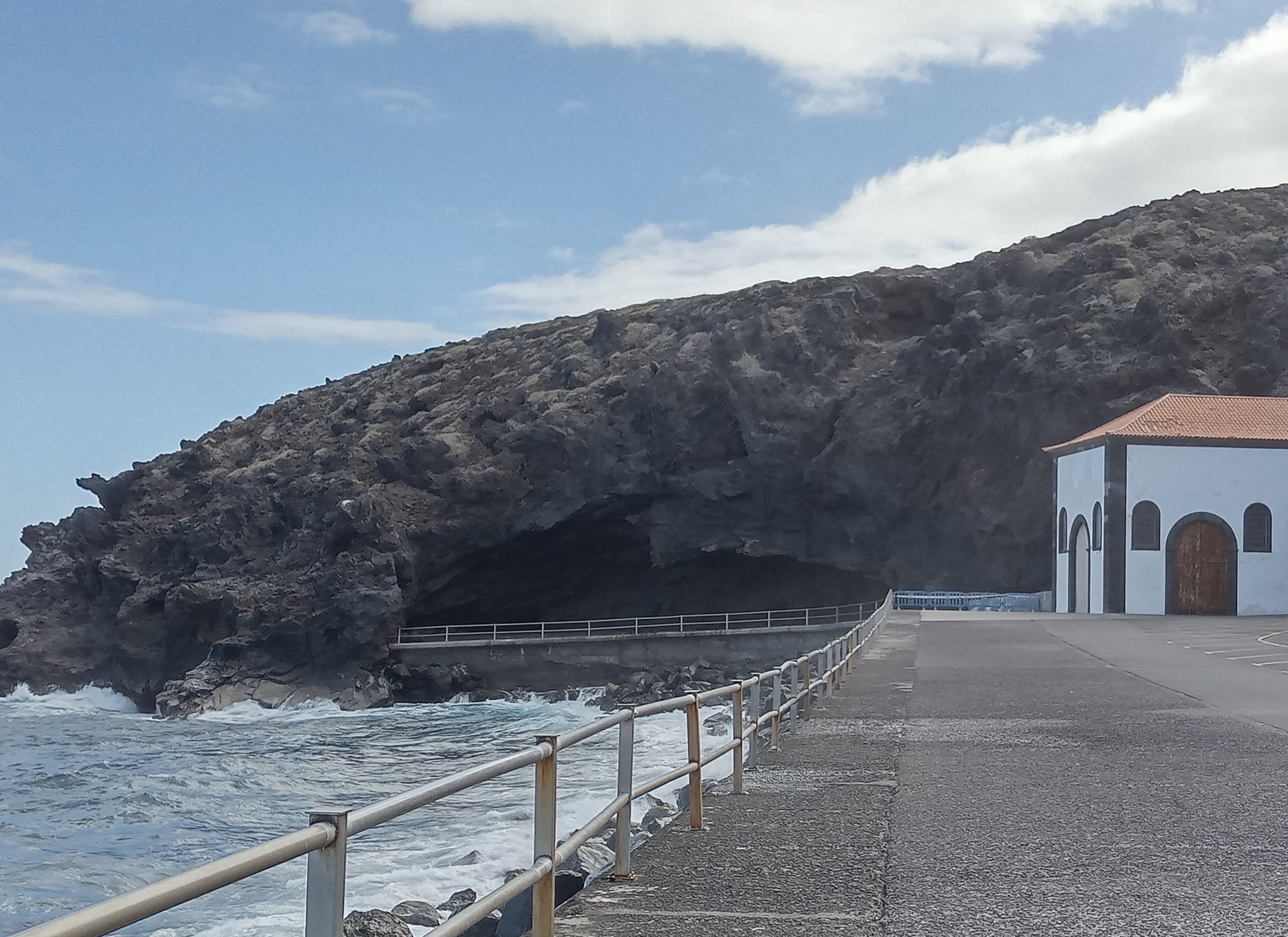
The Cave of Achbinico, also known as the Cave of San Blas, is a Catholic shrine in the municipality of Candelaria on the island of Tenerife. Following the conquest, the cave was the most important Christian shrine on the island and the first shrine in the Canary Islands to be dedicated to the Virgin Mary.
The Achbinico Cave is of great historical and archaeological significance, as it was here that the Guanches worshipped the image of the Virgin of Candelaria prior to the Castilian conquest. Following the island’s incorporation into the Crown of Castile at the end of the 15th century, the cave became the first Christian place of worship in the Güímar Valley.
The Achbinico Cave is situated at the end of the San Blas seafront promenade, behind the Basilica of Candelaria and below the cliffs of La Magdalena. The cave is 14 metres long, six metres wide, between three and six metres high, and faces east.
The chapel, situated just a few metres from the Plaza de la Patrona de Canarias, was established as a place of Christian worship. Since 2000, the chapel has housed a bronze reproduction of the original icon of La Candelaria. Since 2005, the cave chapel has been protected as a cultural heritage site under the auspices of the Sanctuary of La Candelaria.
Cueva de los Camellos
Near the cave is the Cueva de los Camellos (Camel Cave), which served as a stable for the camels that were once used to transport goods to Candelaria.
Royal Dominican Monastery in Candelaria
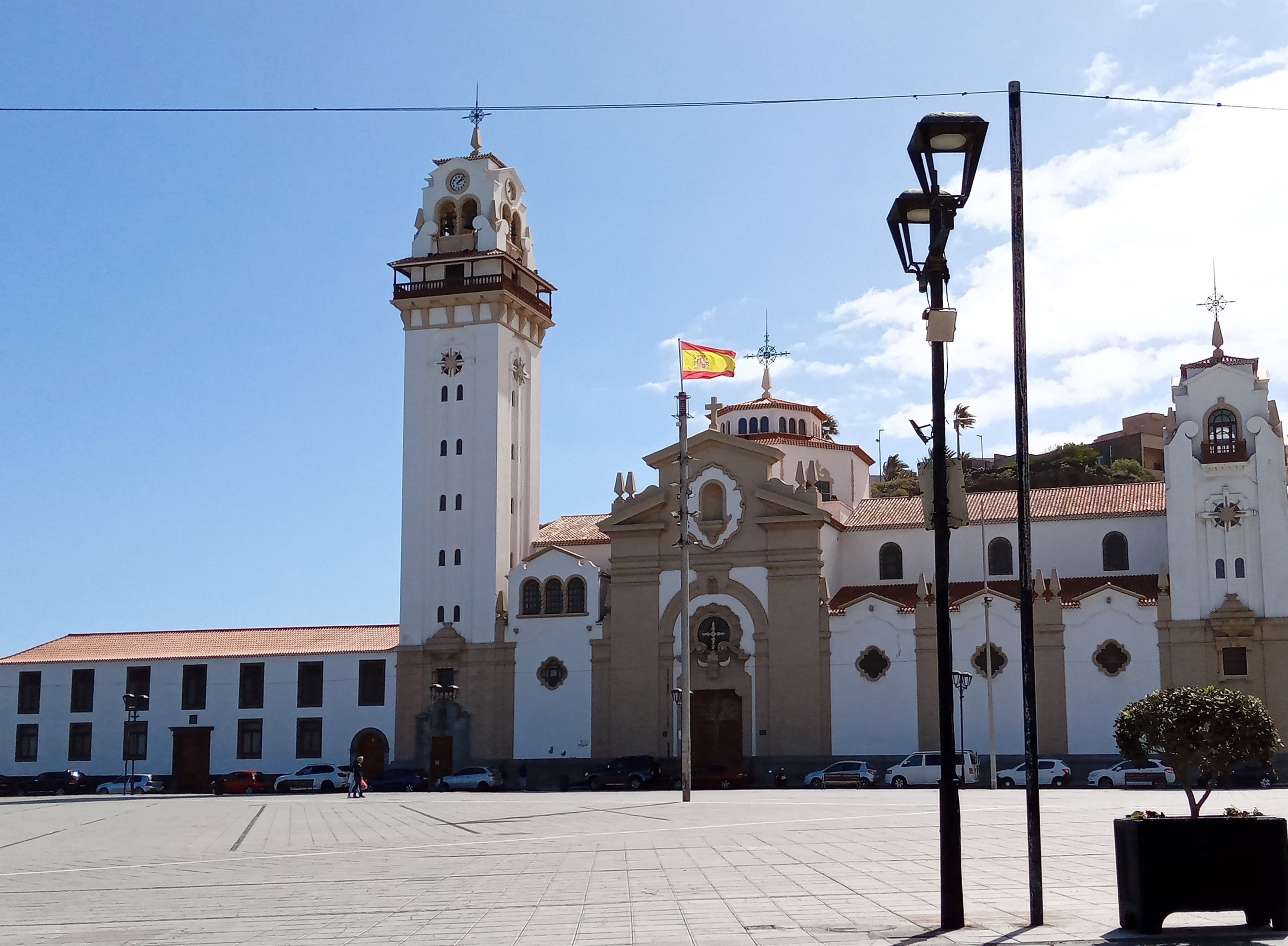
Next to the basilica stands the Royal Monastery of Nuestra Señora de la Candelaria, also known as the Dominican Monastery of La Candelaria. It is run by the Dominicans, who, as chaplains of La Candelaria since 1530, have been responsible for the care of the Virgin of La Candelaria.
The Dominican monastery was built in 1803, after the original monastery had been destroyed in a fire in 1789. The monastery suffered severe damage during a storm in November 1826, during which the original image of the Virgin also disappeared.
Following Mendizábal’s removal from power, the Dominicans were forced to abandon the monastery, which served as a prison in later years. In 1922, the Dominican friars were able to return and reclaim the shrine of Our Lady of Candelaria.
Eight Dominicans still live in the convent today. The Dominican monastery is private and therefore not open to visitors. However, there is a small shop in the building where you can buy books and souvenirs.
Church of Santa Ana

The Church of Santa Ana was founded by the villagers in 1575 and houses a rich artistic heritage. The image of Santa Ana dates from the 18th century, whilst the crucified Christ, a Baroque-style wooden sculpture, dates from the 17th century.
The present-day Church of Santa Ana was built in the mid-eighteenth century on the site of a former sixteenth-century hermitage. Of particular note are a Mudéjar-inspired coffered ceiling and paintings from the Canary Islands school dating from the seventeenth and eighteenth centuries.
Old Town Hall of Candelaria
The building housing the Old Town Hall of Candelaria, also known as the Casa Cabildo or Bishop’s Palace, is situated next to the basilica and stands out for its large Canary Islands balcony, which is situated directly above the pilgrims‘ fountain. The building was constructed in the 17th century as a temporary residence for the island’s councillors. This is where the name ‚Casa Cabildo‘ comes from. Later, the building served, amongst other things, as the town hall and as the local school. It is currently used as a temporary exhibition hall. The site is currently closed due to building works.
Centro alfarero – „Casa de las Miquelas“ Pottery Centre

Pottery was the most important economic sector in the town during the 18th and 19th centuries. This centre, housed in a renovated traditional house, owes its name to the last two potters of the Santa Ana neighbourhood. It comprises three rooms where visitors can discover the traditional trades of the town of Candelaria, the process of making traditional pottery, a collection of pots and traditional clothing, and a workshop.
Calle Obispo Pérez Cáceres
Calle Obispo Pérez Cáceres is the town’s main shopping street. It is popularly known as Calle de la Arena and runs parallel to the coast and the promenade leading to the Plaza de la Patrona de Canarias. It has become the town’s premier shopping street. Calle Obispo Pérez Cáceres is home to various souvenir shops, religious images and local handicrafts.
Plaza de la Villa de Teror
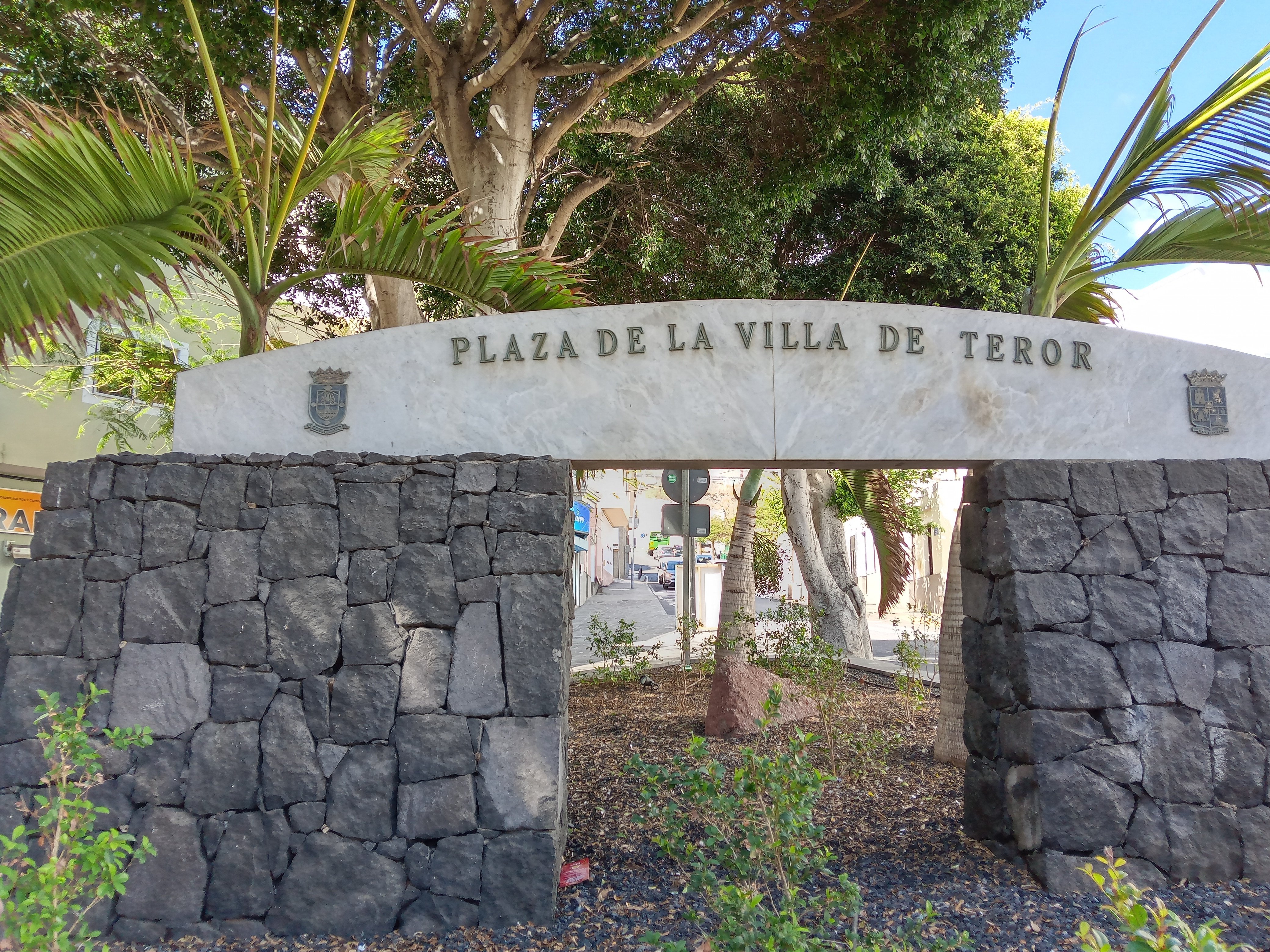
It is one of the main squares in the municipality, home to the main bus stop in the town of Candelaria. This square commemorates the twinning of the Marian villages of Candelaria and Teror (Gran Canaria) in 1991.
This town twinning is primarily due to the fact that both towns are home to the two most venerated images of the Virgin Mary in the Canary Islands: the Virgin of Candelaria and the Virgin of the Pine Tree. At one end of the square stands a stone monument in the shape of a doorway bearing the square’s name and the coats of arms of the two Marian towns. The aforementioned Villa Mariana de Teror is also home to the Fountain of La Candelaria, which commemorates the same event.
A stroll through Candelaria
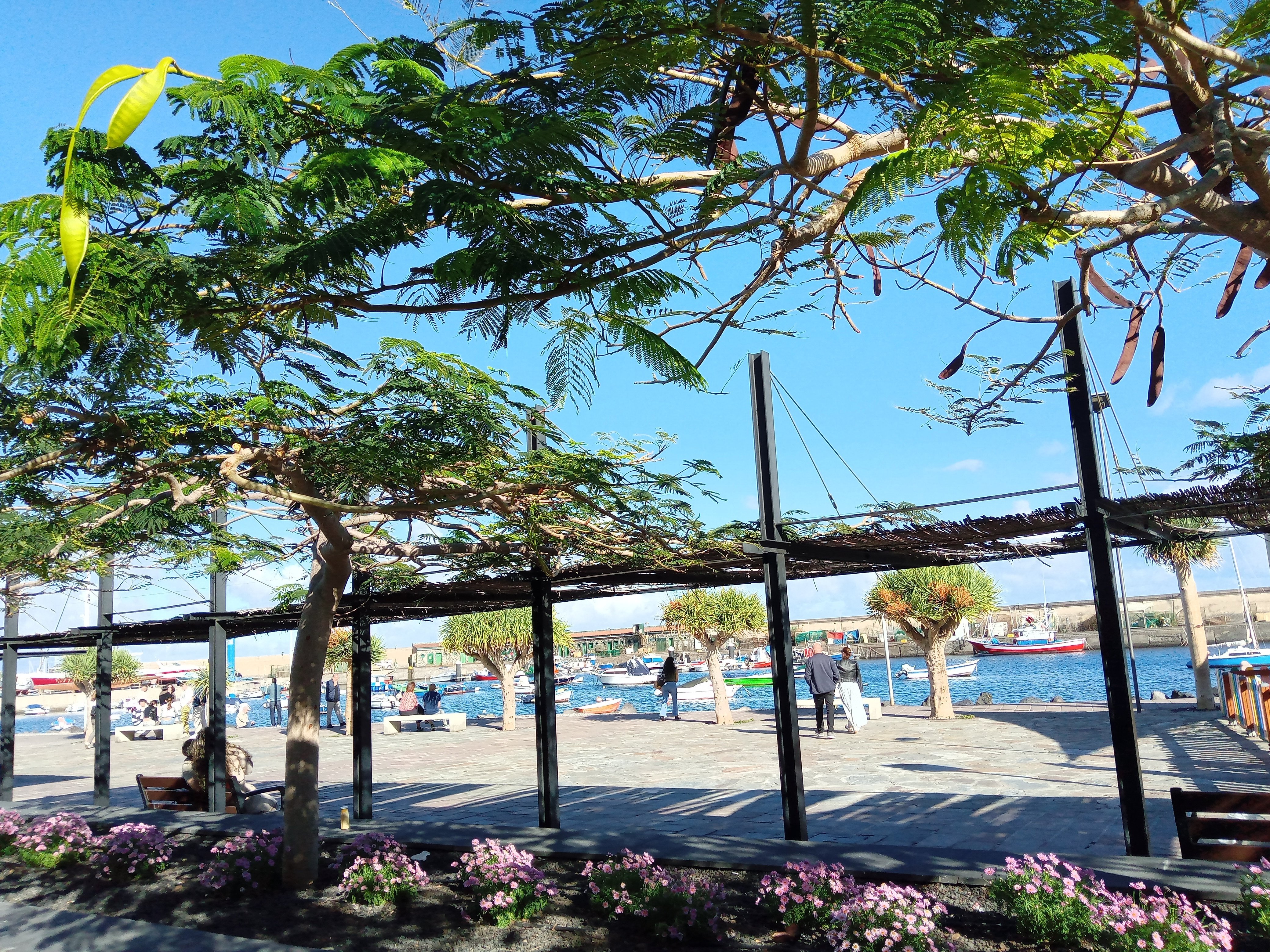
A stroll through the centre of Candelaria is well worth it. On Calle Obispo Pérez Cáceres, numerous seafood restaurants and boutiques invite you to linger. From the Plaza de la Patrona de Canarias, a promenade lined with flowerbeds runs along the seafront, offering views of the marina.
Also worth mentioning is the extensive network of footpaths that winds its way through the rural hinterland of Candelaria. The municipality is home to several officially recognised routes within the Tenerife footpath network. These include:
- SL-TF 292 Samarines
- SL-TF 294 Los Brezos
- SL-TF 294.1 El Moralito
- SL-TF 296 La Mesa
- SL-TF 296.1 Barranco El Rincón
- SL-TF 296.2 Chacorche Gorge
- SL-TF 299 Lomo El Centeno
Eating out in Candelaria
Candelaria boasts a wide range of cosy restaurants, serving delicious fish dishes and other traditional fare. In particular, around the Plaza de la Patrona de Canarias and on Calle Obispo Pérez Cáceres, there are many charming restaurants inviting you to linger and enjoy a feast. As soon as you step onto the square, the smell of freshly cooked fish makes your mouth water.
A trip to Candelaria should be on every visitor’s itinerary when visiting Tenerife. It’s well worth a visit, not just during the festivals but on ordinary days too. On those days, the town isn’t quite so crowded, making it easier to find a table in one of the restaurants and enjoy Canary Islands cuisine in peace.
Candelaria’s culture
Following the conquest of Tenerife, a fusion developed between the culture of the Guanches and Castilian culture. This fusion is particularly evident in the nine bronze statues of the Menceys (kings) of the Guanches in the Plaza de la Patrona de Canarias (Square of the Patron Saint of the Canary Islands). The bronze statues are the work of the sculptor José Abad.
The former chapel of the Dominican monastery, which originally housed the Virgin of Candelaria, now hosts gatherings and concerts of sacred music.
Candelaria – the history of the town
The history of Candelaria is inextricably linked to the conquest of Tenerife. During this process, conflicts arose between the Castilians and the Guanches, the island’s indigenous people. With the incorporation of Tenerife into the Kingdom of Castile, a new era began for Candelaria and the island as a whole.
The area in which the municipality of Candelaria is situated has been inhabited since the time of the Guanches. It formed part of the Menceyato (kingdom) of Güímar.
The history of Candelaria, like that of the Canary Islands as a whole, is closely linked to the image of its patron saint, Nuestra Señora de Candelaria.
Before the 15th century: The time of the Guanches
According to tradition, in 1392 the Virgin of Candelaria appeared to two Guanches who were tending their herd. When they reached the mouth of a ravine, they noticed that the cattle had suddenly stopped moving. To see what was happening, one of the shepherds went ahead and discovered, on a rock, a wooden statue of a woman about one metre high. She was holding a candle in her left hand and carrying a child in her right arm. The child was holding a golden bird in its hands.
This story took place on Chimisay beach and is thought to have occurred between 1390 and 1401. The Guanches worshipped the image under the name ‚Chaxiraxi‘ and initially kept it in the Mencey’s (the king’s) cave. Around 1446, at the instigation of the Christian Guanche Antón, the Guanches moved the image to the cave of Achbinico in what is now the municipality of Candelaria.
Around 1458, Franciscan missionaries founded a hermitage around the image. Three friars, who lived amongst the Guanches, preached in their language and baptised many of them. This enabled the Guanches of Güímar to ally themselves with the conquistadors as soon as the Castilians arrived in 1494.
15th and 16th centuries: Conquest and colonisation
Following the conquest, the Adelant of the Canary Islands, Alonso Fernández de Lugo, celebrated the first Feast of the Purification of the Virgin Mary, known as Candlemas, in the Achbinico Cave on 2 February 1497. From that time onwards, the original sanctuary was frequently visited. Shortly afterwards, the road to Candelaria was opened, the only land route connecting the towns in the south of the island.
During the 16th century, the town of Candelaria grew up around the sanctuary. At that time, it was the most densely populated settlement in the Güímar Valley and was initially inhabited almost exclusively by Guanches. By 1552, Candelaria, with twenty-six houses and 148 inhabitants, was already the most important village in the valley. According to the chronicler Fray Alonso de Espinosa, Candelaria and Güímar were home to „the remaining Guanches, of whom there are only a few, as they have already intermingled; and they live there out of respect for the Holy Image of Candelaria“.
17th and 18th centuries: Candelaria in the early modern period
In 1630, the seat of the parish was transferred to the church of San Pedro de Güímar. Following protests by the inhabitants of Candelaria, a subsidiary parish was established in Santa Ana in 1639, which was subordinate to the parish in Güímar and had jurisdiction over Arafo.
In 1697, the castle – or rather, the Tower of San Pedro – was built next to the Dominican monastery to defend the local population and the church’s treasures.
In 1768, King Carlos III established the public office of the ’syndico personero‘ – the representative of the common people and the faithful – for those towns that had a royal mayor. This official was elected by the inhabitants themselves through a popular vote. This led to the establishment of Candelaria’s first town hall.
19th and 20th centuries: Candelaria in the modern era
In 1812, Candelaria became an independent municipality under the new local government structure established by the Constitution of Cádiz.
In November 1826, heavy rainfall caused flooding which destroyed San Pedro Castle, swept away around a dozen houses and also devastated the Dominican monastery. As a result of this storm, the original image of the Virgin of Candelaria, which had appeared to the Guanches, also disappeared. The image currently venerated in the basilica is a replica made from an older copy.
Throughout the nineteenth century, coastal shipping via the port of Pocillo was of great importance, until the port was closed in 1870 and reduced to a fishing harbour. During that century, the inhabitants of Candelaria were mainly engaged in fishing and boat-building, whilst the women produced earthenware.
On 8 March 1957, Candelaria was granted the status of a ‚villa‘ on the basis of its origins and religious history.
Geographical location of Candelaria
Candelaria is a municipality on the east coast of the Canary Islands of Tenerife. The capital of the municipality of Candelaria lies 20 kilometres south-west of Santa Cruz de Tenerife. The municipality covers a total area of 49.32 square kilometres and lies at an average altitude of five metres above sea level. Neighbouring municipalities are Nuestra Señora del Rosario to the north and Arafo to the south. The municipalities of Santa Úrsula and La Matanza de Acentejo also border Candelaria, but are separated by the central mountain range on the north-western side of the island.
Landscape & Surroundings of Candelaria
Candelaria lies at the northern end of the Güímar Valley. The coastline around Candelaria is varied. The northern section is mountainous. The Chafa slope rises at the northern edge of the valley. It begins at Lomo el Yugo, at around 1,730 metres above sea level, and forms a cliff known as Los Órganos just before the coast.
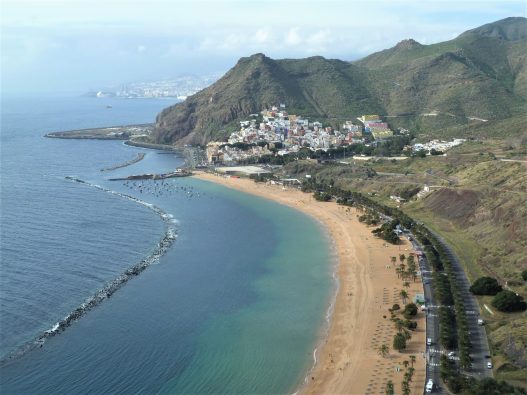
On the border with the municipality of Arafo lies the Malpaís de Güímar, a volcanic formation that emerged from the 1,228-metre-high Media Montaña. Nearby are the so-called ‚Toscas de la Vieda‘, which stand out for their whitish appearance. (‚Toscas‘ is the Spanish term for a pyroclastic rock, a bubble-rich intermediate to acidic volcanic glass, also known as natural foam glass or foamy rock glass.) The rest of the coastline is dominated by beaches, some of which have fine black sand.
The flora of Candelaria
In Candelaria, a large proportion of the diverse vegetation has been preserved. As the coastal areas are heavily urbanised, they have lost much of their natural vegetation. The central plateau, which is intensively farmed, consists of replacement shrubs. Of particular note are the Opuntia (a genus of plants in the cactus family), Artemisia thuscula (Canary Island mugwort) and Rumex lunaria (Canary Island sorrel, also known as moon sorrel), as well as the tabaiba bushes of Euphorbia lamarckii (a plant species from the Euphorbiaceae family, native to the western Canary Islands).
The summits are dominated by Canary Island pine (Pinus canariensis), alongside plantations of Monterey pine (Pinus radiata) and eucalyptus, as well as sprouting dwarf broom (Chamaecytisus proliferus) and sticky glandular broom (Adenocarpus viscosus).
The protected areas of Candelaria
The municipality is home to part of the Corona Forestal Natural Park and the Las Lagunetas and Siete Lomas nature reserves. They all form part of the Canary Islands‘ network of nature reserves and have also been included in the Natura 2000 network as special areas of conservation for birds.
The climate in Candelaria
Candelaria has a steppe climate. There is very little rainfall in Candelaria. The average annual temperature is 17.7 degrees Celsius. Average annual rainfall is 343 mm.
In August, Candelaria records the highest number of hours of sunshine per day, at 10.21 hours. January has the lowest number of hours of sunshine per day, at 7.48 hours.
Due to its location right on the Atlantic coast, it can be very windy in Candelaria on some days. On such days, the grand procession on the patron saint’s day may have to be cancelled – as was the case most recently in 2025.
As a result of climate change and rising sea levels, there have recently been repeated instances of flooding and, in April 2024, even evacuations in the coastal communities of El Rosario, Candelaria, Arafo and Arico. Yet this does nothing to detract from the charm of this place.
Transport links to Candelaria
The municipality of Candelaria is mainly accessible via the TF-1 southern road and the TF-28 General del Sur road.
The town is also easily accessible by public transport. Several routes operated by the regional bus company TITSA run at regular intervals between Santa Cruz, the capital of Tenerife, and Candelaria. From the island’s capital, Santa Cruz de Tenerife, bus routes 120, 121 and 122 run via Candelaria to Güímar. Bus route 111 also passes through Candelaria and connects Santa Cruz with the southern airport, Los Cristianos and Costa Adeje.
The main bus station in Candelaria is located in the Plaza de Teror. You can find the exact timetables here.
Administration and politics in Candelaria
The municipality of Candelaria is governed by its town council, which comprises twenty-one councillors. Since 2015, a woman, María Concepción Brito Núñez, has been the mayor of Candelaria.
The town forms part of the Güímar Valley region, with the exception of the municipal area that encompasses the Corona Forestal Nature Reserve. This falls within the Central Massif region.
According to the National Institute of Statistics, the municipality is divided into seven separate population centres: Araya, Barranco Hondo, Las Caletillas, Candelaria (the municipal capital), Las Pequeñas Cuevas, Igueste and Karst.
Population of Candelaria
The municipality of Candelaria has a population of just under 29,000 (as of 2024). It comprises seven separate units. As at 1 January 2020, the municipality of Candelaria had a total population of 28,383, ranking 9th in terms of population both on the island of Tenerife and in the province of Santa Cruz de Tenerife, and 18th in the Autonomous Community of the Canary Islands.
Economy of Candelaria
The most important economic sector is services, particularly retail, which is concentrated in the Las Caletillas-Candelaria area, and industry, which is based in the industrial estate in the Güímar Valley. The primary sector accounts for a minority of the economy, comprising some agriculture and livestock farming. Fishing is centred on the small harbour and aquaculture.
Tourism and Trade in Candelaria
Today, tourism is one of the most important economic sectors in Candelaria. As a result of the expansion the Candelaria area has experienced in recent years, quality has become both a key objective and a challenge in the fields of tourism and commerce. For this reason, shops and restaurants have joined the Integrated System for Tourism Quality at the Destination, known as SICTED (Sistema Integral de Calidad Turística en Destino) and funded by the State Secretariat for Tourism, with a view to improving the service provided to visitors.
Healthcare in Candelaria
The municipality of Candelaria has several healthcare facilities: the Candelaria Medical Centre, the Villa de Candelaria and Barranco Hondo health centres, and the Igueste de Candelaria Clinic.
No comments on this article yet.