

Von Marlis Zoschke
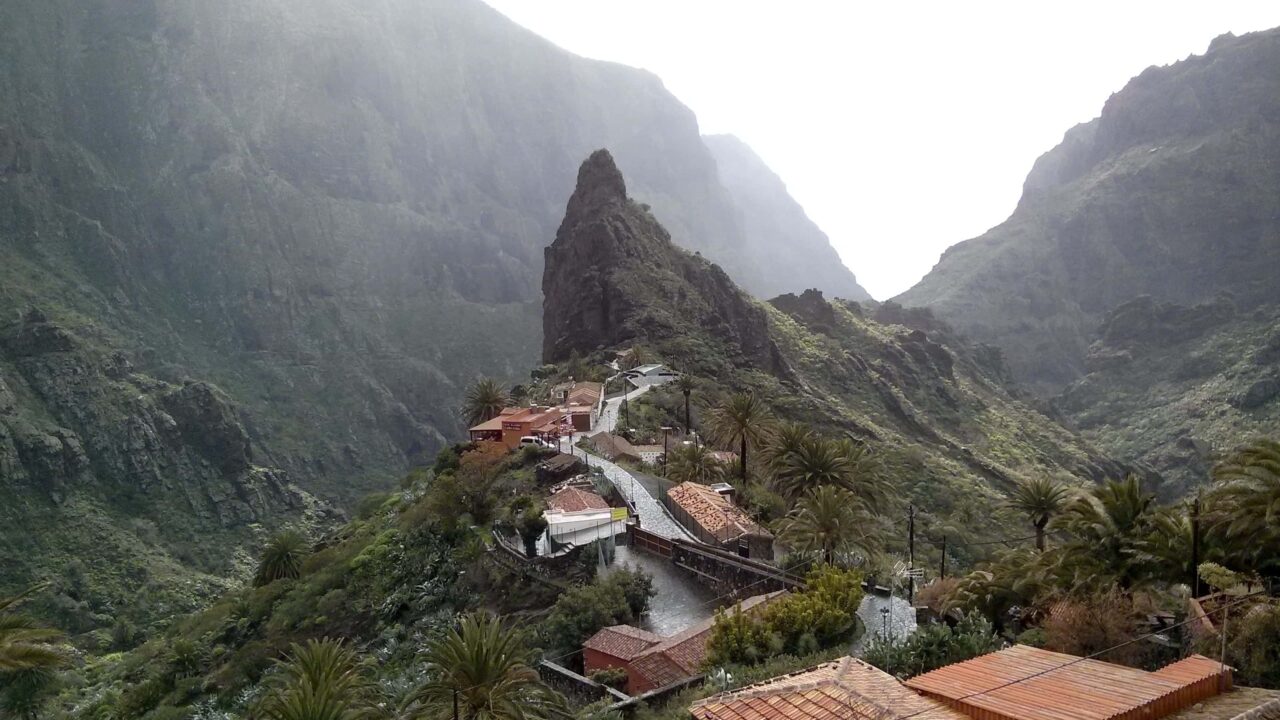
Masca was unknown to tourists at the time. It was our friends who drew our attention to it. From Santiago, the gravel track was very narrow and was frequently closed due to rockfalls.
Now something had been done to ensure that the villagers, who often had to drive through Buenavista, could save time too. The road had been tarmacked, but it was still very narrow, with lots of bends, and quite a challenge for two cars when they happened to meet.
The big surprise, however, was ‚Casa Enrique‘, a small inn run by a young couple. He was Spanish, she was French. Everything here was homemade: bread, cheese, wine and a few other bits and pieces. It was all very clean and well-kept; the little cottage was barely visible for all the flowers and trees.
Memories of Casa Enrique in Masca, Tenerife
Of course, we wanted to have a chat, but it wasn’t quite that simple. Nevertheless, we learnt that the young man had travelled to France to learn about viticulture. It was there that he met his wife, and in due course they returned to Tenerife. Here, he was now able to grow his own wine.
We went back there several more times. But some time afterwards, a few ‚clever‘ people had widened the road to Casa Enrique – and what was there? A food stall, of course, where passers-by on their way to Buenavista could stop for a bite to eat.
Tenerife: Masca embraced tourism early on
The Masca Gorge was never entirely without danger. Back then, it was supposedly easier to approach it from the water. Moreover, there were hardly any places to hold on to. A lot changed within a few years in order to attract more tourists. This did nature no favours.
I can well imagine that restaurants like „Casa Enrique“ no longer exist in this form. People simply adapt. And now Ms Dàvila comes along and fancies she’s solving a major problem by charging a 28-euro entrance fee to Masca. Like all holiday destinations, Tenerife needs a tax that everyone has to pay – including long-term holidaymakers.
The current procedure for entering Masca is so cumbersome that nothing will come of it. Anyone entering the island should be given a slip of paper stating the date of entry. When the tourist leaves the island, the date of departure is noted on it. A fee is payable, and that’s it.
Our reader correspondent, Marlis Zoschke, regularly writes about her experiences over many decades in the Canary Islands. You can find more of her articles here.
No comments on this article yet.