

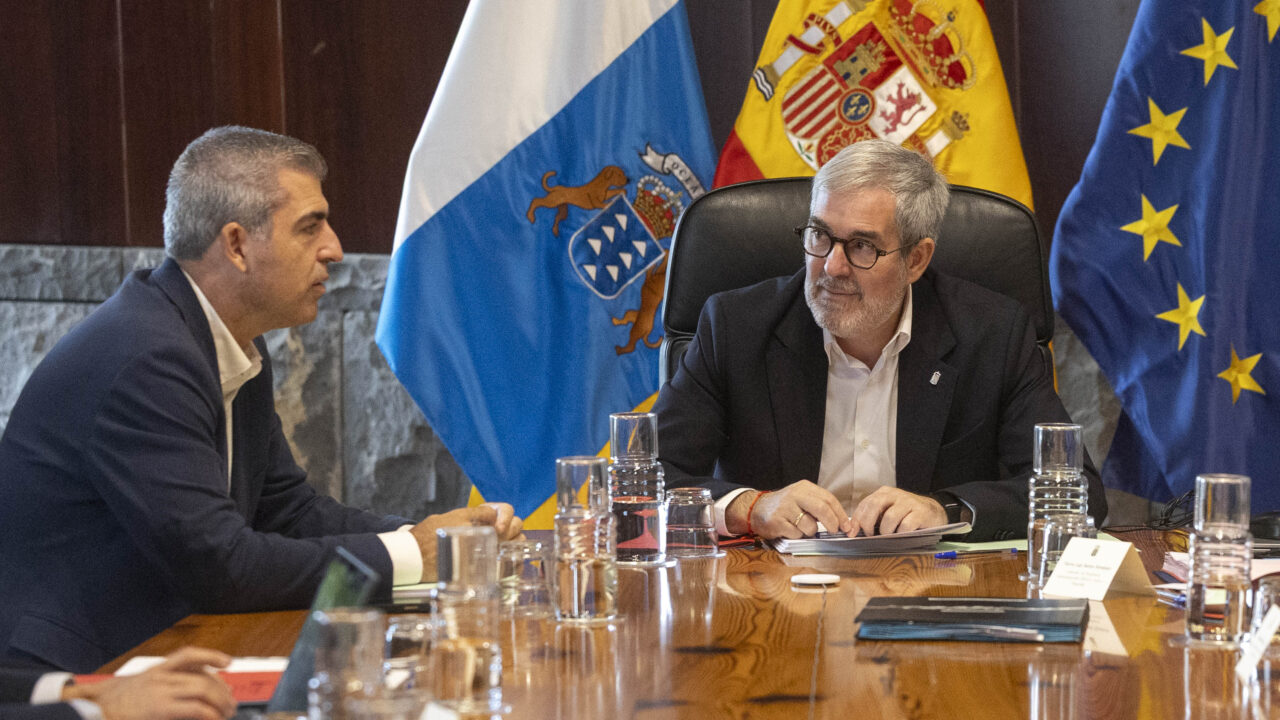
The President of the Canary Islands, Fernando Clavijo, called on Monday for the Council of Ministers to approve tomorrow the outstanding funding allocations for La Palma, the extension of transfers of foreign minors and the roads agreement, as failure to do so would mean «leaving the people of the Canary Islands in the lurch».
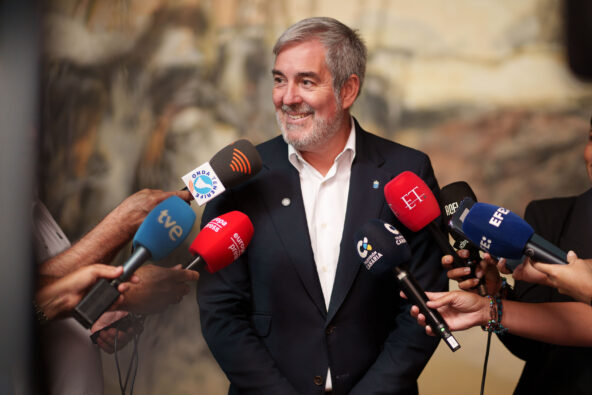
Speaking at a press conference following the meeting of the Regional Governing Council, the president called on the central government to support matters «of vital importance» to the archipelago that form part of the «Canary Islands agenda», and which were set out «in a clear roadmap that we sent to the central government».
These are issues that the Canary Islands have addressed «with institutional loyalty» because they form part of the rights of the archipelago’s inhabitants and, therefore, as its president has pointed out, «we are not asking for charity or special treatment».
Canary Islands Agenda: La Palma is still awaiting millions in aid
These are issues included in the Canary Islands agenda, which was signed by both the PP and the PSOE in 2023, and Clavijo has called on the Council of Ministers to address at least three of them, the first being the authorisation of a 60 per cent personal income tax rebate for La Palma in 2027.
He also calls for the transfer of the outstanding €100 million in annual state funding for the reconstruction of the island for the period 2023-2027, of which only the first year’s allocation has been paid, with the Autonomous Community having covered the remainder, he said.
Secondly, the Canary Islands are calling for the road agreement to be extended until 2032 so that works can continue to be put out to tender, given the risk that projects may have to ’start from scratch‘ if the environmental impact statements for the various roads begin to expire.
Clavijo is calling for the scheme for unaccompanied minors to be extended
And thirdly, Fernando Clavijo spoke about the extension of Article 5 of the Immigration Act, which is the provision that allows for the application of a migration contingency situation when the normal capacity to care for unaccompanied foreign minors is exceeded.
The president has stated that this provision expired in July and has pointed out that the Region cannot be left in the uncertainty of having to renew it every year; furthermore, should it lapse, the Canary Islands could once again experience «a level of saturation» in their reception capacity.
In this regard, he pointed out that the Minister for Children, Sira Rego, is fully in agreement on this issue, but that other ministries also need to be involved, «which do not see the urgent need to tackle this».
The Canary Islands «cannot be left to chance» as to whether the next government to emerge from the polls will choose to extend the Immigration Act or not, «and, quite frankly, I am concerned that there is little sensitivity» towards the islands on migration issues, Fernando Clavijo has admitted.
«Whichever government emerges from the polls, the Canary Islands will remain where they always have been, demanding and asserting the rights to which the people of the Canary Islands are entitled from the State,» continued the regional president, who, when asked whether his appearance today was of an «electioneering» nature, replied that it was not he who had called the elections.
Clavijo regrets the failure to secure approval for the Canary Islands Decree
He added that he was «disappointed» that the so-called Canary Islands decree «had not been accepted» by the Spanish Government, as important issues for the islands remain «unresolved» and, regarding the possibility that the Council of Ministers might ultimately fail to approve their demands tomorrow, he considered that this would amount to «a grave injustice towards the Canary Islands, towards the migrants they receive, and towards the infrastructure to which the people of the Canary Islands are entitled».
In short, he warned, it would be a serious breach of commitments to the Canary Islands «and someone will have to answer for the consequences», which will be felt first and foremost by the people of the islands, and the citizens of La Palma will know «beyond any doubt that the Government has let them down and has not kept its signed word».



Comments (0)
No comments on this article yet.