

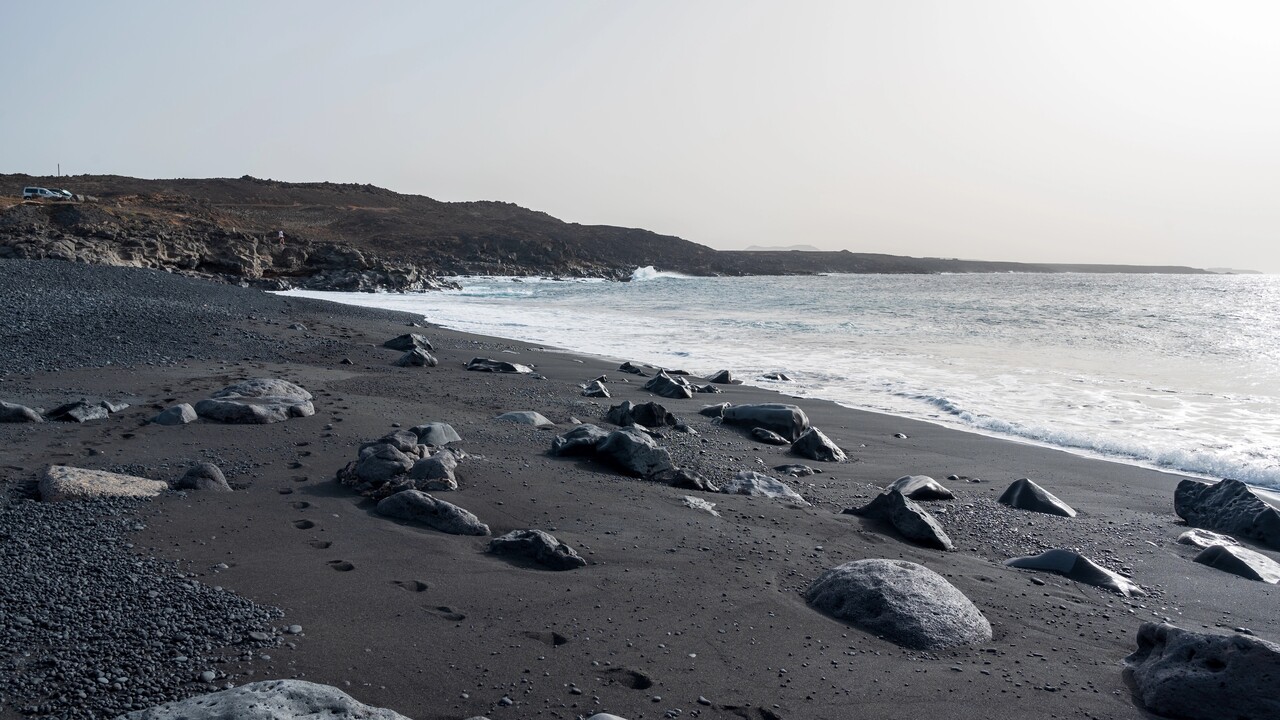
Lanzarote has more than 100 beaches. If you look closely, you’ll find places amongst them that hardly any tourist office in the world could have imagined. The Canary Islands‘ coastline was formed by a millennia-old interplay of volcanic eruptions and the constant (and sometimes unnatural) deposition of sand from the Sahara.
Hidden gem beaches on Lanzarote and La Graciosa
The result is anything but monotonous: stretches of golden sand, tiny white coves hidden amongst lava rocks, black beaches that soak up the sunlight like sponges, and almost untouched corners where the sound of the Atlantic is the only background noise.
Some of these beaches are situated within nature reserves, with no sun loungers, no lifeguards and no beach bars. That is precisely what makes them so special. And here are these oases:
The coastal diversity of Lanzarote and its little sister island La Graciosa reflects the geological and scenic richness of both islands. From tranquil coves with turquoise waters to wild enclaves on the edge of nature reserves, each of these places offers a unique experience. No mass tourism, no queues, no noise. Just what you go to an island for.
Playa del Paso: a lava beach at the end of the world
On the south-west coast, where the Timanfaya Nature Reserve meets the sea, lies a beach that hardly ever features in glossy brochures. Playa del Paso is around 120 metres long, consists of black volcanic sand and requires a bit of effort to reach: from the fishing village of El Golfo, a 1.5-kilometre hike leads northwards along the coast over rugged lava rocks.
Alternatively, it can be reached via a 2.2-kilometre footpath from the car park on the road between Yaiza and El Golfo. Once you arrive, you’re very likely to have the beach all to yourself: the sea here is rough, and swimming is often not advisable due to strong waves. What remains is one of the island’s most impressive coastal landscapes: black lava, rugged cliffs, the open Atlantic and complete silence.
Bajo el Risco: A reward for a gruelling descent
This 845-metre-long beach stretches out at the foot of the Famara massif, in the municipality of Haría. Getting there is a bit of a challenge: the usual route follows the historic Camino de los Gracioseros, a path used by the inhabitants of La Graciosa for centuries. The descent from the starting point near Yé takes about an hour. Those who make it there are rewarded with panoramic views of La Graciosa and the Chinijo Archipelago, and are then doubly rewarded with absolute tranquillity. Alternatively, the beach can be reached by sea.
Lambra on La Graciosa: The Amber Beach
La Graciosa, the smallest inhabited island in the Canary Islands, boasts some of the best-preserved coastal landscapes in the entire archipelago. Lambra Beach, also known as the Amber Beach, is a particularly unspoilt natural oasis. It is situated in the north-east of the island, beyond the village of Pedro Barba, and can be reached on foot in about an hour, by bike in around 30 minutes or by taxi in about ten minutes. The route crosses vast areas of volcanic terrain with unobstructed views of the Atlantic Ocean. It is precisely the tranquillity and the small number of visitors that give this place its special charm.
Playa Quemada and the Black Coast
In the south of Lanzarote, far from the large resorts, the fishing village of Playa Quemada maintains a peaceful atmosphere all year round. The beaches of Playa Quemada, La Arena and El Pozo form part of the Los Ajaches Natural Monument and share one striking feature: black sand of volcanic origin. This area generally attracts far fewer visitors than other tourist destinations in the south of the island. Anyone seeking the contrasts between dark rock and the bright blue of the Atlantic will find them here in a landscape that has retained its unspoilt character.
Montaña Bermeja: Wilderness under nature conservation
Also in the municipality of Yaiza, a short distance from the popular Los Hervideros nature reserve, lies Montaña Bermeja. The beach, around half a kilometre long, is characterised by strong waves and frequent winds. It enjoys dual protection: as a nature reserve and a bird sanctuary. It is not a place for peaceful swimming, but rather for those who wish to experience the untamed Atlantic at close quarters, without coming across a sign telling them how to behave.
Las Malvas: Where Timanfaya meets the sea
Las Malvas beach, in the municipality of Tinajo, is perhaps the most visually striking on the list. Its black sand comes from the material spewed out during the historic Timanfaya eruption between 1730 and 1736. Situated ten kilometres from the centre of Tinajo, it attracts visitors interested in volcanic landscapes in particular, as well as those who enjoy traditional activities such as fishing from the shore. Waves and wind often make sea conditions difficult, so caution is advised on every visit.
Playa de Janubio: Black sand alongside historic salt flats
On the south-west coast of Lanzarote, right next to the Salinas de Janubio, Playa de Janubio stretches for around 800 metres. The salt flats, once the largest of their kind in the Canary Islands, producing up to 10,000 tonnes of sea salt annually, provide a unique backdrop. The beach itself consists of fine black lava sand interspersed with olivine.
Due to strong currents and high waves, swimming here is dangerous. Instead, the beach is ideal for walks and offers one of the most beautiful sunset backdrops in the Canary Islands. There are car parks on both sides of the beach, and there is a deliberate lack of any tourist facilities.
Caletones of Órzola: White specks against black lava
In the far north of Lanzarote, near the small harbour of Órzola – the only ferry terminal to La Graciosa – lie the so-called Caletones: a series of small coves on the edge of the Malpaís de la Corona. The fine white sand forms a dramatic contrast to the surrounding black lava rock. The sheltered location ensures calm waters, which are also suitable for children.
If you venture a little further north, you’ll find Playa de la Cantería – affectionately known by locals as ‚La Playa de Atrás‘ – a beach several hundred metres long which, due to strong undercurrents, is only suitable for experienced swimmers or simply for sunbathing, and which is almost completely submerged at high tide. Both sections are linked by a walk of just under six kilometres through the coastal landscape of the Malpaís.
The diversity of these eight stretches of coastline reflects the true character of Lanzarote and La Graciosa, far beyond the typical package holiday experience. Each of these beaches is a unique natural experience that needs no facilities and no explanation. All it takes is a willingness to drive a little out of the way, walk a little further and embrace the tranquillity that sets in when you are the only person on the beach.

«These 8 Canary Islands beaches on Lanzarote and La Graciosa are real hidden gems»
No comments on this article yet.