


To help you prepare for your holiday in the Canary Islands, we have put together some important information and a handy checklist for you. This guide is intended to help you get ready for your holiday. You can also download and print the information as a PDF document at the end of this post.
Holidays in the Canary Islands: Important telephone numbers
General emergency number: 110
Medical emergency number: 112
Roadside assistance: 9 15 93 33 33
ADAC (Barcelona): 9 35 08 28 28
The best time to visit the Canary Islands
The peak season runs from April to November. The months from December to March are considered the low season. Temperatures in the Canary Islands reach their peak during the peak season. On Tenerife, for example, the north receives the most rainfall. Tourists, on the other hand, can expect guaranteed sunshine in the south of the island. In terms of scenery, however, the north of Tenerife has much more to offer. You can find everything you need to know about the climate on Tenerife here. The latest weather updates for all the Canary Islands are available here.
Important documents for your holiday in the Canary Islands
- Passport/ID card
- Health insurance
- Vaccination record (just in case)
- Driving licence (if applicable)
- Onward or return flight ticket (paper or digital)
- Travel insurance (we’ve got a great offer for you here)
Time: What time is it in the Canary Islands?
The Canary Islands are in Western European Time (WET). This means that the time is one hour behind Central European Time (CET). So, if it is 10 o’clock in Germany, Austria or Switzerland, the clocks in the Canary Islands will show 9 o’clock.
What is the currency in the Canary Islands?
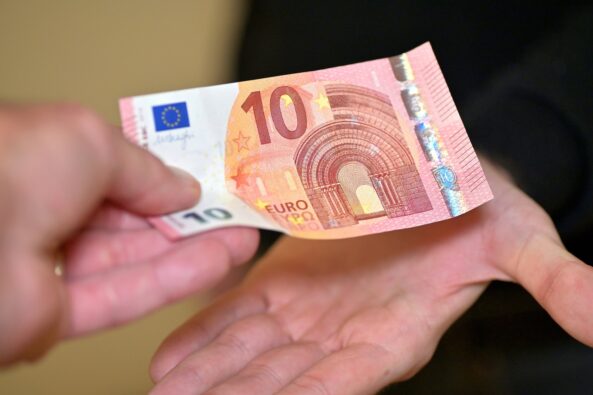
The euro (€) is the currency used throughout the Canary Islands. There are also German banks in the Canary Islands, such as Deutsche Bank. Customers can withdraw money free of charge in the Canary Islands. Customers of other banks, such as Sparkasse, pay a surcharge. This is usually the same as the surcharge charged at home when withdrawing money from an ATM belonging to another bank.
Typical Canary Islands public holidays
1 January: New Year’s Day
6 January: Epiphany
February/March: Carnival
March/April: Good Friday, Easter Monday
1 May: Labour Day
30 May: Canary Islands Day
15 August: Assumption of Mary
12 October: Spanish National Day
1 November: All Saints‘ Day
6 December: Constitution Day
8 December: Immaculate Conception
25 December: Christmas
Opening hours in the Canary Islands
Typical opening hours in the Canary Islands are Monday to Friday:
Shops: 9 am to 2 pm and 4.30 pm to 9 pm
Public authorities: 9 am to 2 pm and 4.30 pm to 8 pm
Banks: 8.30 am to 2 pm
Post offices: 8.30 am to 2.30 pm
Museums: 9 am to 1 pm and 4.30 pm to 9 pm
Pharmacies: 9.00 am to 2.00 pm and 4.30 pm to 9.00 pm
(Subject to change!)
How safe are the Canary Islands?
Tourists need not fear attacks. Violence against visitors is virtually non-existent. However, there are increasing warnings about pickpocketing, car break-ins and fraud.
Our tip: Never leave valuables in plain sight in your car, and keep a close eye on your bags and purses, particularly in crowded areas such as bus stops, public places and on public transport. You can find further information on this here in our round-up of common scams.
Electricity: The right plugs for the Canary Islands
The mains supply complies with the European standard of 220 volts. The sockets also comply with this standard. You therefore do not usually need a travel adaptor for sockets on the islands.
Telephone and internet in the Canary Islands
Since the introduction of EU roaming, you can use your mobile phone just as you would at home. This applies to calls, text messages and data packages.
International dialling codes
To make a call from the Canary Islands to another country, you must dial the usual international dialling codes. The first ‚0‘ of the ‚actual‘ local area code is omitted:
Germany: 0049
Austria: 0043
Switzerland: 0041
Spain: 0034
The Canary Islands Post
Post boxes belonging to the state postal service in the Canary Islands are yellow. The main post office in the western province is located in the capital, Santa Cruz. Postage stamps (sellos) are available at post offices, hotels, kiosks and tobacconists. A postcard from the Canary Islands takes about a week to arrive. There are also a few pitfalls. You can find information on postal services, stamps and postboxes in the Canary Islands here.
Tipping in the Canary Islands
Tips on the islands are generally a little lower than at home. Whilst tourists in restaurants give up to ten per cent, in cafés and pubs, as well as in taxis, at the hairdresser’s or in public toilets, often only small change is expected. Tour guides receive a few euros. The same applies to room service and porters.
Health insurance for the Canary Islands
Germans and Austrians require a European Health Insurance Card (EHIC). Swiss nationals and those with private insurance can pay in cash and claim the costs back at home. Private travel insurance is always recommended.
Dentists in the Canary Islands
Dentists in the Canary Islands work in private practice. It is therefore highly advisable to take out supplementary travel insurance. Find out more here.
Canary Islands: Medicines & Pharmacies
In pharmacies (Farmacia – you can recognise them by a green cross), medicines are available either over the counter or on prescription, just as in your home country. Emergency pharmacies are indicated by signs at the entrance.
Drinking water in the Canary Islands
Drinking water across the archipelago is now safe to drink almost everywhere. However, given the extremely low prices, it is advisable to buy mineral water. This is available in bottles or 5- or 8-litre containers.
Customs: What can I take out of the Canary Islands?
European customs regulations apply to alcohol, cigarettes and other goods: you are permitted to bring 200 cigarettes, or 100 cigarillos, or 50 cigars, or 250 grams of smoking tobacco.
The following are also permitted: 20 grams of perfume, 1 litre of spirits with an alcohol content of more than 22 per cent by volume, or 2 litres of wine or spirits with an alcohol content of less than 22 per cent by volume. The export of rare and endangered animal and plant species is either prohibited or subject to a declaration. The same applies to animal and plant souvenirs.
Equipment for a holiday in the Canary Islands
Good footwear is particularly advisable if you are planning excursions into the countryside. Time and again, hikers have to be rescued by helicopter after injuring themselves due to inadequate equipment. People who cause such rescue operations – for example, due to poor equipment – are now required to contribute towards the rescue costs.
Canary Islands holiday: checklist to download
This information is available as a PDF leaflet here.
By the way: here are some more useful tips for your holiday on Tenerife!
All information is provided without guarantee.





«Holidays in the Canary Islands: Checklist and tips - with a download!»
No comments on this article yet.