

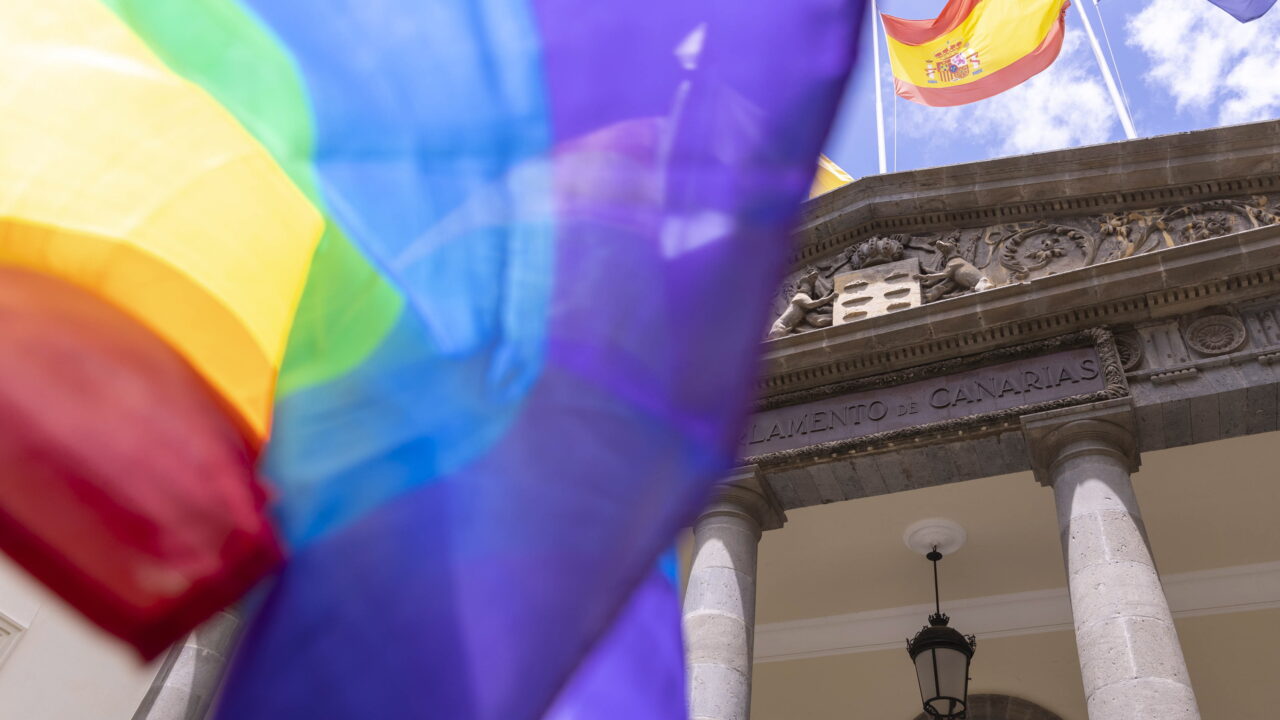
The coordinating body of LGBTIQ+ organisations in the Canary Islands launched the ‚Don’t let your vote be a black ball‘ campaign on Friday, calling on the public to take action ahead of the forthcoming general election and to prevent a rollback of the rights won by the community.
The spokesperson for the coordinating committee, Sergio Siberio, explained in statements to the media that the initiative aims to highlight the importance of voter participation and to call for votes not to be cast for political parties which, he warned, propose measures in their manifestos that would represent «a step backwards» for the rights of the LGBTIQ+ community.
«We want their votes to be rainbow votes and ballot papers, pink ballot papers, and under no circumstances should they support any rollback of the community’s rights,» said Siberio, who also called on the heterosexual population to bear the community’s situation in mind when voting.
Canary Islands: LGBTIQ+ campaign warns against casting blank ballots
The campaign draws on the film ‚La bola negra‘, inspired by Federico García Lorca’s unfinished play, and the significance that this symbol takes on in the story, associated with fear, violence and homophobia.
«What we are essentially asking the public is that, when they cast their vote at the ballot box, they do not vote for black balls,» he said.
Siberio also quoted the Tenerife-based activist Pedro Zerolo to emphasise that LGBTIQ+ people are part of everyday life for the whole of society, as colleagues, friends and family members.
LGBTIQ+ organisations are calling for further steps towards equality
The coordinating body, comprising ten organisations from across the archipelago, believes that significant progress still needs to be made to achieve real and effective equality.
Among these, their spokesperson highlighted the recognition of non-binary people, who do not identify as either men or women, as well as the extension of the right to self-determination of gender identity to trans children and migrants in an irregular administrative situation.
He also highlighted the difficulties faced by transgender people in accessing employment, particularly transgender women, and called for measures to tackle discrimination in the workplace and the housing insecurity affecting this group.
In this regard, he warned that LGBTIQ+ people experience higher levels of homelessness than the general population, according to the studies he cited, and emphasised the need to put a stop to hate speech and attacks.
Ban on conversion therapy stalled for the time being due to the snap election
Another outstanding demand is a ban on conversion therapy.
Siberio explained that the early calling of elections and the end of the parliamentary term led to the lapse of a legislative proposal that sought to ban these practices and make them a criminal offence under the Criminal Code.
The presentation was attended by representatives from the various organisations that make up the coordinating committee: Daniel García, from the Gamá collective; Adela Gallego, from Altihay; Cielco Fernández, from Libertrans; Josefa Rodríguez and Belinda, from Crisálida; José Rodríguez, from Lánzate; and Andrés Paz, from Violetas.








Comments (0)
No comments on this article yet.