

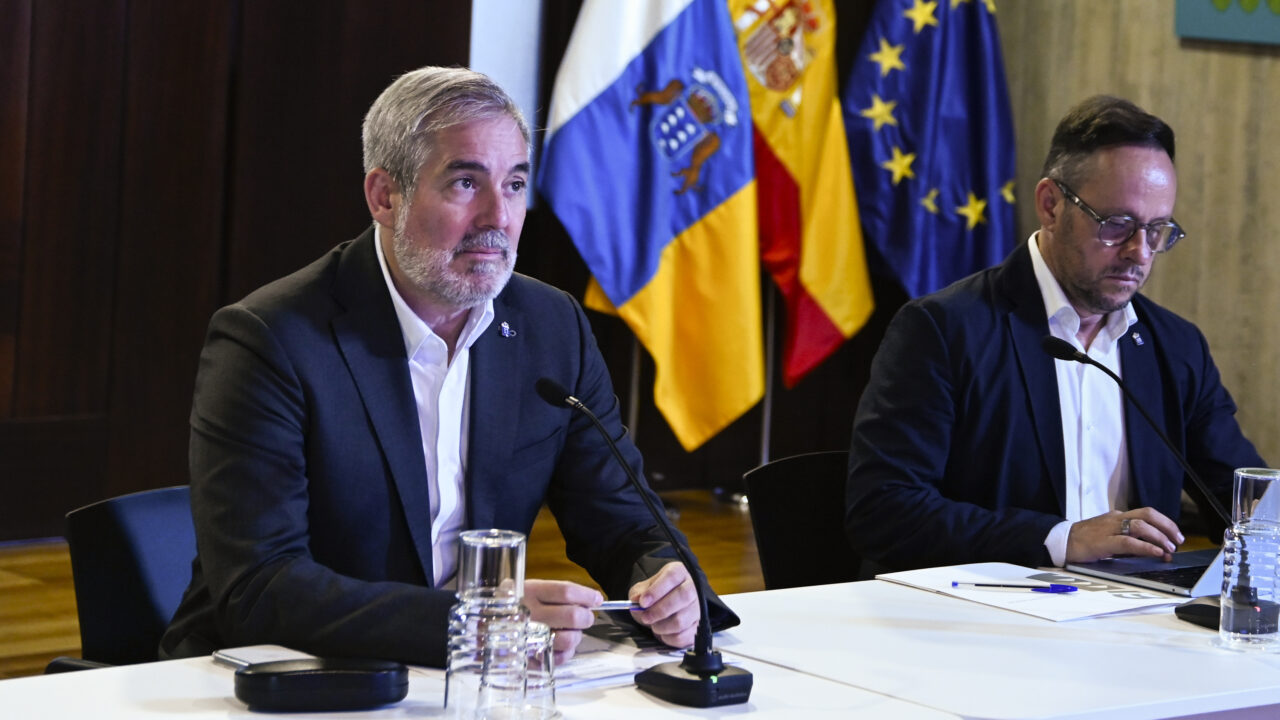
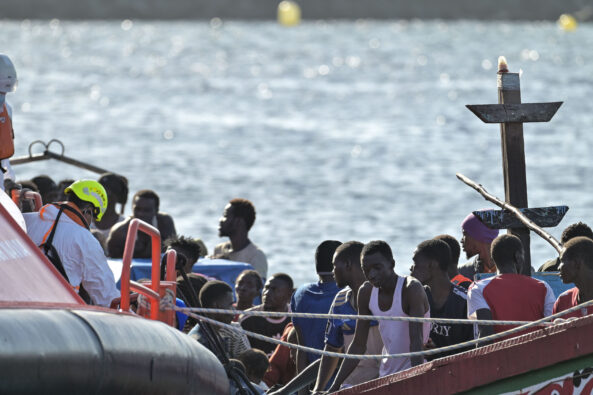
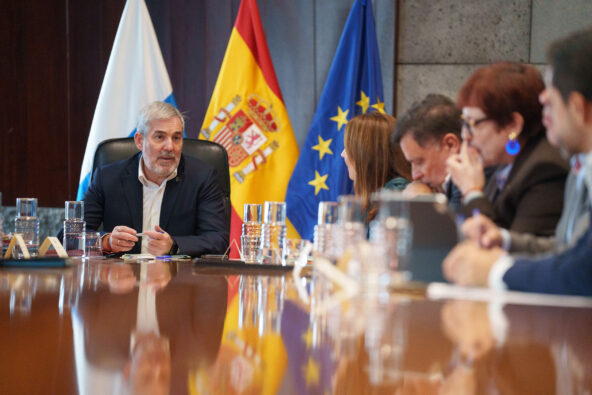
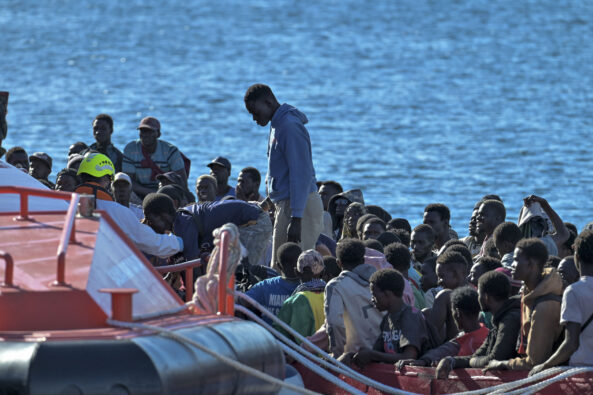
The President of the Canary Islands, Fernando Clavijo, will call on the Government to immediately request that the European Union activate the extraordinary resources which Brussels makes available to Member States to tackle the migration crisis such as the one El Hierro has been experiencing for weeks.
This was announced on Wednesday following a virtual meeting with the European Commissioner for Home Affairs and Migration, Magnus Brunner, who acknowledged the seriousness of the situation and confirmed that it is up to the Spanish Government to request EU mechanisms, according to the Canary Islands Government.
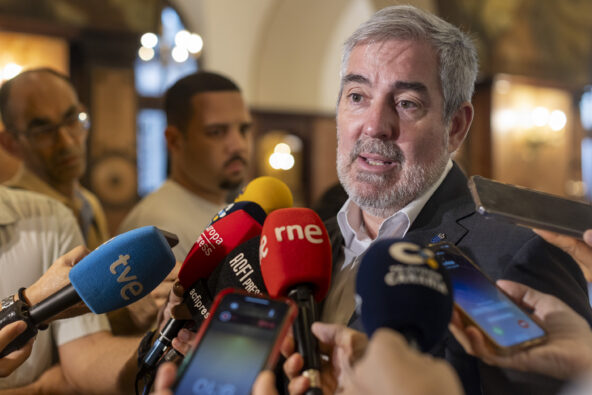
«The Commission and the European Union are fully aware of the current situation of high pressure and overcrowding on the islands,» Clavijo told journalists in Santa Cruz de Tenerife, following his meeting with Brunner.
Canary Islands: Four EU instruments are in place to tackle the migration crisis
The Commissioner has informed him of the availability of four European instruments: strengthening the resources deployed by the European Border and Coast Guard Agency (Frontex), the intervention of the European Asylum Agency, the activation of the Civil Protection Mechanism, and the mobilisation of solidarity funds.
However, the Spanish Government must make the request, Brunner told the President of the Canary Islands.
Clavijo has emphasised that the Canary Islands need permanent resources to manage migration flows, ranging from interpreters and translators to healthcare, civil protection and security resources, to enable them to look after migrants and ensure the safety of professionals and the local population.
He also pointed out that the Atlantic Route has been active for over 30 years and will continue to see episodes of varying intensity for as long as inequalities between Africa and Europe persist.
He therefore argues that the Canary Islands cannot continue to tackle every surge with «ad hoc measures», but rather need tools that enable them to anticipate and respond effectively: «Enough of improvising, enough of applying stopgap measures. Let’s equip ourselves with the necessary resources.»
«We are Europe. Some people haven’t realised that the Canary Islands are part of Europe, that we are Europe’s southern border and that whatever happens here happens in Europe,» emphasised Fernando Clavijo.
Brunner explained that, amongst the available resources, Frontex currently has around 150 personnel in the Canary Islands and that their presence could be increased if Spain so requests.
He also highlighted the role of the European Asylum Agency in strengthening reception arrangements, particularly the care provided to unaccompanied foreign minors, and the possibility of making use of the European Civil Protection Mechanism.
The Commissioner also referred to a European solidarity reserve of 1,000 million euros and proposed discussing the specific needs of the Canary Islands with the Executive Vice-President of the European Commission, Raffaele Fitto.
Special EU status could allow direct access to migration support
Clavijo has, in turn, suggested making use of Article 349 of the Treaty on the Functioning of the European Union (which recognises special treatment for the outermost regions) to explore a means of granting the Canary Islands direct access to the EU’s migration response instruments, given their status as an external border of Europe.
The President of the Canary Islands wishes to explore this possibility further with Fitto during the latter’s visit to the Canary Islands on 3 December.
He also welcomed Brussels‘ willingness to strengthen cooperation with countries of origin and transit for migrants, particularly in West Africa, and acknowledged the efforts being made by Mauritania and Morocco to stem the flow of migrants.
Canary Islands Vice-President criticises Madrid's failure to submit a proposal
For his part, the Vice-President of the Canary Islands, Manuel Domínguez (PP), has lamented that «the Spanish Government has failed to fulfil its obligations towards this region; it has not requested the resources available from the European Union» to tackle the influx of migrants arriving in the Canary Islands.
«This is something we have been calling for not just for days or months, but for years, and at the moment there is no formal request,» said Domínguez.
He also pointed out that these measures have been called for for years and emphasised their urgency, both to prevent the loss of human life in the Atlantic and to address the strain on the archipelago.
Comments (0)
No comments on this article yet.