

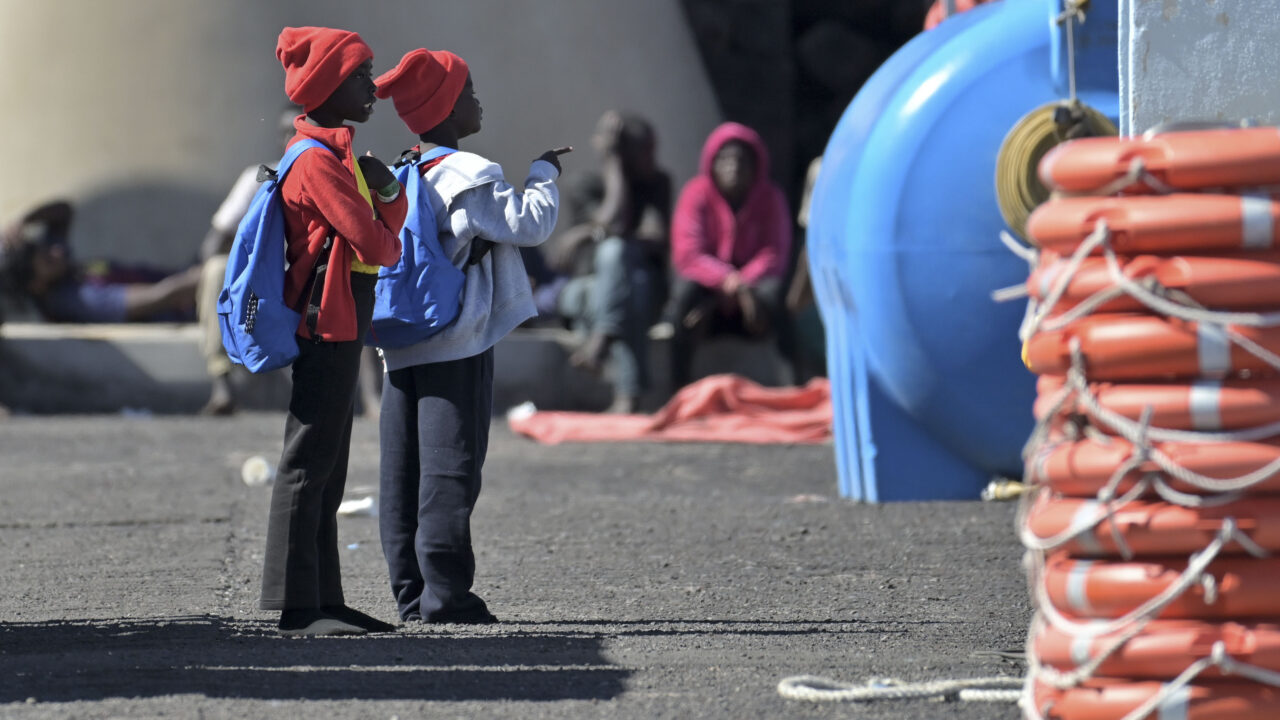
The Public Prosecutor’s Office warns that dozens of minors who arrived on cayucos have left the Canary Islands in the care of second- or third-degree relatives who are not their guardians, often siblings no older than 19, without the institutions asking what will become of them or, quite simply, whether they will go to school.
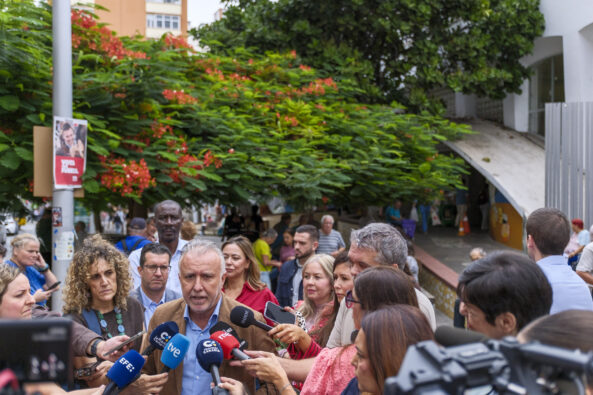
«We would not allow it with a Spanish minor. We would declare them to be in a state of neglect and the social services would be activated. But, legally, there is no difference. It is discrimination that affects the rights and the future of these children», Teseida García, the immigration prosecutor in Las Palmas, who is «deeply concerned» about what is happening, told EFE.
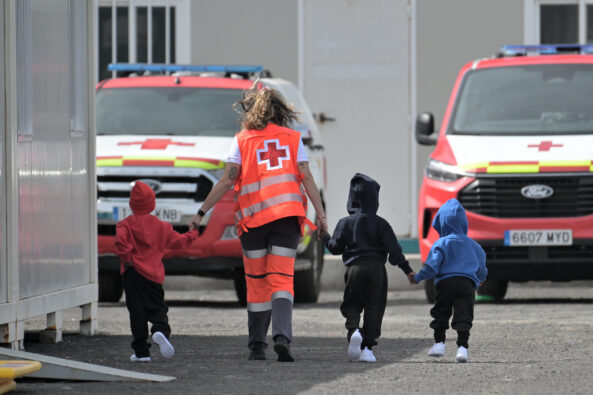
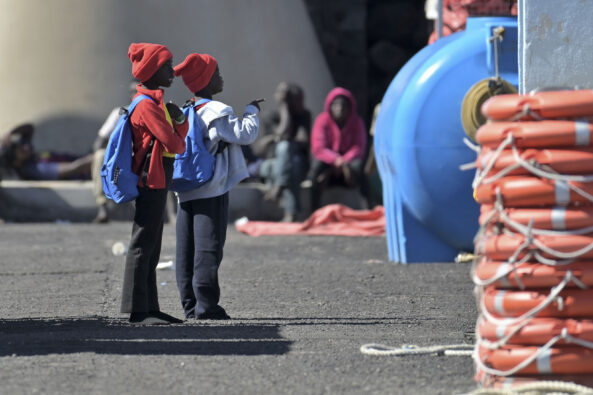
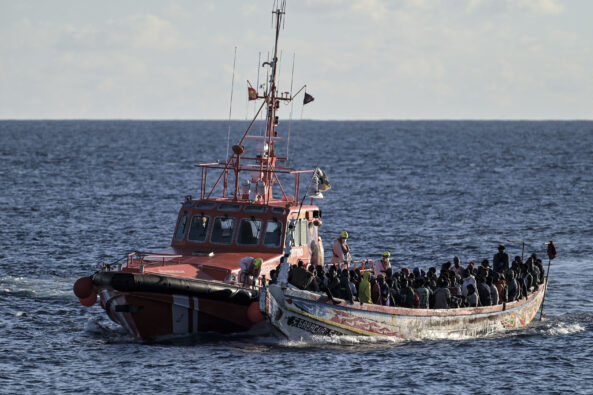
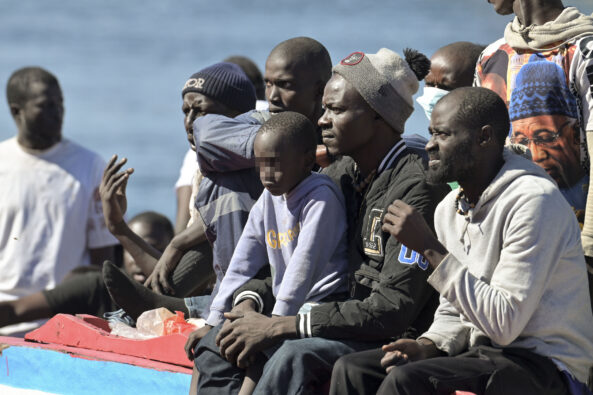
The situation is not new, she explains, but has dragged on for years. With the mass arrivals of recent weeks, however, it has become more pronounced, because many of the cayucos are full of minors from Senegal, Gambia or Mali in the care of an uncle, a cousin or, above all, an older brother who is technically an adult but still barely out of adolescence.
Canary Islands: Minors staying with relatives without a legal guardian
Most of these minors are pushed out of the Canary Islands by the inertia of favouring their transfer to facilities on the mainland, in order to relieve pressure on the islands‘ initial reception centres, which are needed to continue caring for those newly arrived on the coasts.
They will spend their first days on the mainland in a centre for family units run under agreement with an NGO. But what happens to them when their stay in the humanitarian network ends? «They are left in the care of a brother who, moreover, will be desperate to start work and send money home, and we lose sight of them. They fall outside the institutional circuit», the prosecutor replies.
Mainland: Transfers ease pressure on initial reception centres in the Canary Islands
«If he is going to live on charity, if he is going to end up in a shack, picking up whatever he can out there, and those are the conditions… Wouldn’t that child be better off in a children’s home?», she asks.
Teseida García stresses that she, as a prosecutor, will not force the family bond to be broken, nor will she ask for a minor to be separated from their brother, but she argues that there is another way: to declare these children to be in a state of neglect and find them a children’s home where they can continue, without obstacles, to maintain their relationship with their relatives.
This representative of the Public Prosecutor’s Office, with more than two decades of experience on the Canary route, is clear about what would happen if these minors were Spanish: «If a 19-year-old Spaniard has to look after a brother aged three, four or 12, I can tell you the child would be taken into care, because the reality is that the 19-year-old brother hasn’t got a penny to his name», she warns.
In such a case, she continues, the social services would be activated immediately, starting with the closest ones, those of the municipality of residence. However, she adds, with children who are outside their own country and have no family support network nearby, it is not even considered.
Public Prosecutor's Office: Spanish children would be treated differently
Teseida García admits that, where foreign minors are in the care of relatives, the system is operating more laxly, owing to the inertia generated by a migration emergency that has been sustained over time.
«In the ultimate euphemism, we open a file on a minor at risk. But that is a lie, because the risk faced by a foreign minor who arrives accompanied is not the same as the risk faced by a Spanish minor who is here, watched over by the town hall’s social services, because nobody watches over him, the NGO does», she explains.
Indeed, this prosecutor believes that the legal situation of a foreign minor is often better when he arrives alone than when he arrives accompanied by someone who is not his father or mother.
Migrant minors are very frequently entrusted to the care of a brother, a cousin, an uncle or a grandparent who arrived on the same cayuco, when, in reality, none of these relatives is their guardian. «The guardian of a minor has to be appointed by a judge, but if we open that route, the procedure would be a long one», she points out.
«Now», she asks, «what happens if in a month’s time that minor falls down a flight of stairs on the mainland, is taken to hospital and his guardian is needed to authorise an operation? Who signs?»


Comments (0)
No comments on this article yet.