

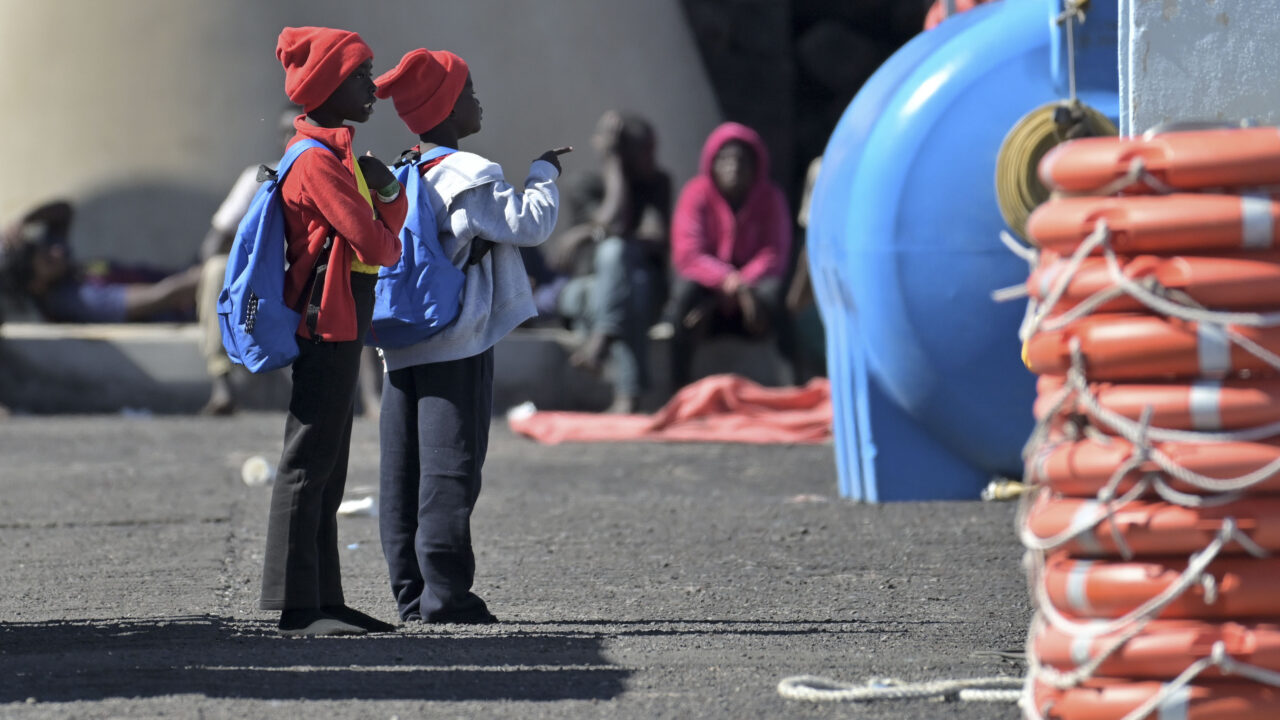
More than 3,200 migrants have arrived in the Canary Islands on 39 small boats and dinghies in the first five days of November, a figure that has set alarm bells ringing among several support services, as it is approaching levels not seen on the Canary Route since the record months of 2023 and 2024.
October already seemed to have marked a turning point in the downward trend seen on the Canary Route since the start of 2025. Last month alone, 6,164 people were rescued (46 per cent of the total for the year), but the pace of arrivals in recent days suggests that something has changed, particularly in Senegal, from where most of the small boats arriving in El Hierro now originate.
Speaking from Guadeloupe (France), the President of the Canary Islands, Fernando Clavijo, summarised the situation as follows: «The figures we are seeing are reminiscent of 2024, when 47,000 people arrived on our shores (46,843, the highest figure in the history of the route). And on some days, the trend is even higher. Urgent action is needed.»
El Hierro: 2,300 migrants reach the island
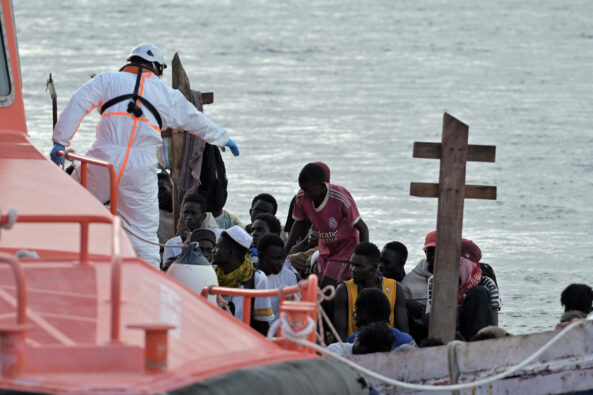
According to a tally from the emergency services to which EFE has had access, based on provisional figures, as rescue operations are still under way (7.00 pm), 2,300 people have arrived on El Hierro alone over the past five days in 26 small boats, including 307 children. Eleven of them are babies.
This week, the Government Delegation has chartered several ferries to relieve pressure on the initial reception facilities on El Hierro, an island with a population of 11,000, where the large influx of arrivals in 2023 and 2024 had already put a strain on several public services.
The situation then eased as the new arrivals were transferred, within a day or two (sometimes within a few hours), first to reception centres in Tenerife and then to those in Gran Canaria, from where they were subsequently distributed to humanitarian centres on the Spanish mainland.
The Government delegate, Anselmo Pestana, has confirmed that this rotation is once again underway, as the Canary Islands‘ resources are limited and it is not advisable to overstretch them, in anticipation of further arrivals.
On Thursday, Pestana acknowledged that the growing number of small boats arriving in El Hierro is «putting pressure» on some of the island’s resources, but he maintained that the system is operating normally, thanks to the diversion measures.
Three police unions (Jupol, SUP and UFP) have put forward a different view of what is happening. Officers stationed on El Hierro are «at their limit», they warn, and union sources at the Maritime Rescue Service have made the same point: whilst there are enough rescue vessels on El Hierro, the crews are exhausted, with days when they barely get any rest, working on one-month rotating shifts.
Lanzarote: Inflatable boats are carrying more and more people
According to figures from EFE, provided by organisations providing initial assistance at the docks, Lanzarote is the second-most frequent point of arrival after El Hierro this month, with 435 people rescued, including at least 76 children.
In this case, the migrants in question are those who set out across the Atlantic from the stretch of coastline in southern Morocco between Agadir and Tan-Tan, mainly in inflatable dinghies.
Lanzarote has also seen a change since this summer: the criminal gangs behind human trafficking in southern Morocco are now loading more than a hundred people onto each rubber dinghy, something never before seen in this part of the Atlantic. On Monday, a dinghy carrying 134 people, two of whom were already dead, was rescued after a three-day crossing.
That figure is double the number of people usually carried by rubber dinghies carrying migrants in the Lanzarote and Fuerteventura area (60-70 people) and greatly increases the risk of the boat breaking up whilst at sea, due to being overloaded with people and fuel.
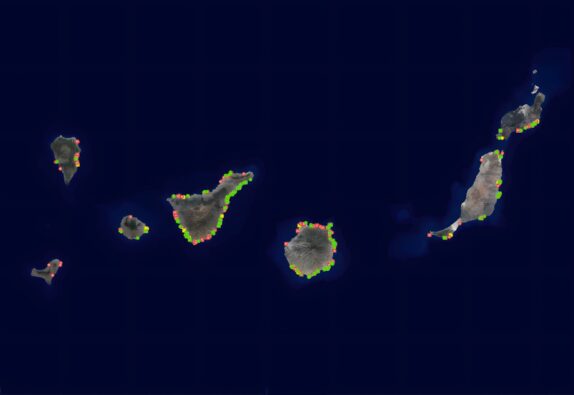
Next come Gran Canaria, with 224 people rescued since 1 November; Tenerife, with 175; and La Gomera, with 80.
The Canary Islands are calling for additional aid from Madrid
The President of the Canary Islands has responded to this situation from Guadeloupe, a French territory in the Caribbean, where he is attending the meeting of the EU’s Outermost Regions, and has expressed his concern to the Commission’s Vice-President, Raffaele Fitto.
Clavijo has once again appealed to the Prime Minister, Pedro Sánchez, to call an urgent coordination meeting, and has urged him to put new measures and resources in place.
The President of the Canary Islands fears that the situation «will get worse» in the coming months, because the migration routes from North Africa to Europe «have been closed» and because «the positive expectations» raised amongst the people of Senegal by the change of government in 2024 «have not been met».



Comments (0)
No comments on this article yet.