

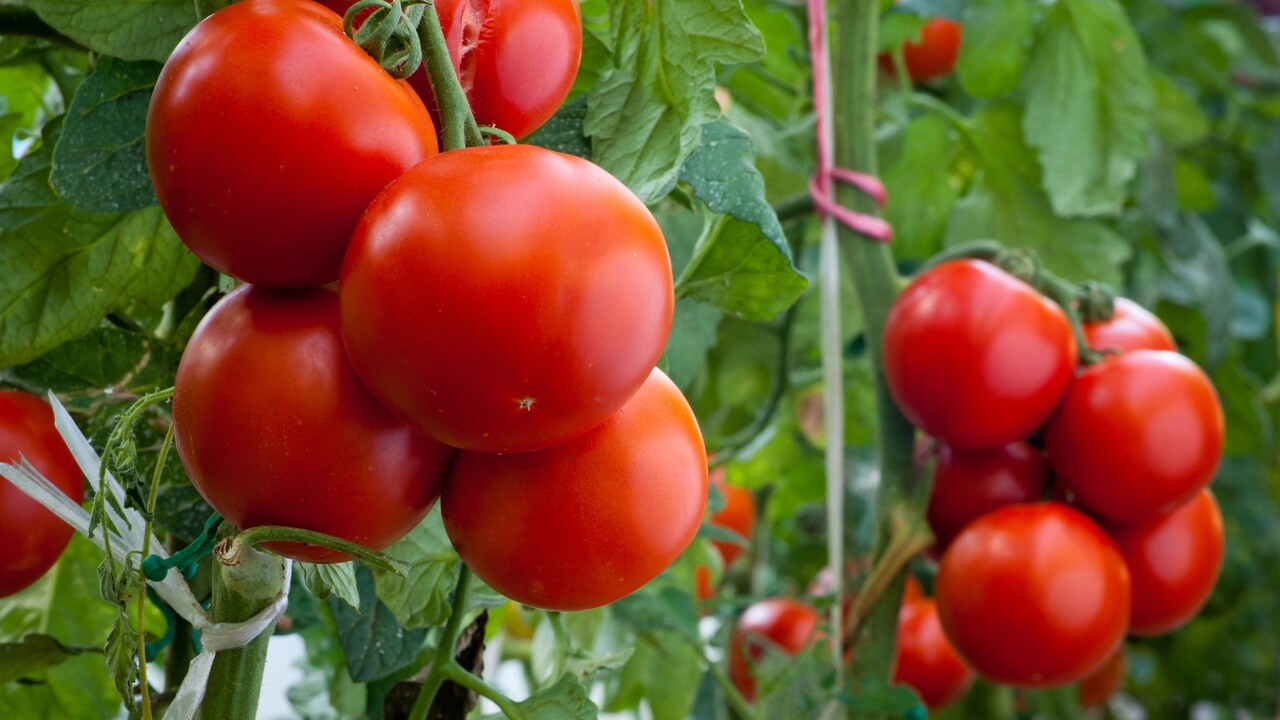
From Thursday, new EU rules will apply to the Canary Islands Government’s aid for agriculture, livestock farming and fisheries in the Middle East, and the government is adapting its funding schemes accordingly. As a result, potato and tomato cultivation will no longer be eligible for aid for means of production. Three further decisions concern social projects, schools and housing.
The EU has provided for specific aid to cover fertiliser costs for potatoes and tomatoes. The Canary Islands approved their extraordinary crisis aid in April; this is intended to offset additional costs for inputs and animal feed, and, in the fisheries sector, for energy and logistics as well. This aid cannot be granted under the temporary state aid framework adopted by the European Commission on 5 May in response to the Middle East crisis. Consequently, the decree-law published in the Official Journal of the Canary Islands classifies it as de minimis aid with fixed ceilings. The Spanish government has allocated 23.1 million euros to the Canary Islands to finance a support scheme for the primary sector; up to 3.6 million euros of this is earmarked for these grants.
The limit per beneficiary is 50,000 euros for production and feed over a three-year period, and 40,000 euros for energy and logistics costs in the fishing industry. A fishing vessel is eligible for a maximum of 20,000 euros, whilst a shipowner is eligible for a maximum of 40,000 euros. For means of production, the administration takes into account a maximum of 50 hectares per applicant, with payments made from 30 euros upwards. The government aims to reach more eligible recipients in this way; however, it restricts feed aid to farms with productive livestock species. Those operating outside Tenerife and Gran Canaria receive a 16 per cent supplement on their feed aid. Beneficiaries must submit their self-declarations via the Canary Islands‘ electronic administration system within five days of receiving notification of approval. If the requirements are met, the Canary Islands Treasury will transfer the funds; alternatively, the designated implementing body will make the payment. The same issue contains three further decisions, ranging from initiatives to combat poverty and nursery classes to a housing complex on Gran Canaria:
The Canary Islands are providing 8.9 million euros to fund projects to tackle poverty
Social organisations, the Spanish Red Cross and similar non-governmental organisations may also apply for funding for projects aimed at combating poverty and social exclusion. The Ministry of Social Affairs, Equality, Youth, Children and Families is making €8,886,669 available for projects to be implemented in 2027; the funds come from allocations from income tax and corporation tax. Applications can be submitted online via the Canary Islands Government’s e-government portal until 25 November; the application period lasts for 15 working days.
Funding is provided for projects that comprehensively address the basic social needs of people living in poverty or facing social exclusion. This also includes particularly vulnerable people, namely those who face discrimination on the grounds of gender, ethnic origin, age, disability, need for care, gender identity, health or sexual orientation. The call for proposals is based on the 2024 funding scheme, which was amended in September and can be read here.
The Canary Islands are expanding classes for children under three years of age
In addition, during the 2026-2027 school year, the Canary Islands Ministry of Education, Vocational Training, Physical Activity and Sport will set up pilot classes for children aged between zero and three at selected schools. At each school, lessons will only begin once the building work has been completed and the classrooms have been fitted out. The relevant authorities will then inform the respective regional directorate.
The pilot project has been running since the 2022-2023 school year and has since been expanded. In all municipalities across the Canary Islands, the Ministry has compared the number of children under the age of three with the available places. Priority is given to municipalities with no approved places, no public provision, or too few places to meet demand. The Ministry is not building new schools; instead, it is using existing buildings. The layout can be viewed here.
Gran Canaria: Housing Agency takes over 16 flats
A development comprising 16 flats, garages and storage rooms on Calle Antonio Yánez in Valleseco is being transferred to the Canary Islands Housing Institute, which will add it to its stock of social housing. The Gran Canaria Housing Consortium approved the transfer free of charge on 27 March, and the Institute accepted it on 24 September.
This is based on a 2021 agreement under which the consortium and the institute acquire unfinished buildings and complete them as subsidised housing. In July 2025, the partners extended the agreement; on 25 September, they amended it. At the same time, the Canary Islands Government aims to facilitate the provision of more social housing through a reform of land law. The Institute is now having the transfer entered in the land register and is bearing the costs; the documents are available here.




Comments (0)
No comments on this article yet.