

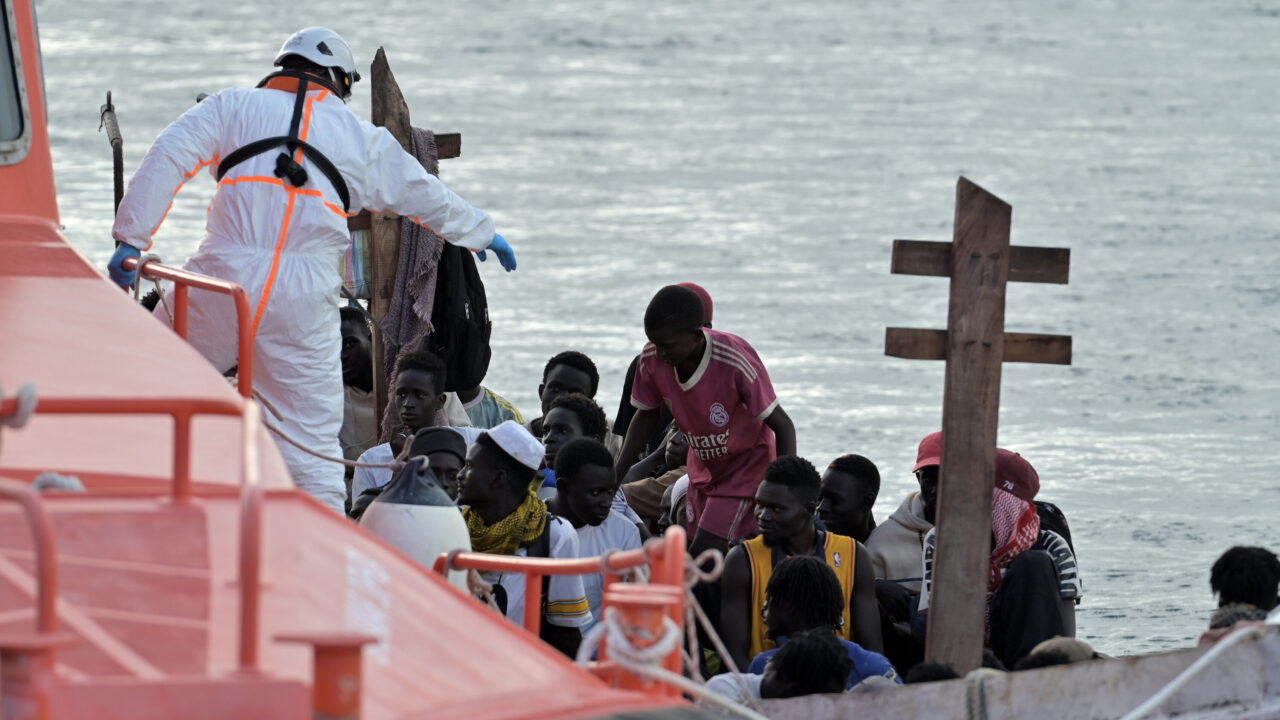
Since Wednesday night, the Maritime Rescue Service has disembarked 901 migrants, at least 25 of whom are minors, who were travelling on nine boats, in El Hierro, Gran Canaria, Lanzarote and La Gomera, whilst it continues to operate a rescue operation to assist two further small boats located some 55 kilometres from El Hierro.
The latest arrival took place early this afternoon, when the Salvamar Navia came across a cayuco some 30 kilometres from El Hierro carrying 207 people, including four women and two children, as it was heading towards another vessel situated further away from the island.
The Salvamar Diphda is now heading towards those last two cayucos, located some 55 kilometres away, and the Maritime Rescue Service has also deployed the Helimer helicopter, which has confirmed the location of those two vessels.
El Hierro: Sea rescue service brings further migrants ashore
Furthermore, shortly after midday, Diphda itself rescued another vessel some 22 kilometres south of El Hierro carrying 66 people, all of whom were men apart from two minors.
These two new arrivals are in addition to the 628 migrants who had previously been disembarked from seven vessels.
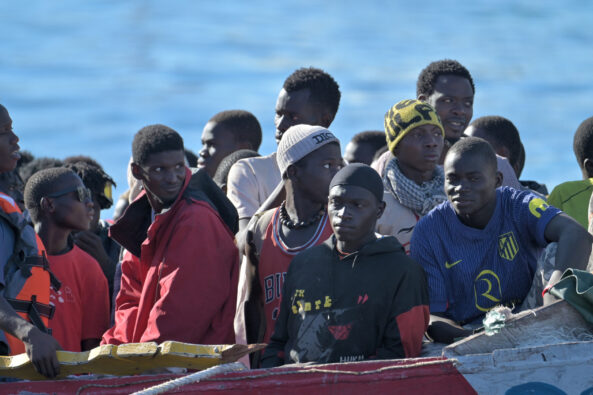
The largest of these was carrying 194 people, including 16 women and one girl, and was detected at around 12.00 by the Guardia Civil’s SIVE surveillance system in waters near El Hierro.
A few hours earlier, at around 09.00, the Salvamar Navia had rescued another cayuco carrying 99 people, including seven women, 18 kilometres south of the island; this vessel had also been located by the SIVE.
Migrant boats reach La Gomera, Lanzarote and Gran Canaria
Another cayuco carrying 80 people, including three minors, arrived on La Gomera; it was spotted four kilometres south-east of the island and rescued by the Salvamar Mizar, whilst a patera from southern Morocco carrying 51 people, three of whom were children, arrived in Lanzarote in the early hours of the morning.
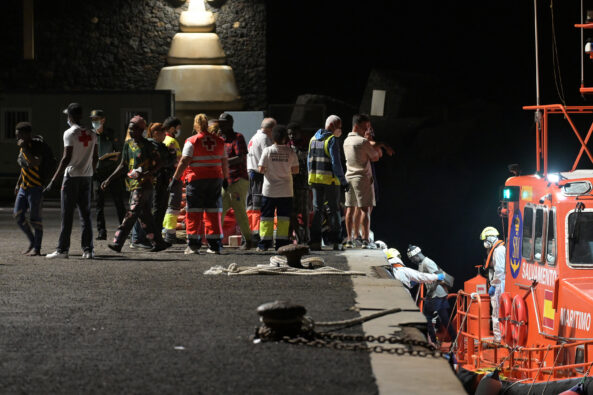
In Gran Canaria, the Guardamar Urania and the Salvamar Macondo disembarked 73 and 39 people, respectively, at Arguineguín, including thirteen women and seven minors.
The first arrival covered in this report took place at 9.30 pm on Wednesday in El Hierro, involving a cayuco carrying 92 people, including several women and seven minors.
El Hierro: Accommodation capacity is once again under pressure
The surge in arrivals has once again put pressure on resources on El Hierro and the other islands, particularly those relating to reception facilities.
On Thursday morning at 10.00, the Government Delegation transported 214 migrants who had been staying at the CATE centre in San Andrés, Valverde, to Tenerife on a chartered vessel, and plans to transfer a further 160 people this afternoon via the regular El Hierro-Tenerife ferry service.
The Government Delegate for the Canary Islands, Anselmo Pestana, acknowledged on Thursday that the increase in arrivals is causing «strain» on the reception network, although he assured that it continues to operate «as normal» thanks to referrals to facilities in the rest of Spain.
In October alone, 6,194 migrants arrived in the Canary Islands in small boats and canoes, almost double the number for the entire first half of the year, whilst the police unions JUPOL, SUP and UFP have reported that the surge is pushing officers stationed in the Canary Islands «to the limits of their operational capacity», and have therefore called for emergency reinforcements to cope with the increase in arrivals.



Comments (0)
No comments on this article yet.