

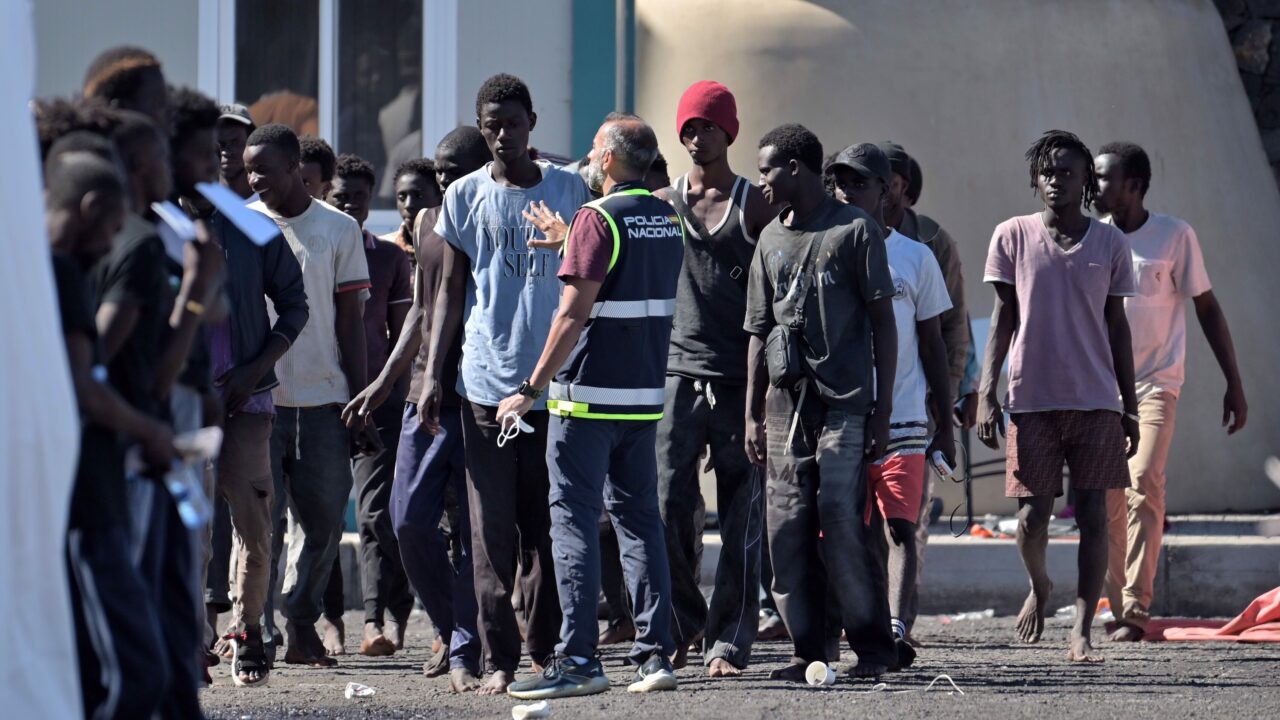
The police unions JUPOL, SUP and UFP have denounced on Thursday the «institutional neglect» in the face of the surge in migration to the Canary Islands, particularly on El Hierro, which is causing officers to find themselves «at the limit of their operational capacity».
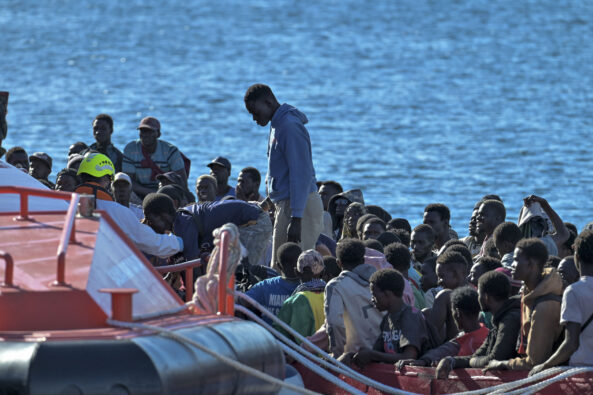
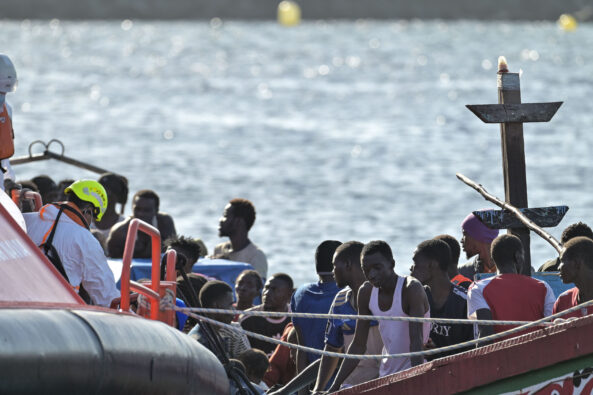
In a statement, they say that the arrival of 24 boats carrying approximately 2,500 people over the last four days has led to «an extraordinary workload» for the Immigration and Border Brigades, the Forensic Police and the Public Safety units.
All this «without the provision of the additional staff from other national workforces that this situation requires».
El Hierro: Lack of reinforcements is putting a strain on regular police operations
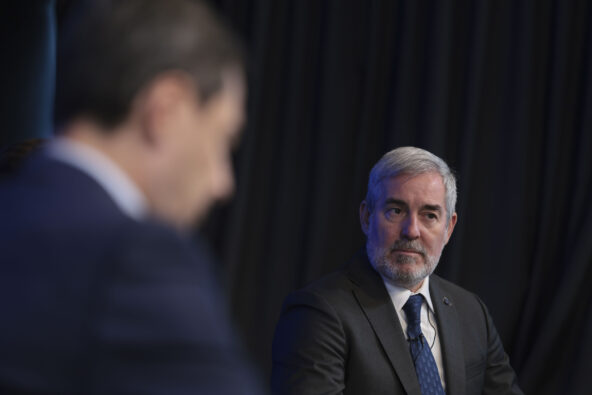
For this reason, JUPOL, SUP and UFP speak of the «institutional neglect» being suffered by police officers in the province of Santa Cruz de Tenerife at the hands of the Directorate-General of Police, as well as the «lack of effective involvement» on the part of the Government Delegate in the Canary Islands, Anselmo Pestana, «in driving a response commensurate with the seriousness of the situation».
They criticise the fact that the police response is falling primarily on the province’s own officers, who are «forced to temporarily abandon their usual duties and undertake extraordinary deployments, sometimes at very short notice».
In the meantime, «investigations, administrative proceedings and all other police duties must continue to be carried out».
«We cannot continue to tackle a national emergency with the ordinary resources of a single province, by taking staff away from some units to cover others,» argue the three trade unions.
«This situation,» they claim, «is causing exhaustion, stress, anxiety and serious difficulties for police officers in balancing work and family life, particularly amongst those who have to travel to El Hierro on secondment, with the added difficulties posed by the island’s remote location».
Police operations: Trade unions have been criticising the planning for months
Added to this are «the serious organisational shortcomings» which the three trade unions have been highlighting for months in official correspondence.
Among these, they refer to «the lack of individualised and sufficiently detailed service orders prior to deployments, the absence of adequate planning of working hours and rest periods, and the allocation of shifts which, according to the conditions documented in October, reached up to 17 hours, totalling 97 hours on duty over 11 consecutive days».
«We have been warning about these shortcomings for months. We cannot continue to demand extraordinary sacrifices from civil servants whilst organisational problems that should have been resolved long ago remain unresolved,» say the police unions.
Furthermore, some of the officers from the Police Intervention Units stationed in the Canary Islands are currently deployed in Ceuta and Madrid, «further reducing the availability of police resources in the archipelago».
According to the trade unions, «it is incomprehensible that the Canary Islands should provide staff to reinforce other regions whilst its own workforces remain overwhelmed and do not receive national support commensurate with their needs».
They emphasise that since 2021 they have been warning of the consequences of tackling migratory pressure through «temporary solutions, continuous relocations and internal reorganisation», whilst the previous command structures have failed to bring about «a sufficient structural response».
«Five years on, we are still applying stopgap measures to a problem that has long since ceased to be a temporary one. The lack of planning cannot continue to be offset by the constant sacrifices of civil servants, especially when no one can determine how long this migratory pressure will last,» they argue.
In this context, JUPOL, SUP and UFP acknowledge «the commitment and effort» of the current provincial police commissioner, who «is working hard to reorganise services, address the trade unions‘ demands and minimise the impact on police officers‘ working conditions and work-life balance».
However, «no provincial administrative body can make up for the human resources that the Directorate-General of Police is responsible for providing, nor can it replace the necessary involvement of the Government Delegation in the Canary Islands», they point out.
A police garage to house migrants
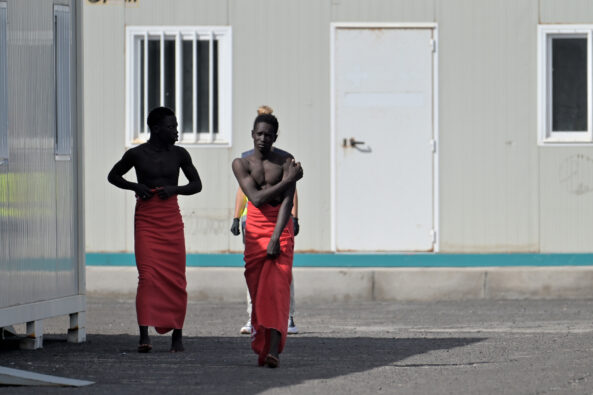
In their joint statement, the three trade unions denounce «a particularly serious situation»: the garage at the Southern Tenerife Police Station is being used to temporarily house migrants, despite the fact that these facilities are not designed for that purpose.
«Six years on from Arguineguín, we are once again witnessing the haphazard creation of spaces to house migrants. What was then known as the ‚quay of shame‘ is in danger of being repeated today in the south of Tenerife, having become the ‚garage of shame‘,» they warn.
JUPOL, SUP and UFP consider it unacceptable that, after years of pressure from the migrant influx, «police facilities not intended for housing people continue to be used, rather than making use of suitable, pre-planned infrastructure».
They are calling on the Minister of the Interior, Fernando Grande Marlaska, and the Government Delegation in the Canary Islands to provide «an immediate solution that guarantees dignified and safe conditions for migrants and adequate working conditions for police officers».
Police reinforcements: Trade unions call for immediate deployment
Specifically, they are calling for «an immediate and coordinated response to ensure the urgent deployment of reinforcements from other police forces across the country, the establishment of a permanent police presence on El Hierro, and a structural plan to enable the maintenance of routine police services without further deteriorating the working conditions of police officers».
They also demand that journeys be carried out «with duly formalised work orders, schedules communicated in advance, and full respect for rest periods and employment rights».


Comments (0)
No comments on this article yet.