

The PSOE and Nueva Canarias-Bloque Canarista (NC-bc) announced on Tuesday that they were tabling amendments to the whole of the draft budget for the Canary Islands for 2027, as they consider that the budget fails to address the archipelago’s main problems and reinforces an economic and social model that both groups regard as misguided.
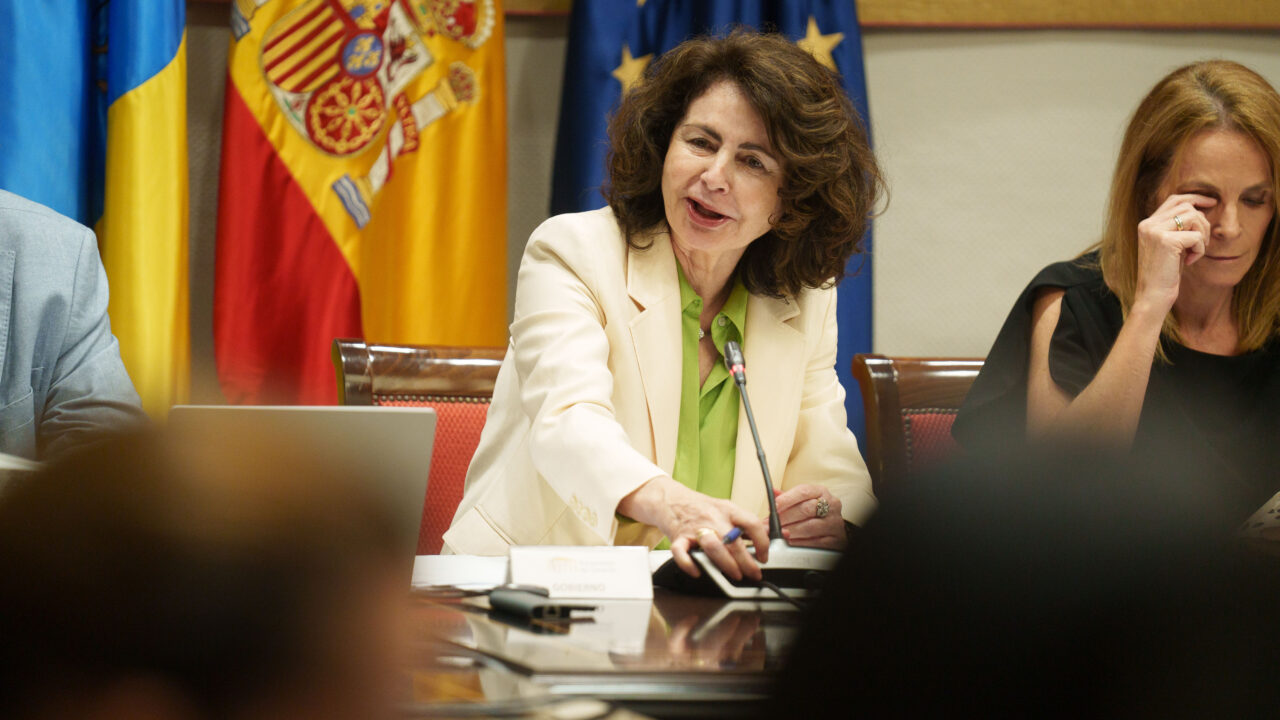
The two opposition groups voiced their opposition during the appearance of the Regional Minister for Finance, Matilde Asián, before the Canary Islands Parliament, where she presented the final budget of this legislative term, which totals 13,209 million euros, 717.6 million more than in 2026, representing an increase of 5.7 per cent.
The PSOE has explicitly announced that it will call for the bill to be returned by tabling a motion to reject the bill in its entirety, whilst Nueva Canarias, which has also confirmed to EFE that it will table such a motion, has questioned the government’s priorities and attributed its rejection to the lack of investment, the low level of budget implementation and the absence of measures to alleviate the situation facing families.
Canary Islands budget: Opposition doubts the impact of increased social spending
The minister has argued that 83.3 per cent of the budget increase, equivalent to 970 million euros, is allocated to social policies, primarily health, education, social services, justice and housing.
However, for opposition groups, the overall increase in the budget does not mask the loss of investment capacity or the difficulties in translating public resources into tangible improvements for the public.
Speaking on behalf of NC, Esther González criticised the fact that, after four budgets, the Government can no longer simply present growth figures, but must demonstrate what results it achieves with public funds.
NC has criticised the Government for failing to spend more than 3.4 billion euros over the last three financial years and has questioned why, despite the cumulative increase in healthcare funding, members of the public continue to face long waiting times for consultations, diagnostic tests and surgical procedures.
She has also criticised the Government’s tax policy, arguing that it particularly favours those on the highest incomes, and has called for measures to support lower-income families, against a backdrop of rising costs for housing, fuel and everyday shopping.
She also criticised the Government for failing to fulfil its election pledge to reduce the standard rate of IGIC from 7 per cent to 5 per cent.
The PSOE criticises falling investment and cuts in housing construction
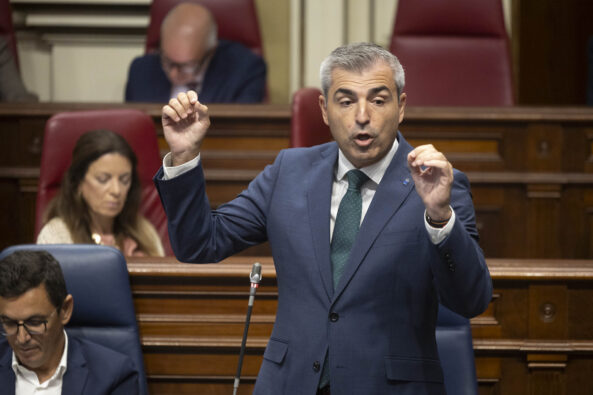
For his part, PSOE spokesperson Manuel Hernández has described the draft budget as the «disastrous epilogue to a wasted parliamentary term» and, amongst his main criticisms, has highlighted the €452 million cut in investment, which he has put at a reduction of 21.45 per cent compared with the previous initial budget.
He has also questioned the use of the disappearance of European funds from the Recovery and Resilience Facility (RRF) as a justification for scaling back investment efforts using own resources.
On the issue of housing, he has criticised the Government for cutting its own funding in the midst of a housing crisis, whilst on healthcare he has questioned why the increase in the budget has not led to a sufficient reduction in waiting lists and has criticised the rise in funding agreements with the private healthcare sector.
Vox notes a lack of improvements in health and education
Vox MP Javier Nieto has criticised the Canary Islands Government for using uncertainty as an excuse to avoid taking far-reaching measures, whilst lamenting that the budgets continue to be drawn up using an «outdated» model, with no significant changes compared with previous financial years.
He cited the health and education sectors as examples, which receive significant budget increases without, in his view, this translating into sufficient improvements in waiting lists, healthcare infrastructure or educational outcomes.
The Government is defending the increased budget and attributes the difficulties to uncertainty at national level
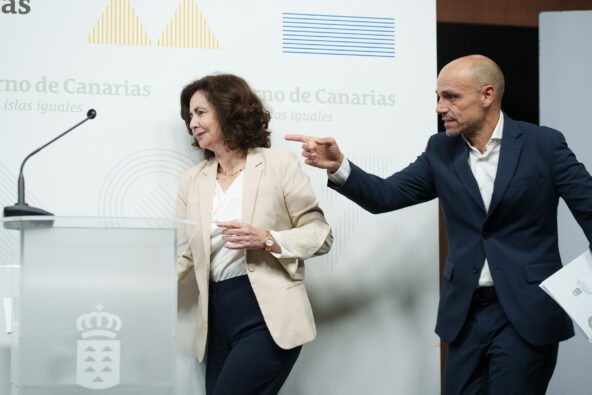
In response to the criticism, Matilde Asián has argued that the budget strengthens the social safety net and enables the continued growth of essential public services against a backdrop of economic and financial uncertainty.
Asián has emphasised that the loss of nearly 500 million euros in MRR funds affects the comparison with the previous financial year and has argued that, excluding this European funding, the budget has increased by 9.7 per cent.
The regional minister has attributed part of the financial difficulties to the extension of the General State Budget and the delay in updating the interim payments, which, she has warned, could result in a temporary loss of 170 million euros per month for the Canary Islands.
La Gomera and El Hierro are calling for more targeted investment
The groups supporting the Government, the Partido Popular and Coalición Canaria, have defended the budget and highlighted the increase in funding for healthcare, education, social welfare and housing.
The Agrupación Socialista Gomera has also welcomed the strengthening of public services, although it has called for clarification on the regional distribution of investment and has announced that it will table partial amendments to address the specific needs of La Gomera.
The Agrupación Herreña Independiente has called for greater attention to be paid to territorial cohesion and the specific needs of the less populated islands, such as El Hierro, La Gomera and La Palma, through differentiated tax measures, improved funding for island councils and local councils, and increased investment to offset the additional costs arising from their dual insularity.



Comments (0)
No comments on this article yet.