

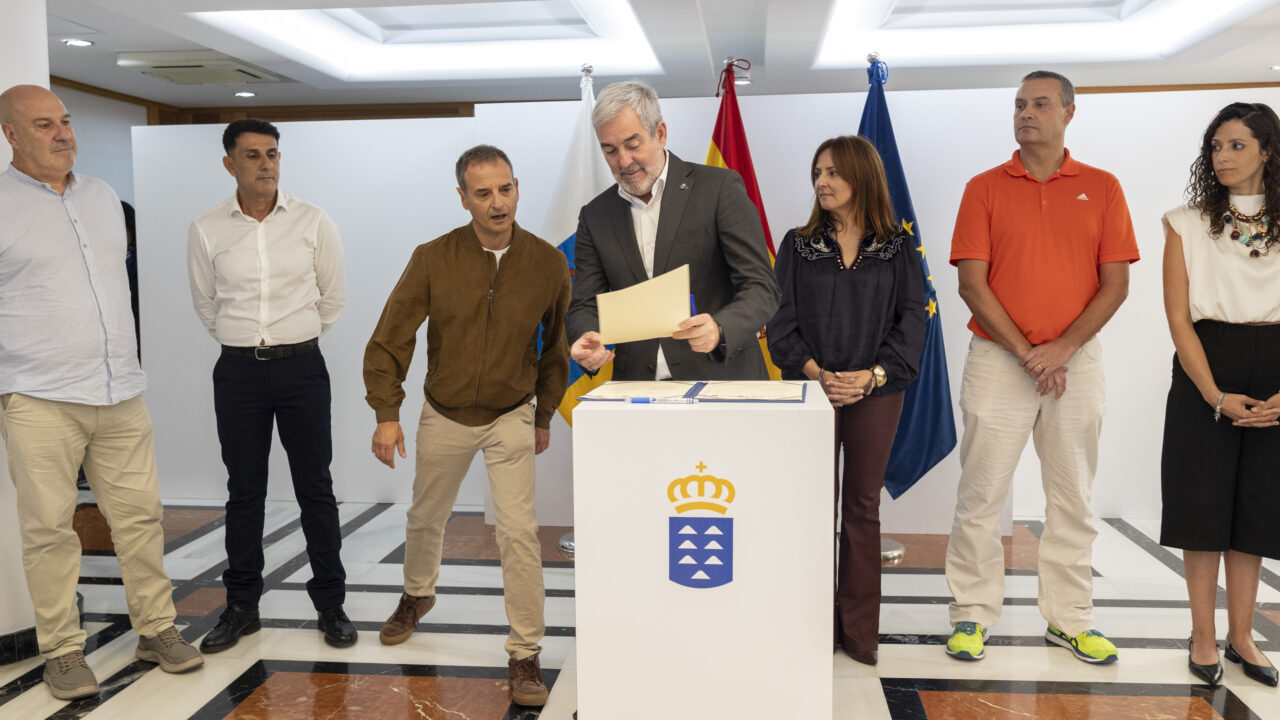
On Monday, the Government of the Canary Islands and the trade unions representing staff in the Autonomous Community’s General Administration signed an agreement to introduce a career progression scheme for its civil servants and contract staff, which will benefit more than 10,000 workers.
Comisiones Obreras, UGT, CSIF, Intersindical Canaria, Cobas and the Canary Islands Public Employees‘ Union have signed this agreement, which uses the pay scales established for staff of the Canary Islands Health Service as a benchmark and recognises workers‘ accumulated length of service.
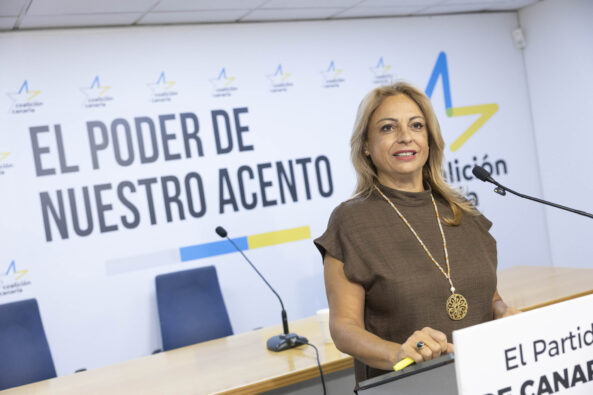
Furthermore, it provides that, on an exceptional and one-off basis, each public employee will initially be placed in the pay band corresponding to their years of recognised service as at 31 December 2026, as stated by the Regional Minister for the Presidency, Public Administration, Justice and Security, Nieves Lady Barreto Hernández, following the signing.
Canary Islands: Five pay grades are based on years of service
The scheme sets out five bands, which will initially be accessible after 5, 11, 17, 23 and 28 years‘ service, respectively.
This ensures that those who have been working in the civil service for decades do not have to start their professional careers at the very bottom.
Furthermore, from 2027 onwards, work will be carried out on the career development of employees with less than five years‘ service and those who join the organisation from now on, who will be subject to a performance appraisal.
Similarly, a working group will be set up to address the career development of the Regional Police and staff of the Justice Administration, who are not covered by this agreement.
Canary Islands budget provides for phased payments until 2030
The agreement provides for these measures to be incorporated into the Canary Islands Budget Act for 2027, with financial effect from 1 January of that year, and their implementation in terms of remuneration will be phased in as follows: 25 per cent in 2027, 50 per cent in 2028, 75 per cent in 2029 and 100 per cent in 2030, at a cost of 10 million euros per year.
The initial classification will be carried out ex officio, without the need for an individual application, and must be finalised by 30 June 2027.
The first payment is scheduled to be included in the July payslip, along with the corresponding arrears dating back to January.
Clavijo and the trade unions welcome the agreement in the public sector
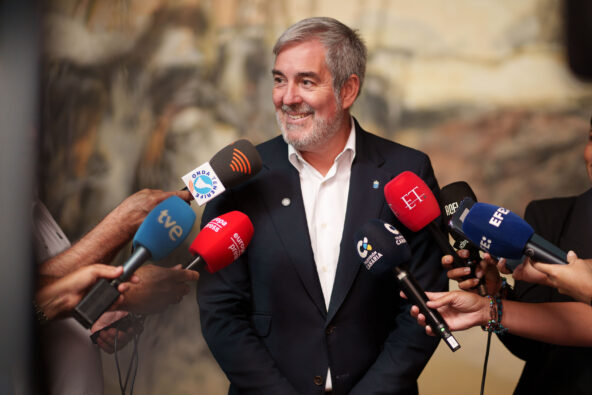
The President of the Canary Islands, Fernando Clavijo, has emphasised the importance of the dialogue between all parties, which has led to the agreement being reached.
He also encouraged the extension of this willingness to engage in dialogue to other areas of society, as mutual understanding brings benefits to citizens, as he emphasised.
For their part, the trade unions have described the agreement reached as «historic», as it addresses a demand that public sector workers have been making for two decades.
Trade union representatives have agreed that the salary supplement secured goes some way towards offsetting the loss of purchasing power suffered in recent years due to the rising cost of living.




Comments (0)
No comments on this article yet.