

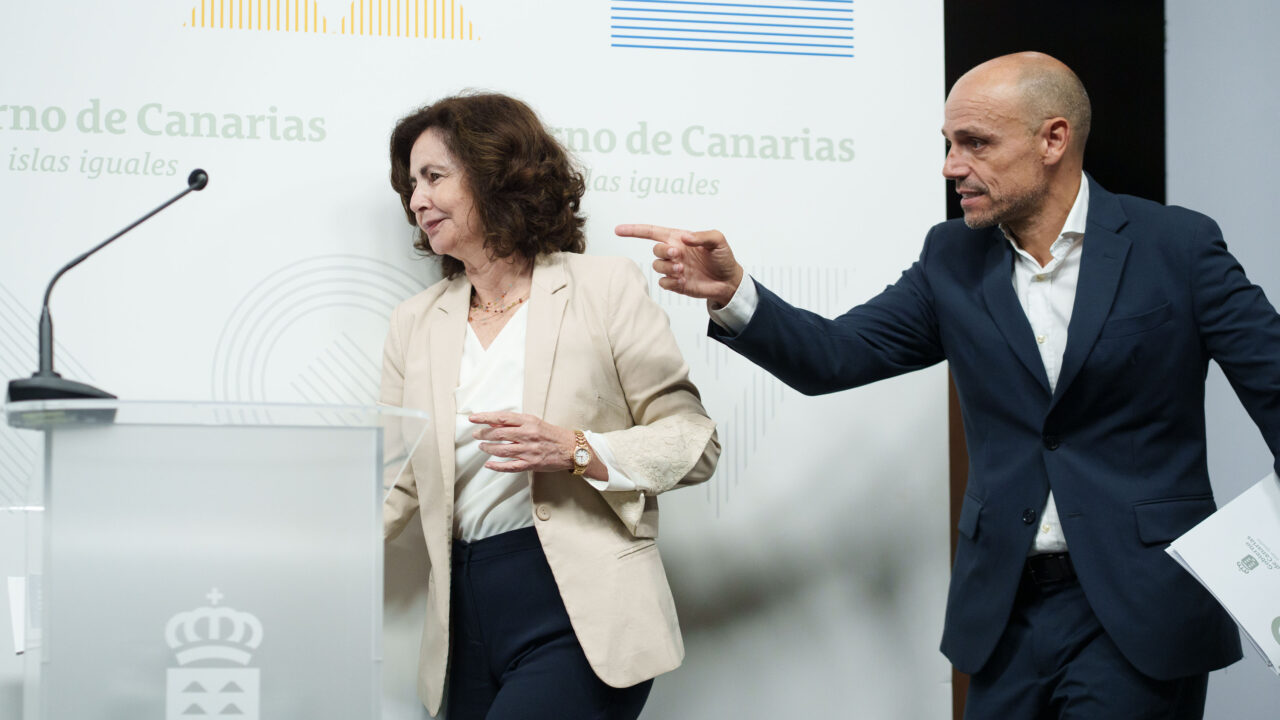
On Monday, the Governing Council of the Canary Islands approved its draft regional budget for 2027, which totals 13,209 million euros, an increase of 717.6 million euros, or 5.7 per cent, compared with 2026.
Whilst awaiting the start of the parliamentary process to amend and finally approve the budget, the regional government’s spokesperson, Alfonso Cabello, stated at the press conference following the Council meeting that the bulk of the increase is earmarked for health, education, social services, housing, justice and security.
Cabello has argued that having a new budget in the current context of political and economic «uncertainty» is a significant achievement, and has emphasised that the aim is to maintain the so-called «social safety net».
Canary Islands budget: Social sectors to receive 83 per cent of the increase
«It hasn’t been easy to balance the budget; it hasn’t been without its ups and downs,» acknowledged Cabello, who put the proportion of the increase in funding allocated to key public services and security policies at around 83 per cent.
The health budget will receive an additional 409 million and will exceed 5,000 million euros for the first time, whilst the education budget will increase by 217 million and the social welfare budget by 197 million.
Housing has received an additional 48.6 million, an increase of 24.6 per cent, the largest increase in percentage terms among the major areas highlighted by the Government.
The Treasury sees limited scope for new measures
The Regional Minister for Finance, Matilde Asián, has emphasised that the accounts have been drawn up with limited room for manoeuvre due to the reintroduction of fiscal rules, the absence of a new General State Budget and uncertainty over issues such as future regional funding or a possible restructuring of the regions‘ debt.
Added to this, she said, is the calling of a general election, which makes it impossible to know which specific allocations for the Canary Islands the next Government will retain; consequently, the regional government has opted to include primarily those recurrent central government transfers.
«Providing a budget in a timely and proper manner gives certainty to citizens, businesses and public authorities,» argued Asián, who contrasted this stability with the uncertainties surrounding the national situation.
One of the main changes compared with previous financial years, she added, is the withdrawal of a significant portion of the European funds from the Recovery and Resilience Facility (RRF), which means around 500 million euros less in the accounts.
Asián has pointed out that certain initiatives relating to housing and social services are continuing because their respective ministries have agreed to extend them, whilst in other areas there is as yet no confirmation as to whether they will continue.
The budget must also cover the 4.5 per cent pay rise agreed with public sector workers, even though, according to the regional minister, the central government has not transferred any additional funds to the autonomous communities to finance it.
Furthermore, approximately 10 per cent of the available increase is absorbed by transfers to local councils, funding schemes and rising interest payments on debt, which reduces the Executive’s scope for implementing new policies.
According to the Treasury’s forecasts, the Canary Islands‘ public debt will stand at around 9.73 per cent of gross domestic product, and although the total amount has risen by only around 50 million, Asián has warned that interest payments have indeed increased due to the rising cost of borrowing.
The Canary Islands expect weaker growth and 3.1 per cent inflation
The Treasury has estimated that the Canary Islands‘ GDP will grow by 1.1 per cent, as the pace of economic expansion slows, whilst average inflation will stand at around 3.1 per cent, against a backdrop of international instability and rising energy costs. The official forecast also anticipates an unemployment rate of 12.4 per cent, Asián noted.
She also emphasised that the region’s revenue depends to a large extent on the regional funding system and expressed regret that it has still not been updated, whilst other uncertainties remain regarding the fiscal rules that the regions will have to comply with.
When asked how this year’s additional revenue has been allocated, she pointed out that, for example, in the case of healthcare, it is an area that «needs more and more», partly due to the size of the population.
«A significant proportion of the budget increase is being allocated to this, as well as to technological innovation and the need to upgrade medical equipment so that we do not fall behind in meeting existing needs and keeping pace with how they evolve,» concluded Asián.






Comments (0)
No comments on this article yet.