


The UGT and CCOO trade unions have welcomed the fact that the Autonomous Community’s draft budget for 2027 allocates 80 per cent of its increase to strengthening the so-called ’social shield‘, whilst the employers‘ organisations CEOE and CCE have welcomed the fact that the tax burden is not being increased despite the end of the Recovery and Resilience Facility.
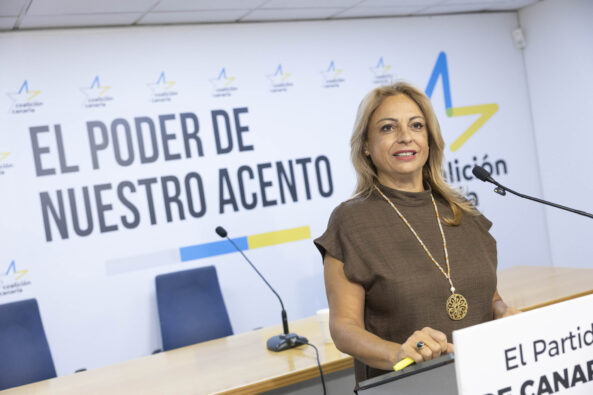
Employers‘ organisations and trade unions have made these observations following the meeting of the Advisory Council to assess the financial measures to be included in the final regional accounts for the current legislative term, «which are subject to the usual uncertainty, albeit to a greater extent», said the Regional Minister for Finance, Matilde Asián.
Manuel Navarro, general secretary of UGT Canarias, has hinted that they are not as «expansive» as his trade union organisation would like, but he has acknowledged that «things are as they are», with no national budget and a reduction in European funding, and that «it is difficult to cater for everything».
Canary Islands budget: Associations call for a thorough review of the figures
Otherwise, he has said it requires a more in-depth analysis of the accounts in order to make an assessment, as have his counterpart at CCOO Canarias, Vanesa Frahija, and the president of the Canary Islands Confederation of Employers, Pedro Ortega.
The president of CEOE Tenerife, Pedro Alfonso, has congratulated the Canary Islands Government on drawing up the fourth budget of the current legislative term, acknowledging that the employers‘ organisation had «serious doubts» as to whether it would be possible to push it through without MRR funds and without increasing the tax burden.
Alfonso has realised that, in the current climate, the promised across-the-board reduction in personal income tax, which the employers‘ organisation refuses to give up on, will not be possible, but he has asserted that, for the time being, it is time to «pull together».
Canary Islands Government approves budget with increased social spending
The President of the Canary Islands, Fernando Clavijo, has announced that the Governing Council will initially approve the budget at an extraordinary meeting this Thursday; he has thanked the employers‘ organisation for its «understanding» and the trade unions for their positive response to the promised strengthening of the ’social shield‘.
Specifically, the Department of Health will, for the first time, have 2,240 million euros at its disposal, and there will be 10 per cent increases in both social policy and education, with «a specific allocation» for public universities and a commitment to finalise the programme contract by the end of the year.
Clavijo has also pledged to put in place a mechanism for monitoring inflation and interest rates, as these are the two issues of greatest concern and could slow down the Canary Islands‘ economy.
13.6-billion budget boosts social services and housing
The Regional Minister for Finance, Matilde Asián, has explained that 80 per cent of the approximately 770 million euros by which the next budget will increase compared with the current one, bringing the total to 13,600 million, will go towards Health, Education, Social Welfare and Housing, with a «significant allocation» set aside for the Canary Islands Housing Institute (Icavi).
The remaining 20 per cent will be divided equally between allocations to island councils and town councils and the repayment of debt, on the one hand, and policies to boost economic activity, on the other, whilst identifying any ’non-essential‘ expenditure that can be cut.
The Vice-President and Regional Minister for the Economy, Manuel Domínguez, has highlighted one of the measures he believes will most benefit the Canary Islanders‘ household budgets: the deflation of the regional portion of personal income tax.





Comments (0)
No comments on this article yet.