

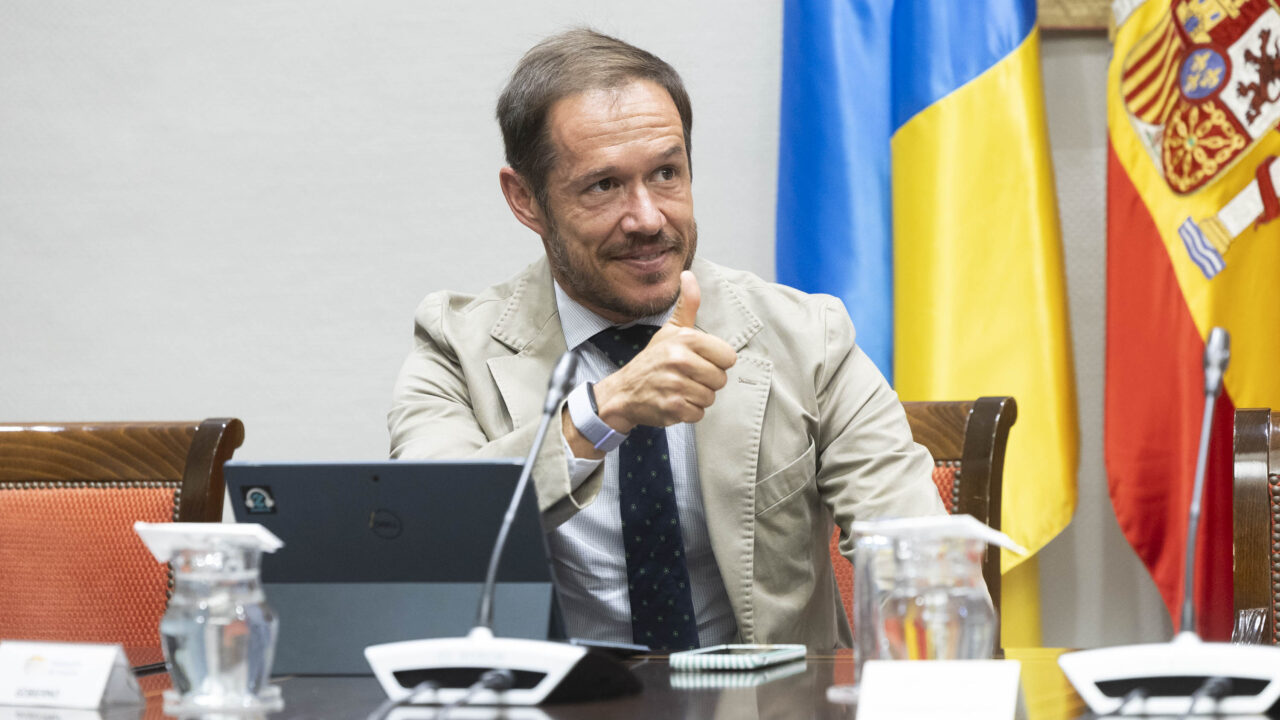
The Canary Islands Government’s Department for Ecological Transition and Energy will have a budget of 142.43 million euros in 2027, 68.6 per cent less than this year’s 453.64 million, as the extraordinary European funds from the Recovery and Resilience Facility (RRF) come to an end.
However, the regional minister responsible for the area, Mariano Hernández Zapata, has called on the Ministry of Finance to release the remaining 230 million euros for the Canary Islands from those unused funds, arguing that the milestones required for the energy grants have been met and that the money will be used to decarbonise the archipelago.
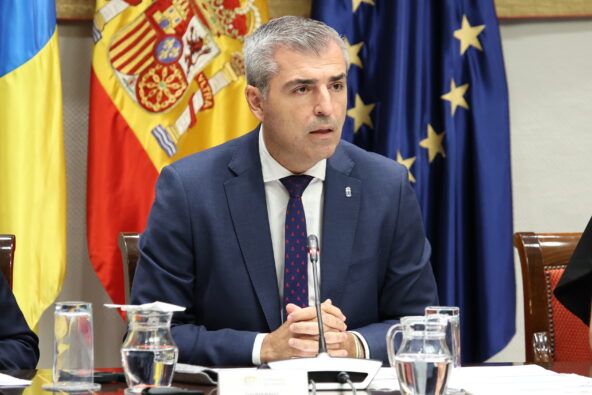
Hernández Zapata, who presented his accounts to the Canary Islands Parliament’s Budget Committee on Friday, emphasised that, had the Spanish Government released those funds, «this budget would be 230 million euros higher».
Canary Islands: Ministry prioritises energy, waste management and nature conservation
As for the budget’s objectives, he pointed out that they are to guarantee the security of the electricity supply across all the islands, to move towards an energy model with a greater share of renewables, and to reduce dependence on fossil fuels.
It also aims to improve waste management, make the most of resources and protect biodiversity, forests and natural areas.
The regional minister argued that, if the extraordinary European MRR funds are excluded, ordinary funding will increase by 0.36 per cent, rising from 141.92 million in 2026 to 142.43 million in 2027, a figure that could be increased if the 230 million is released.
The energy development programme will have a budget of 61.2 million euros, an increase of 5.4 per cent, of which 30.47 million euros relate to the centralised electricity bill managed by the regional ministry, whilst the energy-saving and renewable energy project accounts for almost 19 million euros and 2.47 million euros are earmarked for energy storage grants.
In the waste sector, he highlighted the 8.8 million allocated to the composting and sorting plants at the Zurita environmental complex in Fuerteventura, as part of a total investment of 17 million, as well as 2.5 million in ERDF funds for the circular economy, which will be transferred to the island councils.
Biodiversity will receive 11.68 million, an increase of 16.58 per cent, whilst fire prevention and fire-fighting will receive 10.3 million for projects on La Gomera, El Hierro and La Palma, and the national parks will be allocated 13.17 million.
Funding for measures to mitigate and combat climate change will rise from 762,000 euros to 1.89 million, whilst green infrastructure will receive 1.15 million and the climate shelter scheme will be allocated 137,500 euros.
The PSOE and Nueva Canarias criticise dependence on EU funding
PSOE MP Alicia Vanoostende has pointed out that the regional ministry’s budget is set to rise from 140 million in 2023 to 143 million in 2027, a mere three million more, compared with the 3,200 million increase in the regional budget over that period, which, in her view, demonstrates its lack of influence within the Government.
She stated that this department is the one showing the least growth during this parliamentary term, with the only increase being in the energy sector, at the expense of the environment, the fight against climate change, sustainability and nature reserves.
Vanoostende has argued that the budget has been maintained thanks to the MRR, whilst the Canary Islands Government has neither compensated for the withdrawal of these funds with its own resources nor put in place a policy to ensure the continuity of these initiatives.
She warned that European funds had an expiry date, but the climate emergency did not, and stated that the outstanding 230 million corresponded to funds that had not been accounted for in a timely and proper manner, amounting to 40 per cent of the total funds.
Yone Caraballo, a member of the Nueva Canarias party, has condemned a «cut of almost 70 per cent» and questioned why the energy transition policy is dependent on European funds, when the region’s isolation and distance from the mainland require a policy of its own.
He has urged the regional minister to press for an increase in funding, whilst acknowledging positive developments at electrical substations and in the interconnection between La Gomera and Tenerife.
Vox and CC call for a secure electricity supply
Vox MP Nicasio Galván has stated that the very least that can be expected of the regional government is to ensure that there are no power cuts and that blackouts do not recur, and he has questioned the commitment to wind and solar power, which he considers unreliable and unstable.
He has called for a mix of energy sources that moves away from «climate fanaticism», has acknowledged the merit of pressing ahead with tenders for new backup power stations, and has called for a study into the feasibility of small modular nuclear reactors.
CC MP José Javier Pérez Llamas has praised the investment and efforts made in energy development, whilst acknowledging that the lack of European funding is a major setback; he has also called for emergency measures in response to the power cuts on La Palma, which he has urged should not be treated as the norm.
He has also called for the modernisation of waste management facilities, which he considers obsolete, and has stated that only 15 per cent of waste is recovered, compared with the 60 per cent required, he said, by the European Union.
PP calls for the release of the outstanding 230 million euros
PP MP Raquel Díaz has argued that the regional ministry is rigorously planning for the Canary Islands‘ climate and energy future and has called for the MRR funds to be utilised, given that their expiry date was known.
Díaz highlighted that core funding is increasing by 0.36 per cent and, whilst admitting that she would have liked to see a larger increase, she denied that there had been any backtracking on energy and climate policies, and called on the central government to release the 230 million for the Canary Islands.


Comments (0)
No comments on this article yet.