

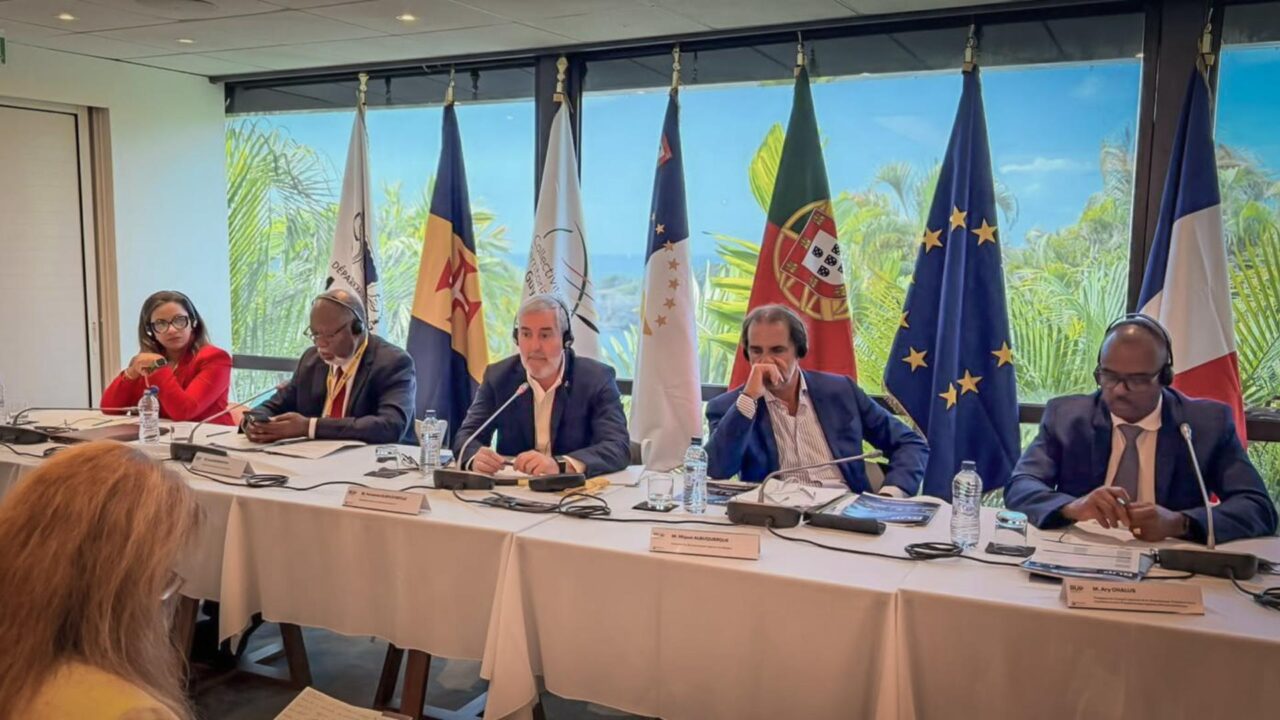
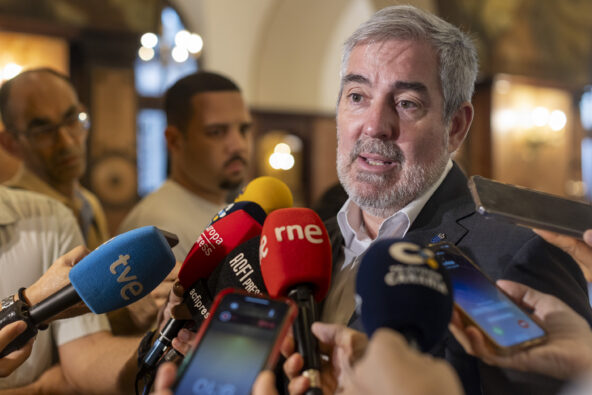
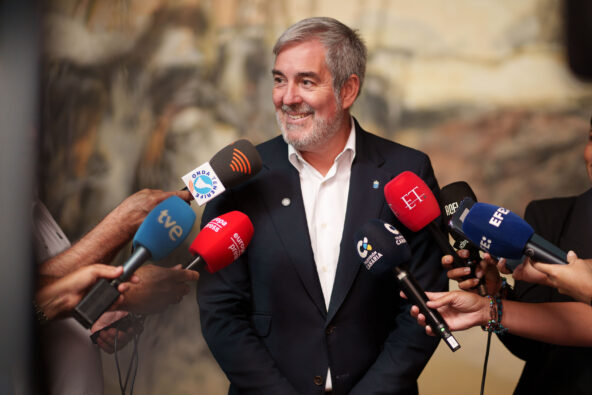
The President of the Canary Islands, Fernando Clavijo, spoke out on Thursday in favour of the nine outermost regions (ORs) of the European Union maintaining a common position and strengthening their negotiating power in the run-up to the reform of the EU budget for 2028-2034.
During the Conference of Presidents of the Outermost Regions, held in Guadeloupe, one of France’s territories in the Caribbean, the President of the Canary Islands emphasised the importance of safeguarding the specific funds and programmes that Brussels allocates to these regions, as well as the need for the new European Strategy for these regions to include concrete financial and legislative commitments.
According to the Canary Islands Government, Clavijo has warned of the need for the three Member States to which these territories belong (France, Portugal and Spain) to «get genuinely involved» in defending the interests of the outermost regions, «something which, in his view, has not happened so far».
EU budget: Three countries to jointly defend peripheral regions
«We will only be able to change the direction of the European budget through the European Council, and to do that we need the involvement of the heads of state and presidents of our three states,» he argued.
The Canary Islands Government points out that this conference of the outermost regions is taking place at a crucial juncture for the future of cohesion policy and the European instruments designed to offset the difficulties arising from remoteness, insularity and territorial fragmentation.
EU financial framework threatens earmarked funding for peripheral regions
The proposal for the new Multiannual Financial Framework transforms the EU funding system by integrating a large proportion of the current cohesion, agriculture and fisheries programmes into broader national and regional plans.
This new model has raised concerns amongst the outermost regions due to the risk that resources which are currently earmarked for specific purposes may be diluted within general instruments and subject to allocation decisions taken by the Member States.
Against this backdrop, Clavijo has highlighted the need to preserve the body of measures and provisions that make up the so-called ‚RUP acquis‘, as enshrined in Article 349 of the Treaty on the Functioning of the European Union, and to ensure that the new budget recognises the enduring characteristics of these territories.
«These are decisions that will shape the future of the Canary Islands and the other outermost regions for many years to come. That is why it is so important that we are able to uphold a common position, because Europe cannot acknowledge that we face different structural challenges whilst, at the same time, jeopardising the instruments that enable us to tackle them. We are not demanding any privileges; rather, we are calling for respect for a right that is enshrined in the European treaties and which has been fundamental to our development», he said.
At the same time, he has warned that, if the new budget does not address the demands of the outermost regions, these regions face «a very bleak future».
Clavijo has therefore emphasised that the next budget must guarantee «sufficient, differentiated and protected funding for all outermost regions, with specific and mandatory budget headings for each region in future national and regional plans, ensuring that the allocations for these territories do not depend exclusively on other budgetary priorities».
POSEI is to remain in place as an independent agricultural fund
The Canary Islands‘ main demand is that the POSEI (a European fund for the primary sector that compensates for remoteness and insularity) be maintained as an autonomous instrument, with its own regulations and sufficient funding.
The Canary Islands Government points out that the POSEI «is one of the main instruments for supporting agricultural production in the archipelago, as it helps to offset the additional costs borne by the primary sector and promotes the continuation of agricultural and livestock farming».
Regional government calls for further EU funding and a say in decision-making
The Clavijo administration also considers it «essential» to preserve the additional cohesion funding provided through the European Regional Development Fund (ERDF) and the European Social Fund Plus (ESF+), as well as the specific compensation for fisheries and aquaculture, which is currently included in the FEMPA.
In addition to these demands, there is a need to ensure that regional authorities continue to play an effective role in the design, management and monitoring of European investments.
For the President of the Canary Islands, the administrative and financial simplification proposed by the Commission «must not lead to a centralisation of decision-making or to a loss of the territories‘ ability to determine the investments they require».

Comments (0)
No comments on this article yet.