

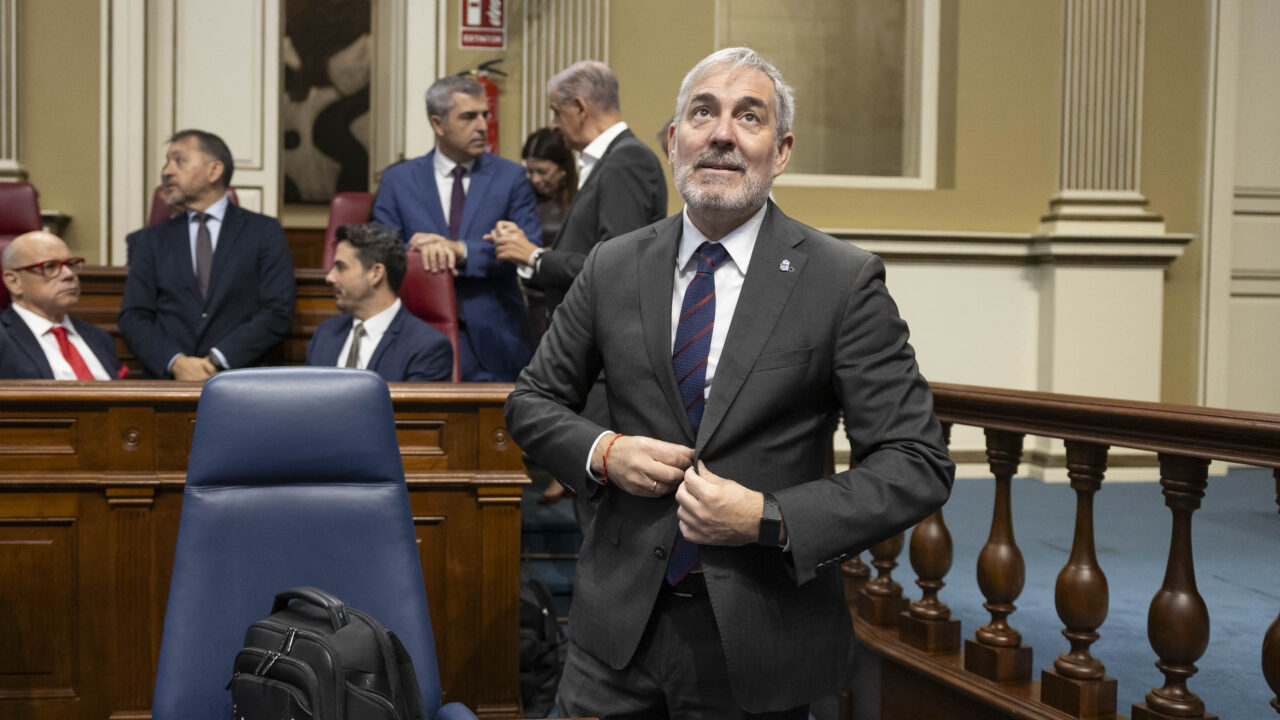
The draft regional budget bill for 2027, the last of this parliamentary term, is moving towards approval after the groups supporting the Government rejected, in a plenary session of the Parliament, the three amendments seeking to overturn the entire bill tabled by the PSOE, Nueva Canarias and Vox.
Following a debate lasting three hours and fifteen minutes, the amendment tabled by Vox was supported by its three MPs and rejected by the other 67, whilst those tabled by the PSOE and NC were supported by the 28 representatives of those groups and rejected by the remaining 42 MPs.
Parliamentary groups may table partial amendments until 4 December; these will be debated in the drafting committee and in committee prior to the debate and final approval of the accounts at the plenary session on 21 December.
Canary Islands: 2027 budget rises to 13.209 billion euros
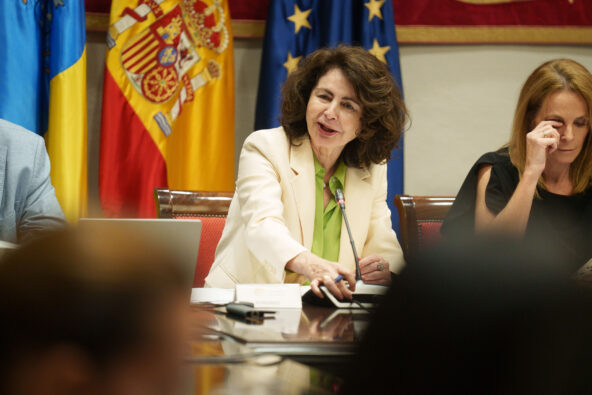
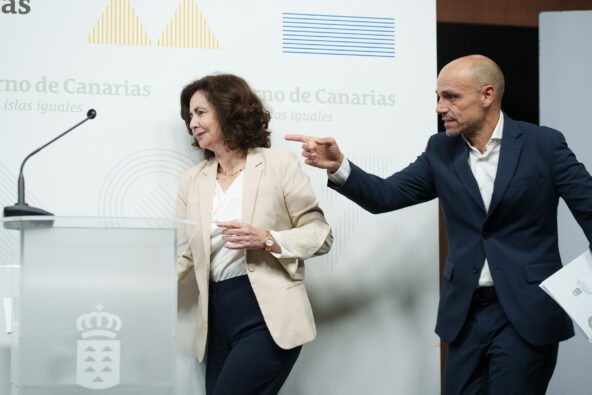
The Regional Minister for Finance, Matilde Asián (PP), has presented the draft bill to the plenary session; it provides for non-financial expenditure of 13,209 million euros, 5.7 per cent more than in 2026.
The Canary Islands Government forecasts that the islands‘ economy will grow by 1.1 per cent in 2027.
Asián has highlighted three key features of these accounts: the strengthening of social initiatives, the increase in pay for staff working for the autonomous community, and the end of European funding from the Recovery and Resilience Facility (RRF).
If those funds are excluded from the comparison, expenditure rises by 9.7 per cent compared with 2026, she pointed out.
The minister argued that the Government had applied the «principle of prudence» when drawing up the accounts, given the uncertainty she attributes to the lack of a new national budget and of stability and debt targets for the autonomous communities.
With regard to revenue, Asián has pointed out that non-financial revenue not earmarked for specific purposes will grow by 8.5 per cent, whilst the spending rule limits the increase in eligible expenditure to 4 per cent.
The project also provides for the regional personal income tax rate to be deflated in order to adjust the tax brackets in line with price trends, the regional minister said, whilst ruling out any tax increases.
The PSOE sees this as a missed «historic opportunity»
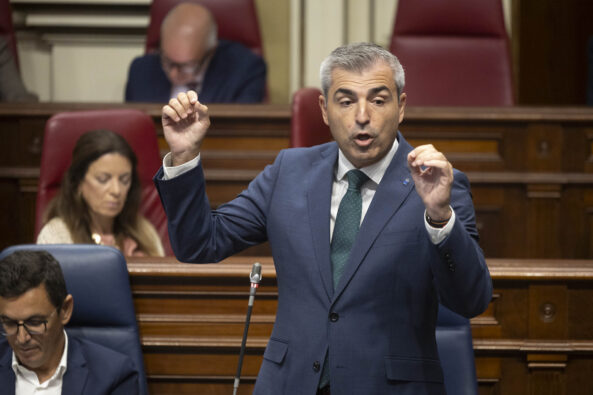
Socialist MP Sebastián Franquis has argued that the Government has missed a «historic opportunity» to improve public services and reduce inequality.
He has criticised the fact that 3.4 billion euros have remained unspent during this parliamentary term and has pointed out that, despite the increase in healthcare spending, almost 14,000 more people than in June 2023 are waiting to see a specialist.
Franquis has questioned why, in light of the economic slowdown forecast by the Government itself, the 2027 budget reduces capital expenditure by 452 million euros, a fall of 21 per cent.
He has called for a return to the agreements proposed by the PSOE to improve productivity and tackle poverty, and has criticised the Government for the fact that the budget for research, development and innovation has fallen from 120 million in 2023 to the 89 million planned for 2027.
Franquis has described housing as «this Government’s biggest political failure» and has called for more of its own funds to be allocated to the construction of social housing.
Furthermore, he has blamed the government’s refusal to declare a moratorium whilst the holiday accommodation bill was being debated for the fact that more than 34,000 properties have moved from the residential market to the tourist market, and has accused the government of acting as «a middleman for private interests».
The leader of Nueva Canarias, Luis Campos, has defended his group’s motion to reject the budget in its entirety, arguing that the 2027 budget is out of touch with the economic and social reality of the people and marks the «culmination of an utterly failed parliamentary term».
He has criticised the Government for the fact that the increase of more than 3,000 million euros in the budget over four years, together with record levels of tourist activity and corporate profits, have not led to a more equitable distribution of wealth on islands where more than 700,000 people are at risk of social exclusion.
Nueva Canarias criticises falling investment and tax policy
He has also pointed out that the investment planned for 2027 is down by 450 million euros and that, even if the European MRR funds are excluded from the comparison, it is down by eight million despite a 717 million increase in the budget.
On tax matters, he has criticised the extension of personal income tax deflation to all income brackets and has reproached the Government for deciding not to introduce a tourist tax that would have raised between 700 and 800 million euros over four years.
Vox MP Nicasio Galván has defended his party’s motion to reject the budget in its entirety, arguing that the budget maintains the priorities of previous financial years despite the fact that one in three people in the Canary Islands is at risk of poverty or social exclusion.
He has called for a zero-based budget that would require each item to be justified, and has questioned whether the Government has assessed who the more than 200 million euros, which, he pointed out, are earmarked for grants, are intended for.
Galván has described the adjustment of personal income tax rates for inflation as insufficient because, in his view, adjusting the tax brackets in line with inflation does not improve taxpayers‘ purchasing power.
Vox is calling for a reduction in the IGIC and the abolition of the AIEM
He has called on the Government to honour its commitment to reduce the IGIC and has proposed abolishing the property transfer tax on the purchase of a first home and the AIEM in order to make the shopping basket more affordable, as well as «democratising the REF» so that its benefits reach families, the self-employed and businesses.
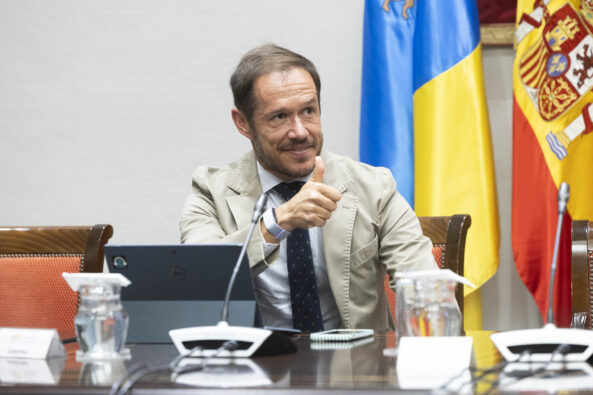
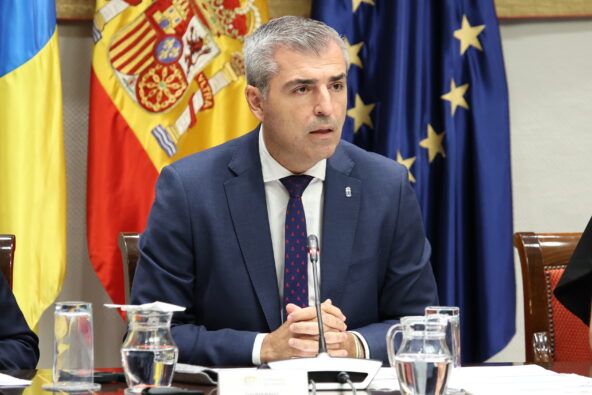
Speaking on behalf of the groups supporting the Government, José Miguel Barragán, of CC, argued that nine out of every ten euros of staff expenditure goes towards health and education, and admitted that the Government will not fulfil its promise to reduce the standard rate of IGIC.
«We promised to lower the standard rate, but we are not going to keep that promise. We cannot keep it. And I am saying this here, and we are saying it straight out, we are not hiding behind anything when we say it,» Barragán emphasised.
Luz Reverón, spokesperson for the PP, has stated that these budgets are «a perfect tool» for continuing to support families in the Canary Islands, for further strengthening public services and for supporting the productive sectors.
Melodie Mendoza, a Member of the Gomera Socialist Group (ASG), has highlighted the «strong social focus» of the budget, although her group will table amendments for La Gomera and the other islands.
Raúl Acosta, a member of the Agrupación Herreña Independiente (AHI) party, has backed the budget because, in his view, it strengthens essential public services and maintains the level of investment despite the end of European recovery funds.


Comments (0)
No comments on this article yet.