

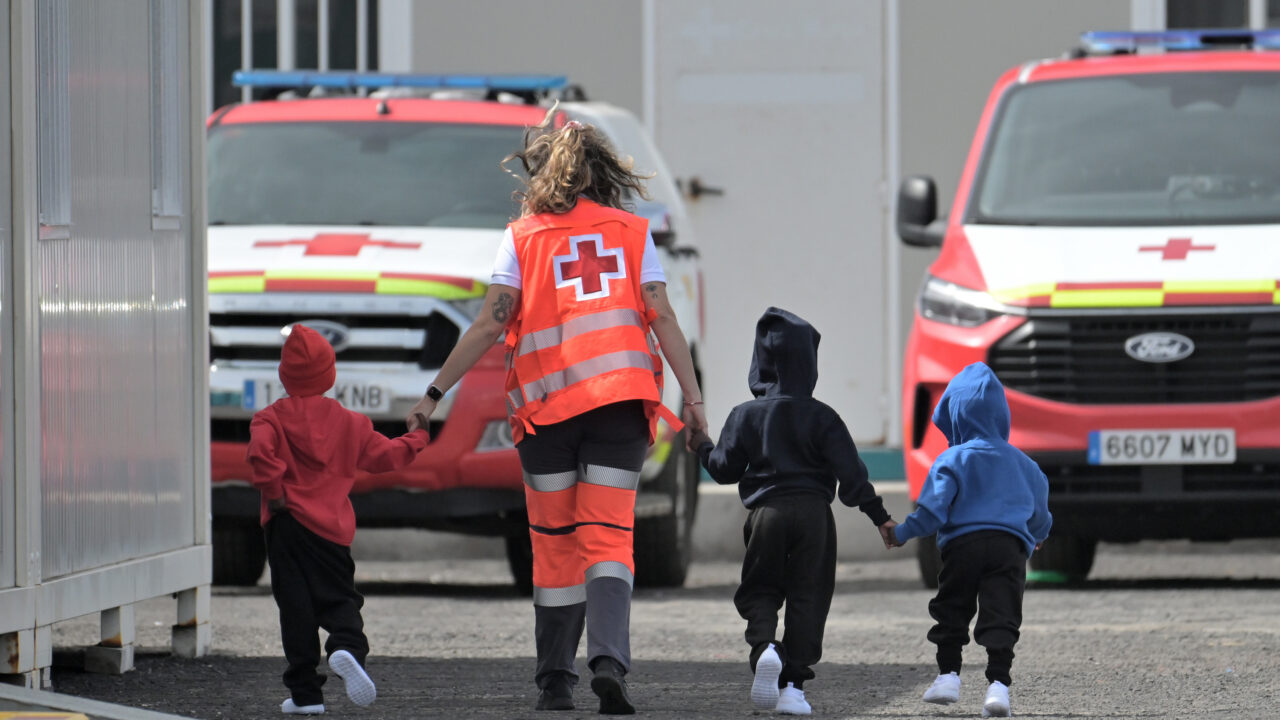
The Canary Islands are currently hosting 2,622 migrant children, more than triple their standard capacity of 782 places, whilst El Hierro is currently hosting between 120 and 140 children and teenagers, having previously accommodated nearly 300.
Sandra Rodríguez, Director-General for Child and Family Protection at the Government of the Canary Islands, presented these figures before opening ‚When the Signs Speak‘, a training day on the trafficking of children for sexual exploitation.
Rodríguez stated that the archipelago took in 92 minors who arrived in El Hierro last weekend, and that the occupants of four of the small boats in which they were travelling were transferred to Gran Canaria, where an emergency response operation had to be set up in the early hours of the morning to attend to them.
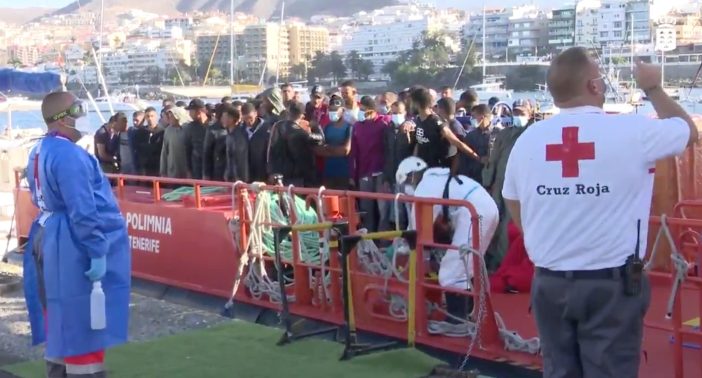
El Hierro: Migrant children are being transferred to other islands
The minors have already been rehoused in other facilities better suited to their needs, said the director-general, who attributed the transfer to a lack of resources on El Hierro on the part of the National Police’s Immigration Brigade to carry out the registrations, as well as to the increased requirements of the procedure established by the European Pact on Migration and Asylum.
As she explained in statements to the media, on Sunday the occupants of four of the boats that had arrived in El Hierro over the weekend had not yet been registered, so they were transferred to Gran Canaria to complete this procedure and undergo triage.
She explained that the children were received on the island during the night between Sunday and Monday.
On El Hierro, she said, the Canary Islands Government has sufficient accommodation to cater for new arrivals and endeavours to ensure that minors remain there during their first week, unless circumstances arise that warrant their immediate transfer.
They are then taken to Tenerife to continue the process of being referred to other autonomous communities.
Canary Islands Government calls for an emergency plan for migrant children
Sandra Rodríguez has called on the government to draw up an extraordinary contingency plan to address the situation and has argued that migrant children should receive specific treatment, distinct from that given to migrant flows as a whole.
She has also called on the European Union to step up its efforts in countries of origin to tackle the root causes of migration, citing as an example the ‚Tierra Firme‘ project, launched by the Government of the Canary Islands in countries such as Senegal and Mauritania.
Redistribution: Around ten migrant children are moved to a different region each week
The regional official also pointed out that the transfer of minors to other autonomous communities is continuing, with an average of around ten transfers per week from the Canary Islands.
Once the final transfer decision has been received, the regional government coordinates the procedure with the destination regions. If a place is not allocated, it refers the matter to the Public Prosecutor’s Office, a mechanism which, according to Rodríguez, enables the transfers to go ahead.
However, she pointed out that the process is not completed within the 15 days initially envisaged, but usually takes around one month or one and a half months from the child’s arrival in the Canary Islands, due to the various administrative procedures and the appeals and objections lodged by the autonomous communities of destination.
During the proceedings, the children are given the opportunity to be heard and are informed of the details of their case.
They are also interviewed to find out whether they have relatives in other autonomous communities or in other European countries, a circumstance which may lead to changes in their intended destination in order to safeguard their best interests.
Rodríguez has emphasised the need to anticipate trends in arrivals and to provide sufficient resources to the services involved in caring for and identifying minors.






Comments (0)
No comments on this article yet.