

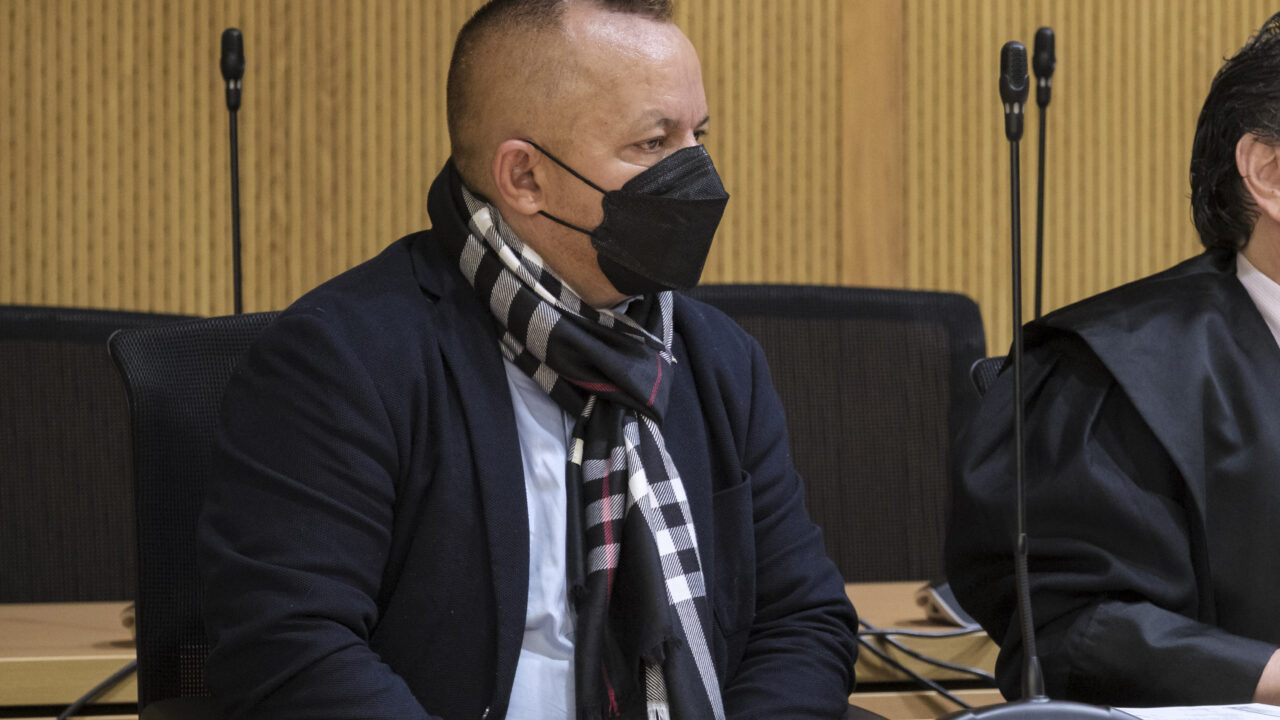
The main defendant in the ‚Catastro case‘, the alleged fraud scheme involving the forgery of documents to misappropriate 141 rural properties in Gran Canaria, Fuerteventura and Lanzarote, admitted the facts of the case, which took place between 2011 and 2016, before the Las Palmas Provincial Court on Tuesday.
At the first hearing of the trial, the defendant, Santiago Ramón M.M., who was initially facing 17 years‘ imprisonment for the continuing offence of forging public documents, fraud, money laundering and membership of a criminal organisation, has pleaded guilty to all the charges brought by the prosecution and has admitted that he was part of a scheme that transferred the ownership of dozens of plots of land and properties without the owners‘ knowledge in order to make a profit.
Furthermore, during his questioning before the court, he admitted that, to this end, he had altered documents relating to sale and purchase agreements in order to submit them to the regional office of the Land Registry in Las Palmas.
Land Registry case: Co-defendants apply to the court for acquittal
Four other defendants were initially named in this case: two of them have since died, and the other two are José O.M. and José María C.F., for whom sentences of 13 and nine years‘ imprisonment, respectively, are being sought for the same offences as Santiago Ramón M.M., with the exception of fraud.
Their defence lawyers are seeking an acquittal for them, and both will give evidence at the end of the trial.
Sources close to the defence team representing the main defendant have stated that their client has admitted the facts after reaching an agreement with the Public Prosecutor’s Office to ensure that the sentences sought for each of the offences with which he is charged are less than two years‘ imprisonment.
According to the prosecution’s indictment, 47 high-end vehicles, luxury watches and jewellery were seized from the defendants, in addition to the estates and other immovable property.
During this hearing, a Guardia Civil officer from the Heritage Unit who had been involved in the investigation from the outset gave evidence and explained to the court that the trigger was a victim from Fuerteventura.
According to his testimony, the person acting on behalf of the Land Registry was the defendant and civil servant Jesús O.M., whilst the person who stood to benefit from that initial transaction was the now-deceased defendant Roque M.M., who was part of the scheme in Fuerteventura.
He noted that all the cases in which the defendants were involved shared a common feature: the absence of a hearing; that some were completed in a single day, when they usually take quite some time; and that they lacked an acknowledgement of receipt from the person concerned, meaning that they were not served.
According to this witness, the defendants Santiago Ramos M.M. and Roque M.M. carried out a great deal of administrative work at José María C.F.’s agency.
Santiago Ramos M.M.’s role was also to recruit people so that private contracts could be drawn up and formalised in a public deed before a notary; he was the «recruiter of straw men and women», always employing the same people, who, in turn, subsequently sold the properties allocated to them to the commercial companies owned by the defendants, he explained.
These were properties that were listed as ‚under investigation‘ in the Land Registry, and the sale contracts were forged and backdated, particularly in the 1980s and 1990s; the legitimate owner was usually deceased, this witness also pointed out, adding that the majority were rural properties.
Furthermore, he stated that as many as 158 files were tampered with due to the privileged information they obtained from the Land Registry via the civil servant Jesús O.M., as he had access to the database.
The witness stated that in emails from Jesús O.M. to José María C.F., which were intercepted, the phrase ‚This is the future, I’ve got three more‘ appeared on several occasions.
This witness has placed the defendant, José María C.F., at the middle level of the scheme, as he was the person to whom those under investigation at the time turned to carry out their ‚legal manoeuvres‘ with the technical support of the civil servant Jesús O.M.
Both this witness and two other Civil Guards who have given evidence today have stated that they took part in the raids and searches of the defendants‘ offices and homes, as well as at the Primero de Mayo Land Registry offices, and that all of these operations were carried out without incident.
Lawyer challenges searches at the Land Registry
However, Jesús O.M.’s solicitor has requested that the search carried out at the Land Registry and at José María C.F.’s administrative agency, which also housed a solicitor’s office, be declared null and void, on the grounds that the Guardia Civil officers exceeded the terms of the court order and seized computer equipment without authorisation and in the absence of a notary public; this is a matter which the court will rule on in its judgement.
«The Guardia Civil seized whatever they wanted,» according to lawyer Sergio Armario, who also pointed out that the search of the lawyer’s office was not mentioned in the court order.
Furthermore, he has rejected the search report on the grounds that it was drawn up ‚in a slapdash manner‘ and has requested that all the material seized in paper and digital form, as well as the items seized from the lawyer’s office, be removed from the case file.
He has also maintained on behalf of his client that there is no evidence that he has committed any offence, given that he has held the post of Plant Health Inspector at the Las Palmas port offices since 2012 and has no connection whatsoever with the Land Registry office.



«Canary Islands: Defendant admits to fraud involving 141 plots of land»
No comments on this article yet.