

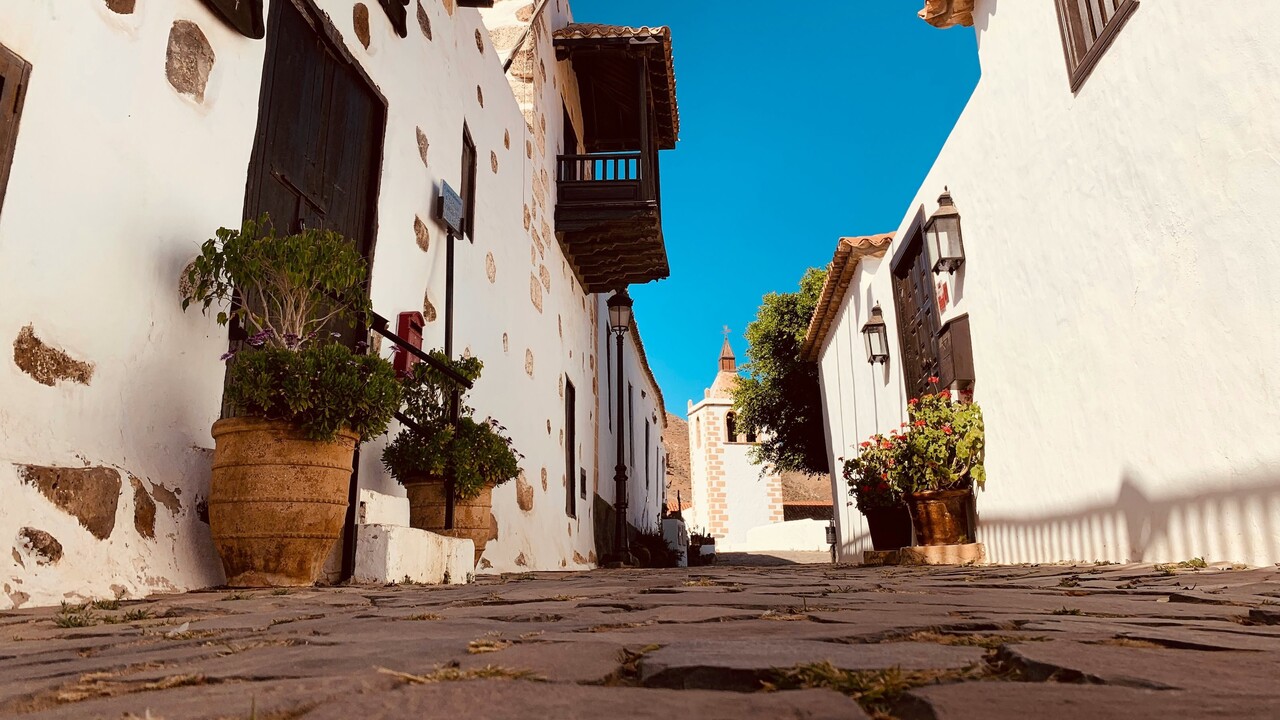
Strictly speaking, Betancuria is known as the oldest town in the Canary Islands. The town was founded in 1404, and even back then it played a major role in shaping the development of the Canary Islands. And there is something else that can be traced back to this town: the fact that the name Béthencourt is so commonly encountered on the islands today.
The impetus came from the Norman conqueror Jean de Béthencourt, whose founding of the town saw it take on a central role in the history of the archipelago. Situated in the heart of Fuerteventura, the second-largest of the Canary Islands, this historic gem attracts thousands of visitors today with its unique architecture and rich history.
There was a very practical reason for deliberately situating the town in the island’s interior: protection from pirate attacks. Béthencourt cemented his claim to power here, and this was reflected in the town’s name. Thanks to the fertile surroundings and its strategic location, Betancuria became the first capital of Fuerteventura and a political centre of the Canary Islands. However, there is some debate regarding its title:
Betancuria and its role in the history of the Canary Islands
Visitors to Betancuria today will find well-preserved historic architecture. The old town has been a listed conservation area since 1979. Among its notable buildings is the impressive Iglesia de Santa María, which was built in 1410. Following a severe pirate attack in the 16th century, the church was rebuilt, and to this day it offers a glimpse into the rich history of this special place.
Although Puerto del Rosario was designated the capital in the 19th century, Betancuria remained an extremely significant historical landmark in the Canary Islands. Visitors can learn more about the town’s history and that of the indigenous Canarian people at the town’s Archaeological Museum.
All the historical events are documented and explained there, covering both the Guanches and the beginnings of European settlement following the arrival of the first conquerors. This is not done entirely without self-interest, as the museum highlights the central role that Betancuria has played in the historical development of the Canary Islands.
Is Betancuria really the oldest town in the Canary Islands?
The town certainly offers a fascinating insight into the origins of the Canary Islands. The picturesque old town, surrounded on all sides by volcanic landscapes, leaves a lasting impression on visitors. You can explore its centuries-old history in various ways, whether by strolling through the charming alleyways or by visiting the historic sights.
Whether Betancuria is in fact the oldest town in the Canary Islands is a subject of ongoing debate. The discussions resurface regularly because other towns also wish to claim this title. The name San Sebastián de La Gomera often comes up in this context; in the late 15th century, it was an important port for seafarers and served, amongst others, as a port of call for Christopher Columbus.
Teguise on Lanzarote also lays claim to the title of the oldest town in the Canary Islands. Founded in 1418, the town was once the political centre of the Canary Islands. The fact that there is so much confusion surrounding the title is often due to the fact that various towns emerged from existing settlements or gained importance for historical reasons.
Myths and facts about Betancuria
Betancuria certainly has its place in the history of the Canary Islands, and anyone wishing to understand the history of the islands should definitely visit the town. The impressive buildings and beautiful landscape ensure that this place is, and remains, a popular destination for tourists. Many travellers appreciate the opportunity to learn more about the Canary Islands‘ past whilst in the town.
There is no shortage of cultural experiences and insights into Canarian history in Betancuria, and it is precisely this history that has laid the foundations for the Canary Islands‘ present-day identity. With every visit, new perspectives open up on the formation of the archipelago as it is today. Despite all the developments, this distinctive character has been very well preserved.







No comments on this article yet.