

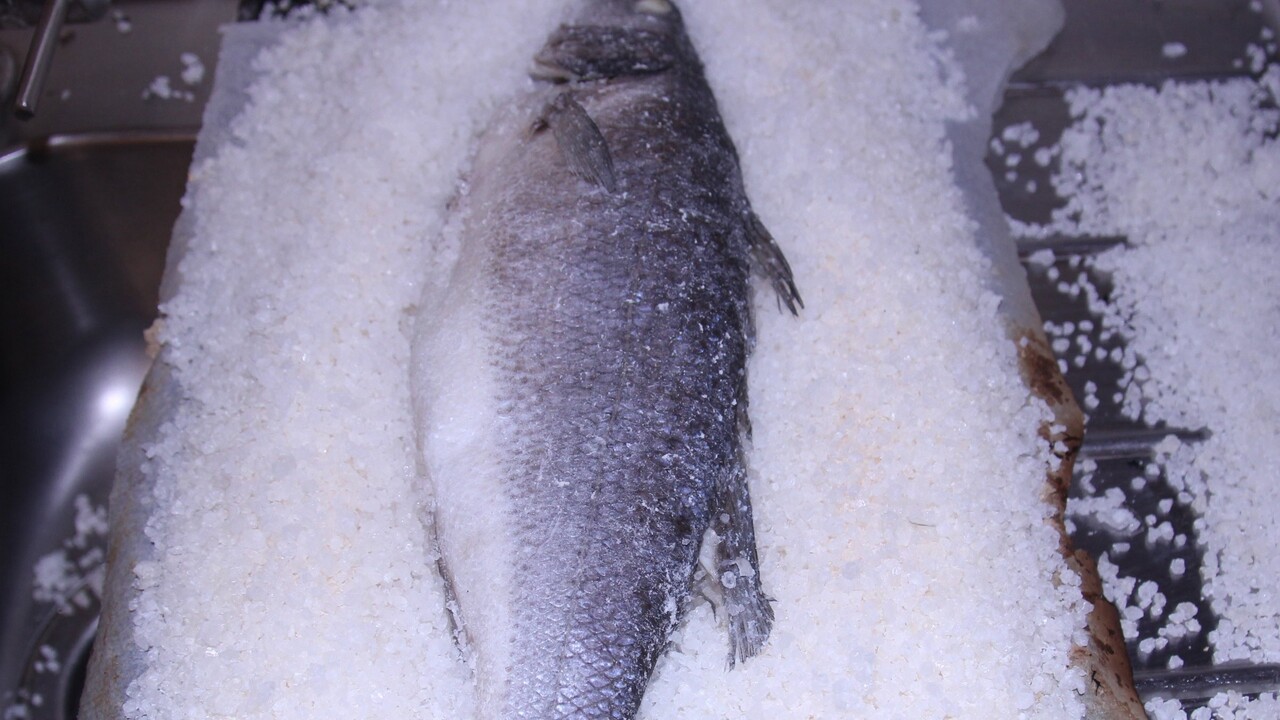
Once you’ve cooked fish in a salt crust, you’ll find it hard to prepare it any other way. The fish braises in its own juices, leaving it wonderfully tender and succulent. Fish lovers appreciate the flavour that’s so beautifully preserved this way.
Recipe for fish baked in a salt crust
First of all, you need a good fishmonger who knows their trade. Fish intended for preparation in a salt crust require special preparation. They are not scaled. The fins are left on. The gills and innards are removed with as small a cut as possible. Therefore, when ordering, be sure to specify that you wish to prepare ‚Pescado a la Sal‘.

Preparing fish in a salt crust
Any fish with firm flesh, such as lubina (sea bass), dorade or cherne (wreckfish), is suitable. Rinse the fish again in your kitchen at home and pat it dry. Fill the fish’s belly with herbs to taste and a little butter or olive oil. Garlic significantly impairs the delicate flavour of the fish, so it is recommended that you leave it out.
Making the salt crust
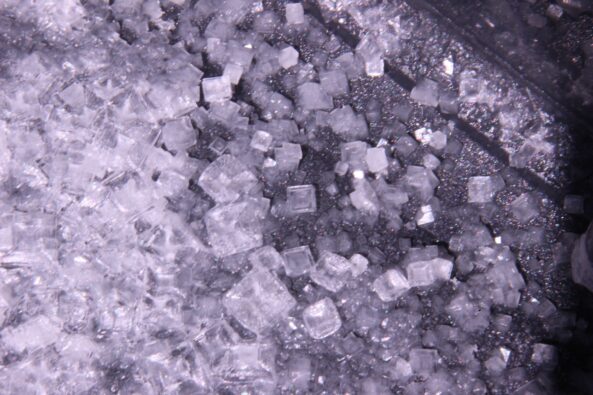
The salt crust is prepared as follows: for every kilo of coarse sea salt, add one to two egg whites, depending on the size of the eggs. It’s easy to misjudge the quantities: for a sea bass 40 centimetres long, you’ll need two kilos of salt.

Mix the egg white thoroughly with the salt. The consistency should resemble dry snow, just enough to form a snowball. If the salt mixture is still too firm, water can be added. This should be done with care. The more water the mixture contains, the harder the salt crust will be later on.
Cooking fish in a salt crust correctly
First, line a baking tray or plancha with baking paper. This will save you cleaning up later. Cover the base with a layer of salt about one centimetre deep, depending on the size of the fish. Place the fish on top and then cover it thoroughly with salt on all sides. It is important to be thorough. The egg white sets quite quickly and there must be no gaps left for the steam to escape.
The cooking time in a preheated oven or under the grill is around 25 minutes at 200 degrees. However, even if the fish were to cook in its salt crust for ten minutes longer, this would not be a problem. As it cooks in its own steam, it remains juicy.
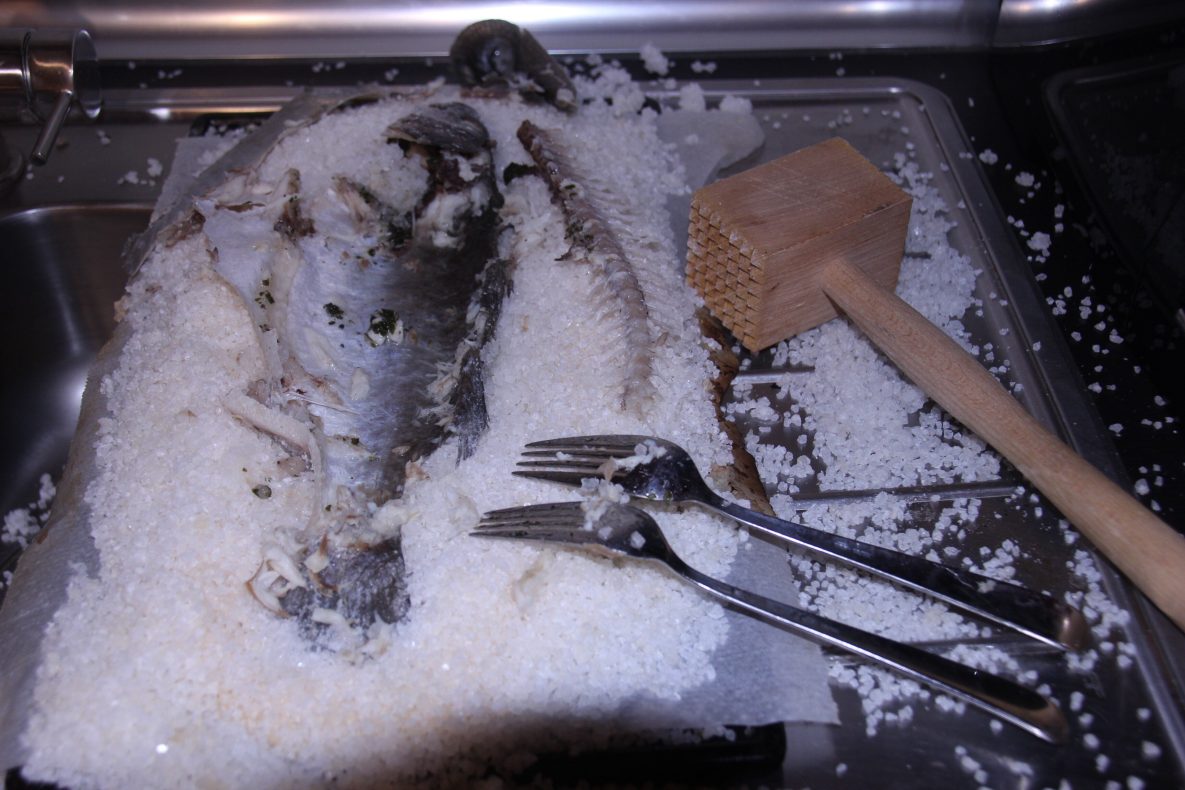
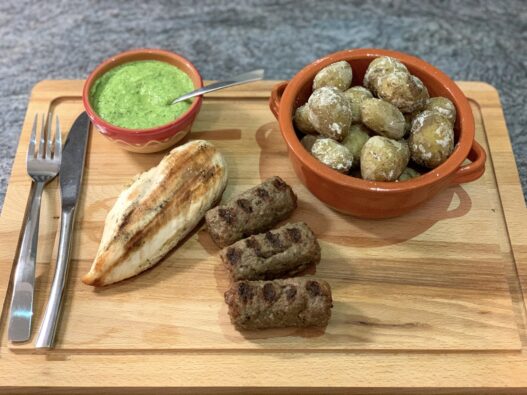
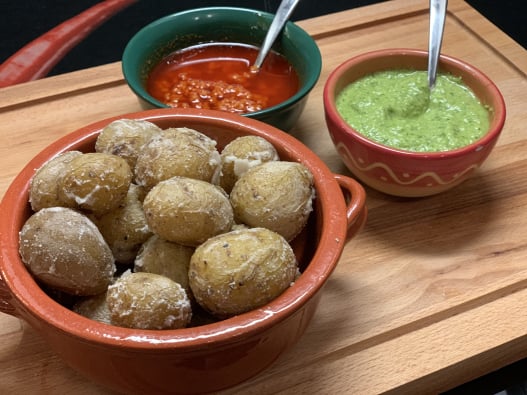
Filleting after removing the salt crust is very easy. The skin comes away on its own and all you need to do is carefully lift off the fillets. Naturally, Papas Arrugadas served with Mojo verde or Mojo rojo, as well as boiled potatoes with melted butter, make the perfect accompaniment. We hope you enjoy your meal!

«Canary Islands cuisine: Recipe for fresh fish baked in a salt crust»
No comments on this article yet.