

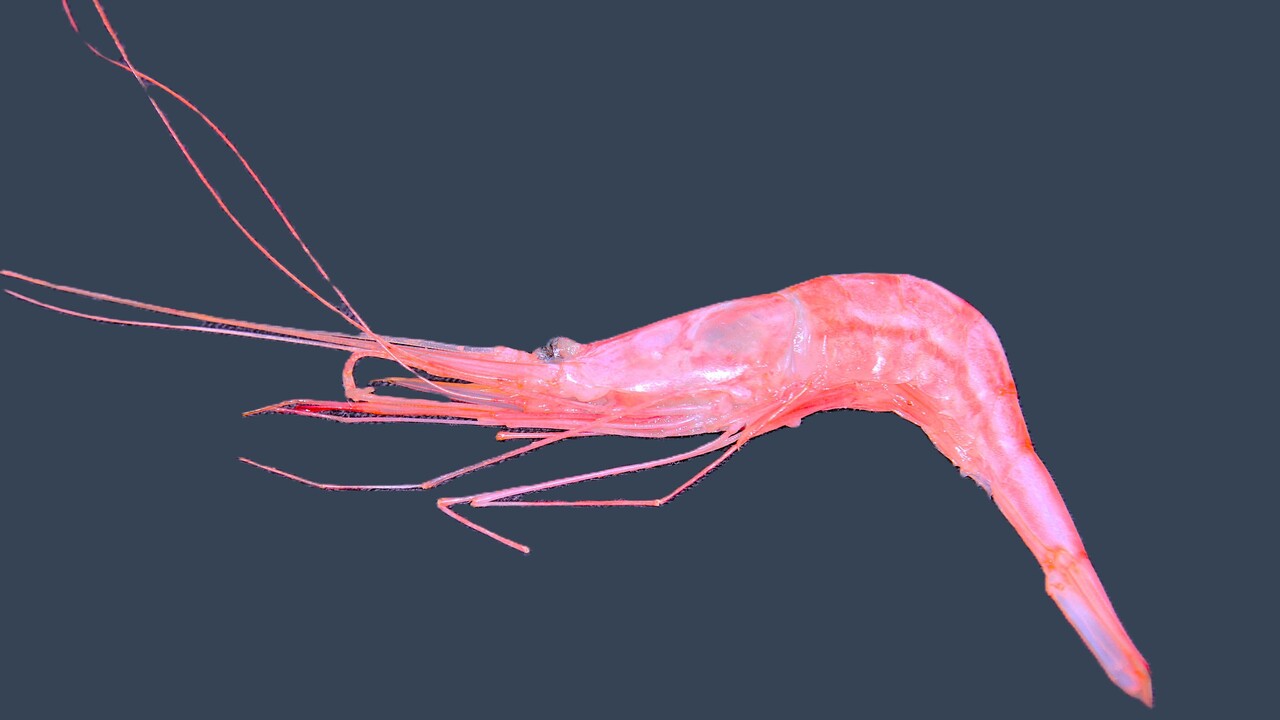
Shrimps usually live around the Canary Islands in the colder, deeper parts of the Atlantic. In summer, they migrate to shallower, warmer waters to breed. For the Canarians, this is an unmistakable sign: summer is here!
Camarones are a species of prawn that make a big fuss about very little. This is because they are only between one and four centimetres long. Their antennae can easily be two to three times as long as their bodies. They are also known as ‚unicorns‘, as they have a rather long and very pointed spine between their eyes.
Prawns are usually caught using trawl nets – but not in the Canary Islands. To protect the seabed, this fishing method is not permitted. Instead, fine-mesh traps are used. Interestingly, the bait in the traps influences the flavour of the camarones: if chicken is used, they taste rather neutral; if fish is used, they take on a correspondingly stronger fishy flavour.
Canary Islands tapas: How do you eat camarones?
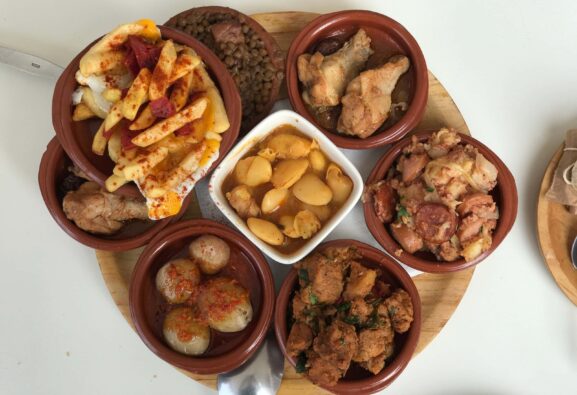
Canary Islands camarones aren’t a proper meal – they’re more like munching on sunflower seeds. They won’t fill you up, but they’re simply delicious. Camarones are perfect as tapas or as a snack to nibble on whilst socialising.
A tried-and-tested technique is to first remove the legs, then squeeze the head slightly and pull it off as straight as possible. Next, peel off the three chitinous plates of the back shell and then carefully pull off the tail. With a bit of luck and practice, you’ll end up with an intact piece of prawn fillet.
Preparation and variations
When in season, Canary Islands camarones are available in many restaurants. However, they are also easy to prepare yourself – much like with mojo, almost every Spanish household has its own recipe.
There are three basic options for the cooking water:
- Water only
- Water with salt
- Water with a pinch of sugar. This gives the prawns a slightly redder colour after cooking.
Canary Islands prawns: what’s the best way to cook them?
Some cooks add a bay leaf to the cooking water. Cooking time also varies: generally, the prawns are plunged into vigorously bubbling, boiling water. Depending on the cook’s approach, the cooking time ranges from one to three minutes. The prawns are then rinsed under cold water and served.
That’s very subjective. Our writer is a fisherman and a keen cook. He has tried out several different cooking methods and prefers the combination of lightly salted water with a bay leaf. Cooking them for three minutes makes the prawn meat slightly firmer, which makes them easier to peel.

«This is how Camarones herald the start of the summer in the Canary Islands (with a recipe!)»
No comments on this article yet.