

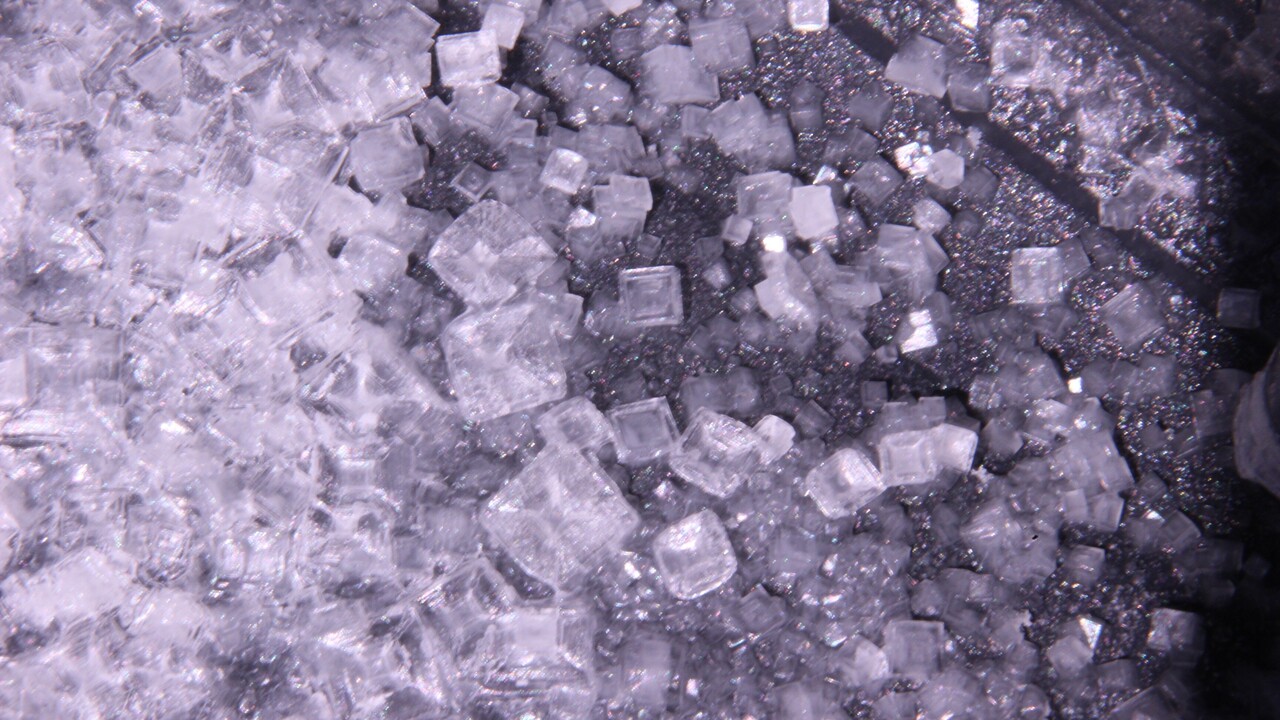
Fleur de Sel is regarded as a gourmet salt. This salt, known in Spain as Fleur de Sal, is produced by the evaporation of seawater. This process creates very special salt crystals. Some sea salts are mislabelled, and so even coarse sea salt is sold as Fleur de Sel.
The sea salt settles at the bottom and can be harvested once all the water has evaporated. This produces large, cube-shaped salt crystals which can be used for cooking.
The coarse salt crystals add an interesting ‚crunch‘ to a salad or steak. This gives the salt an extra culinary appeal. Our author has found a way to make Fleur de Sel himself in the Canary Islands:
Using genuine water from the Canary Islands: making your own Fleur de Sel
The salt harvested from salt pans on the Canary Islands is particularly rich in minerals and mild in flavour. Viewed objectively, one might argue that the Atlantic Ocean should have a uniform salinity throughout, simply due to the Gulf Stream. However, the crystal structure gives this salt – obtained through slow evaporation – its own distinctive character.
Although genuine Fleur de Sel is simply ordinary table salt (NaCl), it has different properties. The salt forms at the interface between the water’s surface and the air. It looks as though snowflakes are floating on the water.
The crystals are tiny and rather needle-like. This salt is too good to be used for everyday cooking. Instead, it is ideal for adding a hint of saltiness to a dish – for example, when making caramel.
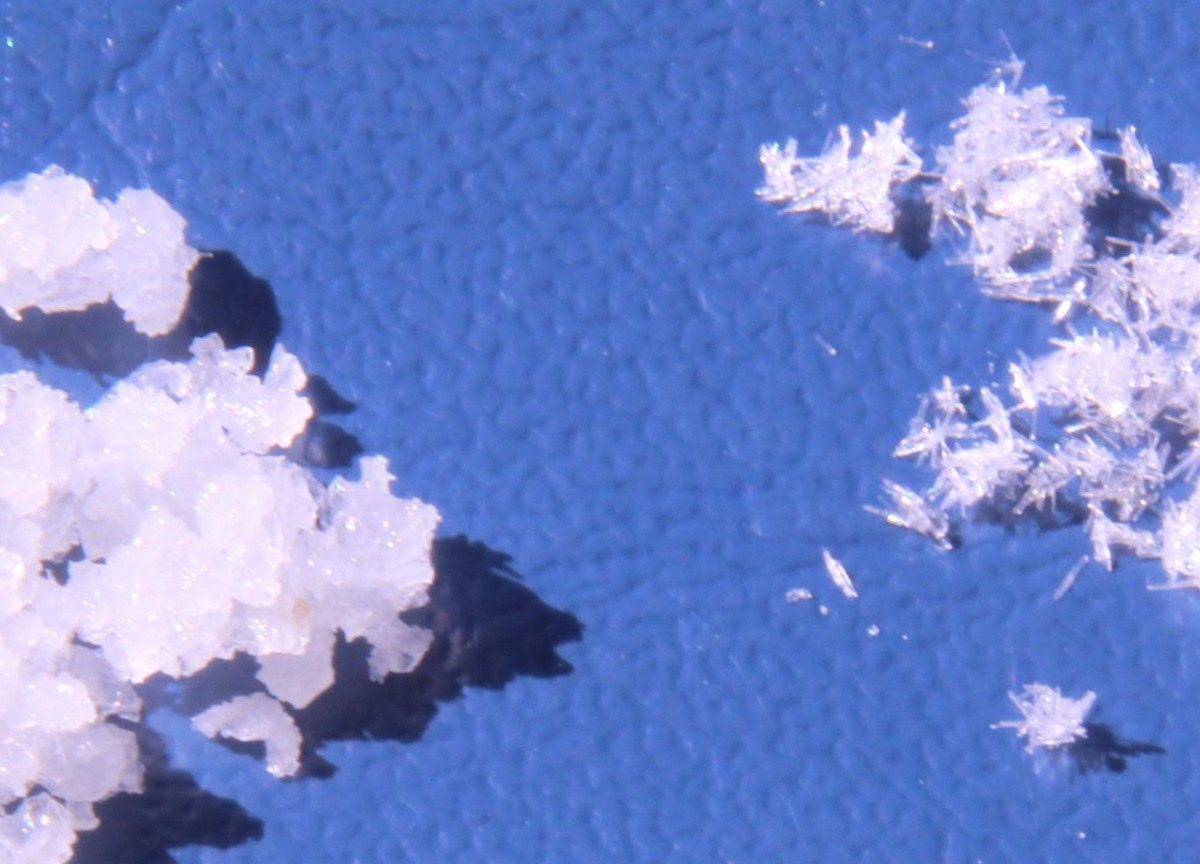
Coarse sea salt on the left, Fleur de Sel on the right. Photos: Thomas Koch
How is Fleur de Sel produced?
The simplest and most boring method is to buy the salt. The price per kilo can sometimes be more than 100 euros. Coarse sea salt from salt pans costs only about a quarter of that.
Alternatively, you can collect the salt yourself. All along the coasts of the Canary Islands there are small pools of seawater where, in summer when the sea is calmer, the water evaporates. However, the salt harvested will usually be coarse sea salt.
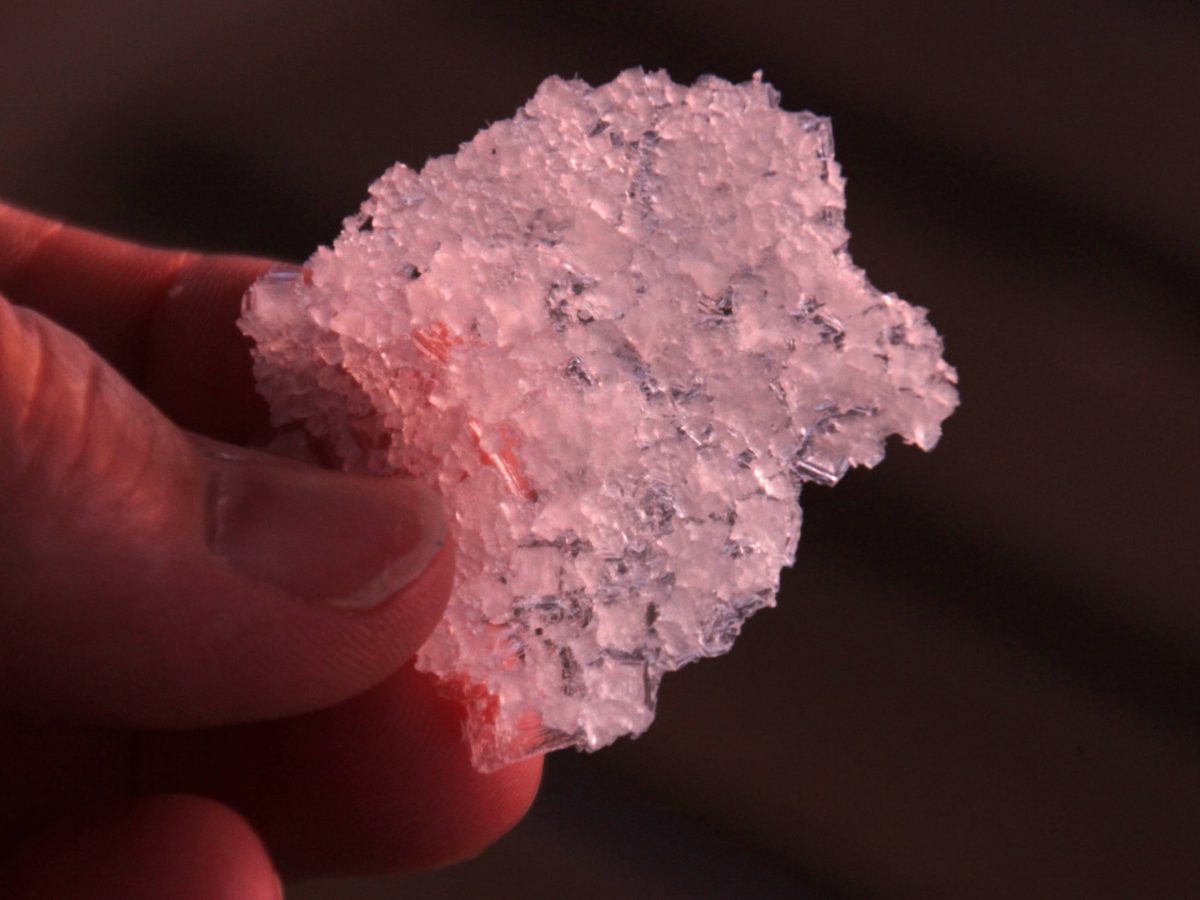
There is another method for producing genuine Fleur de Sel. It helps if you have plenty of time – as well as a certain penchant for DIY and physics.
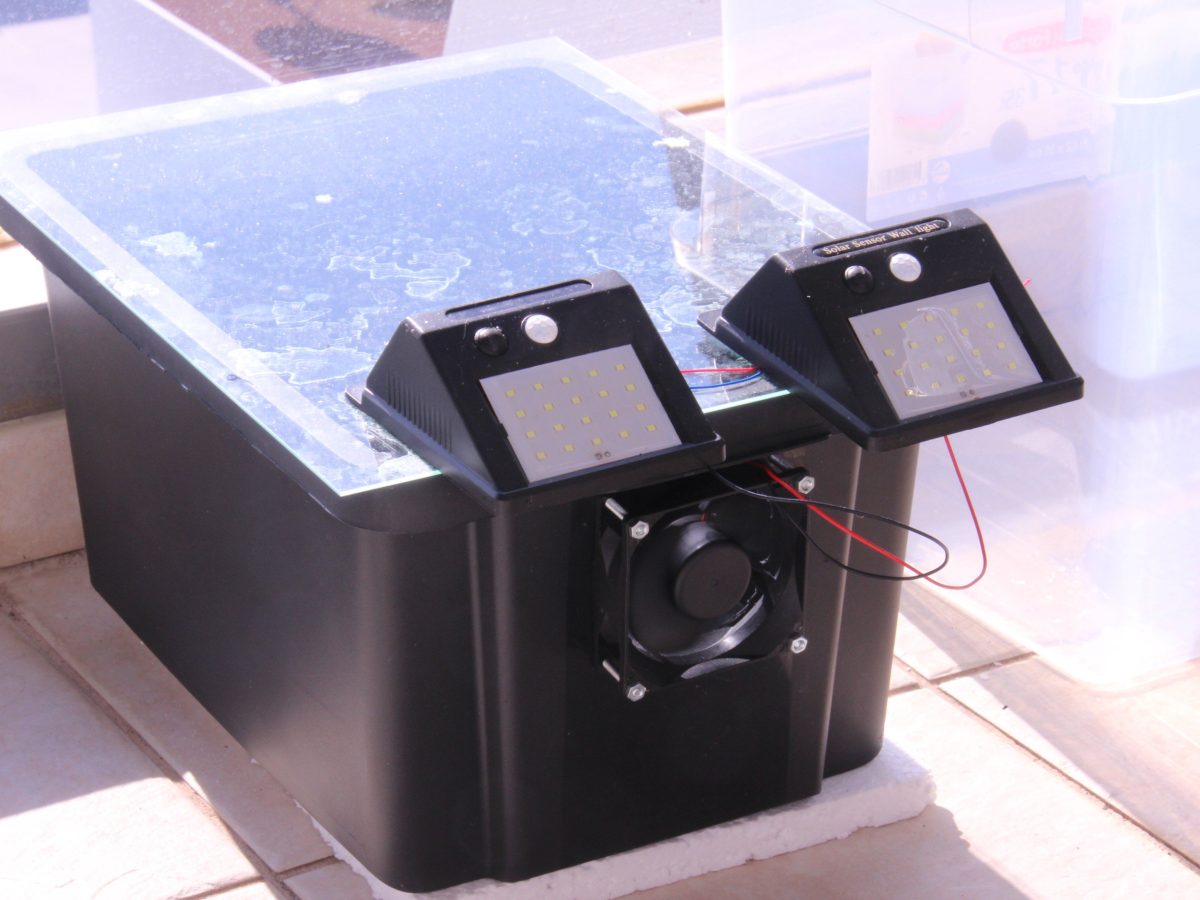
After various attempts, some of which were unsatisfactory, the most practical solution was found: a black container with a glass pane and a solar-powered fan attached to the side.
In warm and sunny weather, several litres of seawater evaporate within a reasonable time to the point where a saturation level of 26 per cent is reached. The first crystals then begin to form. One litre of completely evaporated seawater yields around 35 grams of salt.
Once salt crystals have formed in the container – in other words, once the brine is saturated – it can be transferred to a second container. This should be left open and, as far as possible, sheltered from the wind. Then it’s just a matter of waiting. On some days, the salt crystals float to the surface; on others, they sink to the bottom.
How to harvest the Fleur de Sel
A small aquarium net or a fine-mesh tea strainer is ideal for harvesting the salt. The salt flakes floating on the surface should be scooped up very slowly and carefully. Rapid movements disturb the water’s surface and cause the crystals to sink to the bottom.
The harvested salt should be placed on a sloping, waterproof surface. This allows it to drain and continue drying in the air. Some residual moisture will remain in the Fleur de Sel.
Our author’s conclusion: The process is a joy – especially as producing Fleur de Sel turns out to be quite a challenge. The cost of the materials is around 35 euros. From a purely financial point of view, the process only pays off indirectly. However, being able to add a culinary finishing touch to your dishes with your own painstakingly produced Fleur de Sel makes the whole endeavour worthwhile.
One final safety note: if the fan fails whilst the sun is at its strongest, the sea temperature can reach up to 70 degrees. The unit should therefore always be positioned out of reach of children.
«Here's how to make your own Fleur de Sel»
No comments on this article yet.