

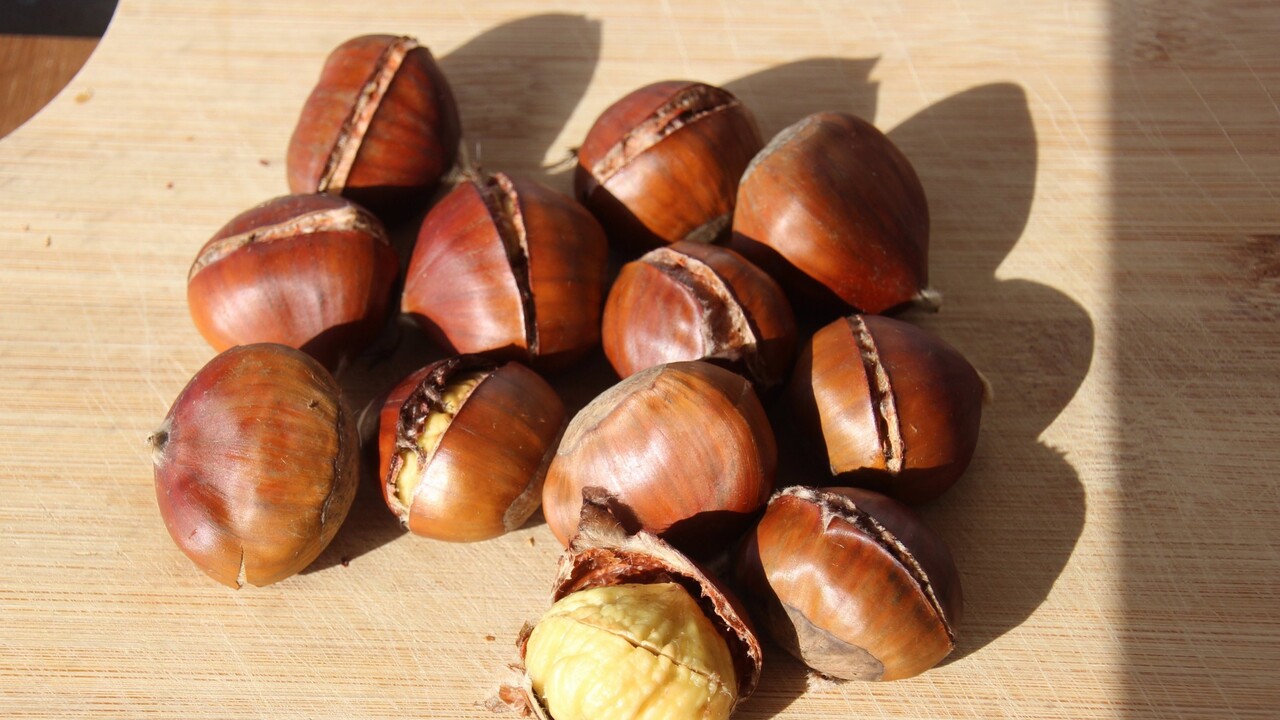
During chestnut season, there are lots of stalls across the Canary Islands that roast and sell fresh chestnuts. Of course, you can also collect and prepare chestnuts yourself. One important thing to bear in mind: if there’s a small hole in the shell, a worm has got there first.
If you prefer to buy chestnuts, you should be aware that not all retailers offer top-quality produce. Here’s what to look out for: if the chestnut feels quite heavy in your hand, that’s generally a good sign. The shell should be glossy, like freshly oiled wood. When you press it with your fingers, the shell mustn’t give way. Chestnuts that look dull, those with a blackish tinge, or even signs of mould, on the other hand, are a clear warning sign.
Our writer loves chestnuts and has tried out all sorts of ways to prepare them. Roasting them the traditional way on a hot oven tray or a plancha always works. However, this often leaves the chestnuts a bit dry. It also results in slightly browned, hard patches. That’s not a bad thing – it even reminds you a little of the typical Munich chestnut stalls. But there’s a tastier way:
Roasting Canary Island chestnuts yourself
Step 1: First, wash the chestnuts to remove any traces of soil. If some chestnuts float to the surface, it’s best to sort them out. They’re hardly worth using.
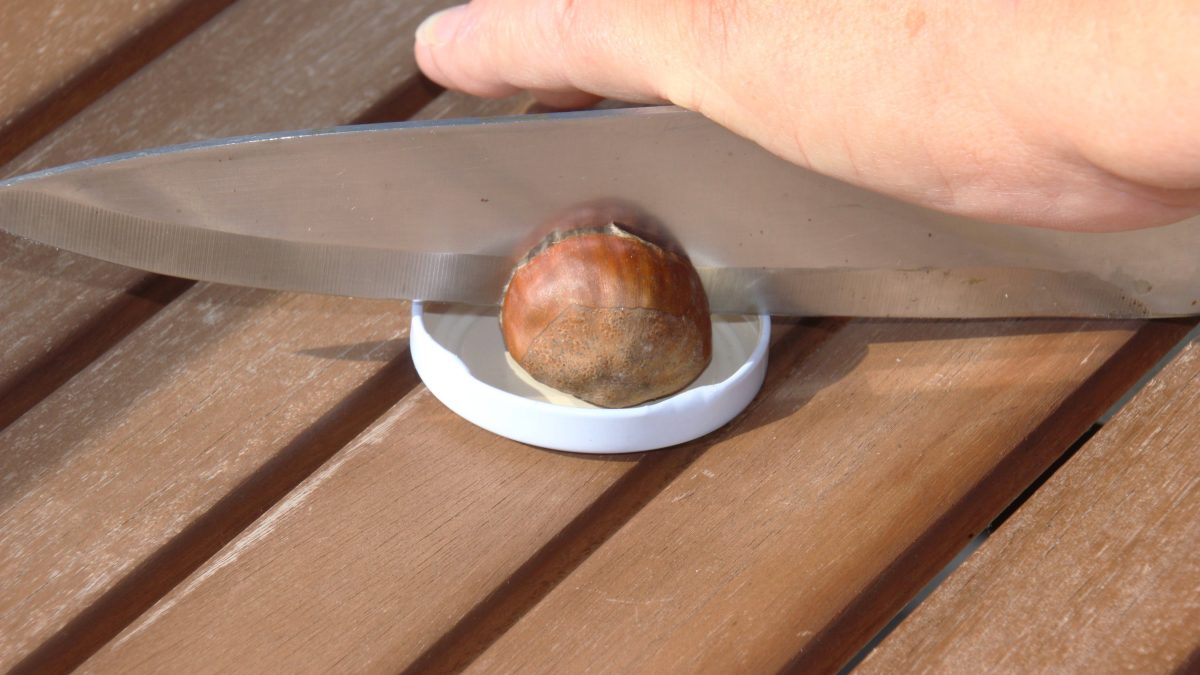
Step 2: Next, use a knife to make a cut in the shell at one point, across the grain. The following trick, using a tin lid, prevents the chestnut from being accidentally split in half:
Step 3: Now place the chestnuts in cold water for about two hours. Then place them in an air fryer with the cut side facing upwards and cook at 180 degrees for about 20 to 25 minutes. A conventional oven works just as well, but the cooking time is usually at least 30 minutes.
Step 4: As soon as the shell has opened – much like a cooked mussel – the home-roasted chestnuts are ready, though still too hot to eat. The best thing to do now is to wrap them in a tea towel for a few minutes to allow them to cool slowly.
With this method of preparation, the thin, rather bitter-tasting skin (pellicle) between the shell and the kernel comes away of its own accord when the fruit is opened.
By the way: A simple, light red wine goes well with chestnuts. Serrano ham and South Tyrolean ‚Schüttelbrot‘ – which is even regularly available in discount supermarkets in the Canary Islands – are also excellent accompaniments.
«Roasting chestnuts yourself - our recipe»
No comments on this article yet.