

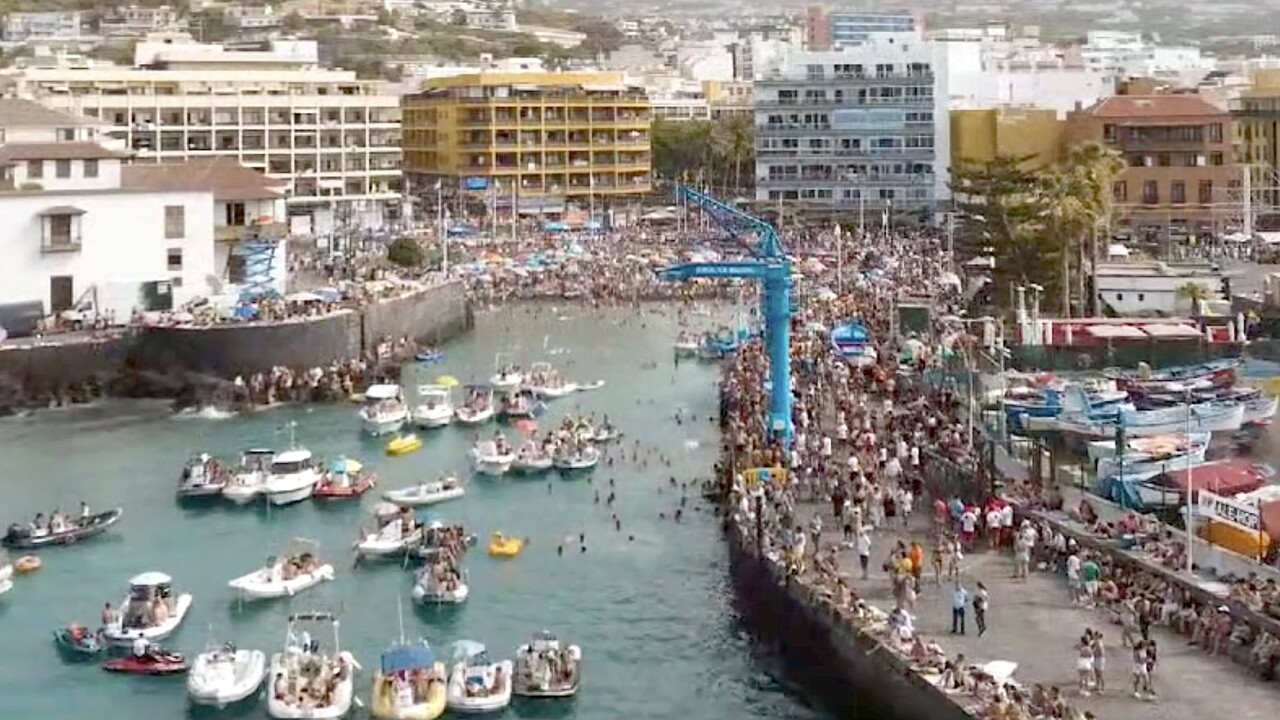
On Saturday, all the Canary Islands are transformed into one big festival venue. Anyone who is there on 30 May will experience one of Spain’s most heartfelt public holidays. Día de Canarias is not a tourist event, nor is it a town festival featuring sponsors‘ logos and booked acts. It marks the anniversary of the first session of the Canary Islands Parliament on 30 May 1983. It was the moment when, after decades under Franco’s dictatorship, the archipelago exercised its autonomy for the first time.
Since then, this day has belonged to the Canarians themselves. This year, the Gobierno de Canarias has organised more than 110 events under the theme ‚Somos Patrimonio de Canarias‘ (‚We are the heritage of the Canary Islands‘). As the public holiday falls on a Saturday in 2026, there is no long weekend. However, this does not dampen the festive spirit in the slightest. Many local authorities simply extend the programme to include Sunday.
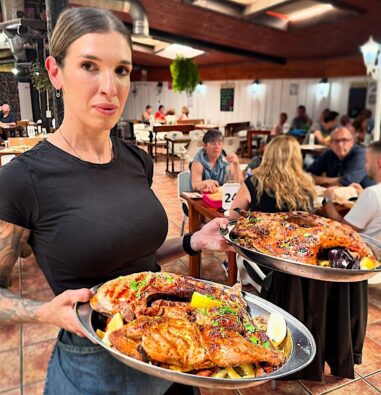
Canary Islands Day has a clear structure that is repeated on every island: folk groups play the ‚Isa‘, ‚Folía‘ and ‚Malagueña‘ in public squares; traditional sports such as ‚Lucha Canaria‘, ‚Salto del Pastor‘ and ‚Bola Canaria‘ are demonstrated and explained; and market stalls offer ‚Papas Arrugadas‘ with ‚Mojo‘, ‚Gofio‘, local cheeses and ‚Pata Asada‘. Admission to almost all public events is free. What is regarded as a public holiday in the Canary Islands is almost unimaginable elsewhere: not a consumerist spectacle, but collective memory in real time. And here are our tips:
Canary Islands Day 2026 – the programme
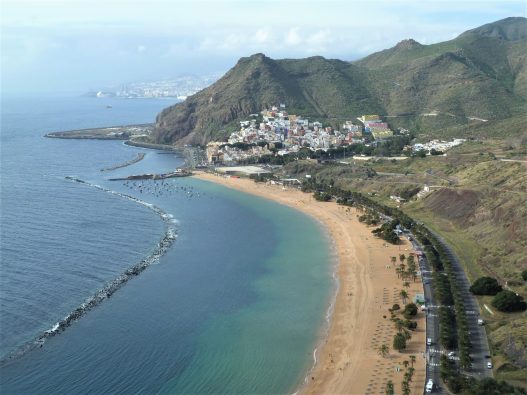
In Tenerife, Santa Cruz is the town with the most packed programme. On 30 May, a display of Canary Islands games and traditional sports begins at 10.00 am around the Plaza de España, followed at 12.00 pm by the institutional ‚Luchada‘, the official wrestling competition of the Día de Canarias. At 2 pm, a cooking competition featuring traditional dishes will take place at the Alameda del Duque de Santa Elena. The evening will conclude at 8 pm with a concert by José Vélez in the Plaza de La Candelaria. He is the singer from Telde whose voice has been part of the islands‘ collective memory for decades.
In Tegueste, north-east of the capital, the celebrations are on a smaller scale and therefore perhaps even more authentic: From 11 am, there will be a workshop on the Canary Islands dice game ‚Juego del Envite‘ at the Mercadillo del Agricultor; from 1 pm, a tasting of ‚Potaje de Berros‘, the traditional watercress soup; and at 8 pm, the Agrupación Musical San Marcos Evangelista will perform in the square of the same name.
Canary Islands Day in Gran Canaria
In Gran Canaria, the action is centred in Las Palmas. The Ayuntamiento has already dedicated the evening before (29 May) to the Baile de Taifas, the third edition of this folk dance festival in Parque Don Benito de Schamann. From 8 pm, Los Gofiones, Poliguanches and the Parranda de Teror will be performing; according to the city council, the 960 available places are already fully booked.
On 30 May itself, the programme at the Plaza de España begins as early as 9.30 am with an exhibition of traditional Loza pottery from Gran Canaria; from 11 am, this will be followed by folklore performances by the groups A.F. Aythamy Atamarazait and A.F. Poliguanches, as well as demonstrations of gofio amasado and artisanal cheese-making, each with tastings. Also from 12 noon, one of the archipelago’s most beautiful processions begins: the 16th Paseo Romero from the Parque de Santa Catalina to the Plaza de La Luz, organised by the Real Club Victoria in collaboration with the Ayuntamiento.
Festively decorated ox-drawn carts, parrandas and hundreds of people in Canary Islands traditional dress parade through the town. The fruit and other items carried in the procession are donated to Cáritas at the Iglesia de La Luz at the end. A few kilometres away in Arucas, Los Sabandeños are performing in Plaza San Juan at the same time; in Gáldar, an ‚Encuentro de Puntos Cubanos‘ is taking place at 2.30 pm; and in Santa Lucía de Tirajana, a Vela Latina sailing competition begins at 10 am and runs until Sunday.
On Lanzarote, the capital, Arrecife, is moving its celebrations to the Recinto Ferial at the Cabildo this year – a deliberately more compact format than in previous years. In San Bartolomé, the Ayuntamiento has put together its own programme: on 29 May from 7.30 pm, the Escuela de Folklore A.M.C. Timbayba and the Parrandas Gurfines – Son los del Puerto, Pal Porrón and Borrón y Cuenta Nueva – will be performing. On 30 May at 11.30 am, the autonomous community flag will be raised in Plaza León y Castillo, followed by a celebration in Playa Honda at 12 noon featuring the Teguey folk group.
On Fuerteventura, the island of dunes and trade winds, celebrations are taking place under the slogan «Mayo 100% Canarias», with more than 40 individual events throughout the month. The centrepiece is the Gran Baile de Taifas on 30 May from 9 pm at the Recinto Ferial in Puerto del Rosario, as confirmed by the Gobierno de Canarias.
La Gomera offers the most concentrated and perhaps the most atmospheric programme of all the islands: the Cabildo Insular has published a packed cultural programme running from 28 May to 6 June, involving all six municipalities. On 30 May itself, the exhibition «Recuerdos y Tradición» will open its doors at the Casa de la Aduana from 10 am to 9 pm. At 3 pm, Parranda Los Mesturados will perform in Parque El Curato in Hermigua, followed at 4 pm by Parranda Chigadá at the Muelle de Vueltas in Valle Gran Rey.
In the capital, San Sebastián de La Gomera, the Asociación de Mayores Iballa will hold its traditional Paseo Romero through the historic city centre, before the Plaza de Las Américas is transformed into a large Patio Canario, featuring gofio demonstrations, tastings and music from parrandas and orchestras, as announced by the Ayuntamiento San Sebastián on 21 May 2026.
On La Palma, the ‚Cantares del Archipiélago‘ show will take place on 29 May at 9 pm in the Plaza de San Francisco: eight folk soloists – one voice per island – accompanied by the Parranda Cantares under the musical direction of Fernando Cruz, and presented by musicologist Félix Morales. On 30 May from 11 am, Los Viejos, Los Benahoare and the Rondalla Renacer will be performing in the same square, and everyone in attendance will be treated to free pata asada, papas arrugadas, mojo and wine.
El Hierro will finally be celebrating from 11.00 am at the Hoya del Morcillo in El Pinar, a natural setting amidst Canary Island pine forests, which the Cabildo has deliberately chosen as the venue for the festivities. According to the Island Council, the folk groups Tejeguaito, Taros, Bentaica, Taicares and Grupo Tejeguate will be performing. The timplista Neyhel Alonso will be performing with three other female musicians, the comedian Maestro Florido will provide the laughs, and the singer Ruperto will accompany the evening’s folk dance.
The sporting programme concludes with the traditional Lucha Canaria: Club de Lucha Guamasa versus Club de Lucha Bediesta, complemented by a specially organised women’s competition. This is the final of the third Semana Canaria de Juegos y Deportes Tradicionales, which has toured all the Canary Islands this year.
What sets this public holiday apart from others is not just the programme itself. It is the fact that, all across the Canary Islands this Saturday, the same sense of identity emerges: eight islands, eight distinct characters, one people. Somos Canarios.
All dates are subject to change; changes at short notice are possible.

«Canary Islands Day 2026: Our tips for each of the Canary Islands»
No comments on this article yet.