La Orotava, a listed old town above Puerto de la Cruz
Wooden balconies from the 17th and 18th centuries, the Casa de los Balcones museum, the gardens of the Liceo de Taoro and a church that has been a national monument since 1948. At Corpus Christi, around two tonnes of sand form a picture of more than 900 square metres.
Johannes Bornewasser is an author, journalist and editor-in-chief of Teneriffa News. He is regarded as a recognised expert on the Canary Islands. Bornewasser is also responsible for the editorial content of the website.
8 min read
Photo: Johannes BornewasserThe Casa de los Balcones is the landmark of La Orotava.
La Orotava in the north of Tenerife not only gave its name to the beautiful Orotava Valley. The town is a symbol of Canarian culture and architecture. The region is one of the most lush on the island and is definitely worth a visit.
The Orotava Valley owes much to its geographical location and the associated mild, humid climate of northern Tenerife. The region offers perfect conditions for agriculture, which is why numerous banana farms have sprung up around the town, situated above Puerto de la Cruz. The Botanical Gardens in Puerto and parts of the Cañadas on Mount Teide are also managed from here.
Canarian architecture in La Orotava
The whole town of La Orotava can be regarded as a «large museum». Large parts of the town are listed as historic monuments. This applies not only to buildings, but also to two parks, which have been declared «sites of special cultural significance» by the Canary Islands government.
The buildings in the old town reflect Canary Islands architecture, with their wooden balconies and beautiful houses. Many of these buildings date back to the 17th and 18th centuries.
The town hall square in La Orotava
Photo: Johannes BornewasserWork has begun on setting up the nativity scene in La Orotava’s Town Hall Square. Photo: Johannes Bornewasser
There’s always something going on at Town Hall Square throughout the year. At Christmas time, for example, a huge nativity scene is set up here. Individual scenes line the square and, as you walk past them, tell a complete story. (You can find photos of this in our photo gallery below.)
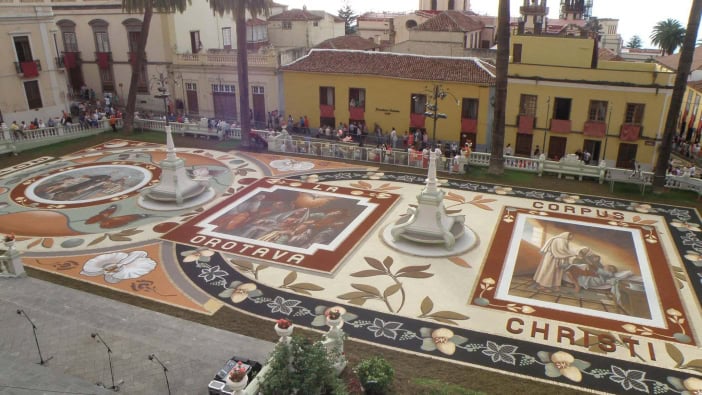
On Corpus Christi (Corpus Cristi), a design covering more than 900 square metres, made from around two tonnes of sand, has been created about halfway along the procession route every year since 1912. The work involved takes many days, and both locals and tourists watch the artists from the first floor of the town hall. (You can find more pictures of this in our photo gallery below.)
Since 1847, the route of the evening procession has also been adorned with a continuous carpet of flowers. Incidentally, the festival is celebrated in La Orotava a week later than usual.
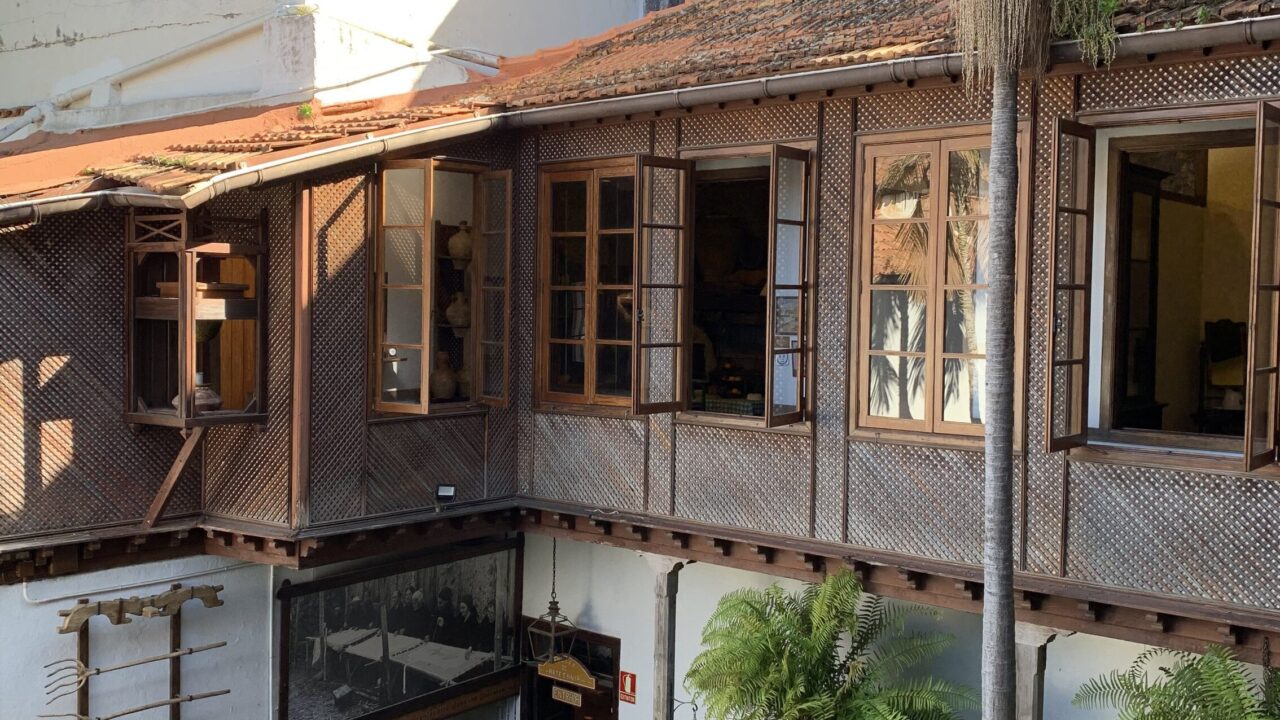
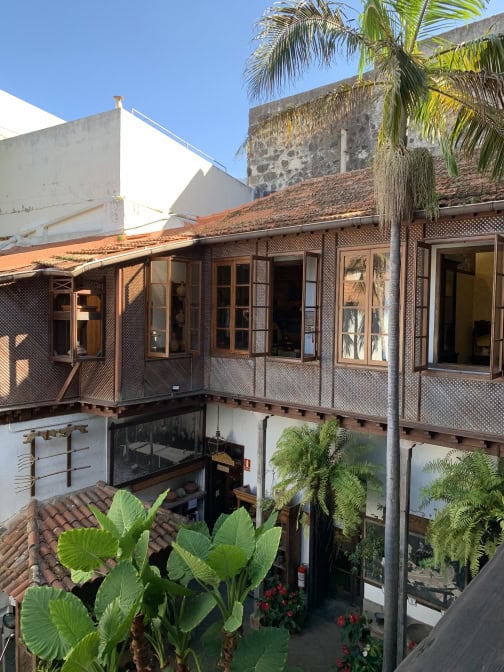
Photo: Johannes BornewasserThe Casa de los Balcones is the landmark of La Orotava. Photo: Johannes Bornewasser
The town’s most prestigious building is the Casas de los Balcones on Calle San Francisco. The building is a fine example of 16th-century architecture. Today, it houses a museum.
The house is famous for its magnificent balconies, from which it takes its name. They are made of wood and feature delicate carvings. The building once served as a residence for wealthy families and, along with the town’s main square (see below), was regarded as one of two venues for social events.
Anyone visiting La Orotava should make a point of popping in to the Casa de Los Balcones, even if there is an admission charge. The museum offers an insight into the lives of the Canarians in days gone by. There are also traditional costumes, crafts and art on display. You make your way through the site via narrow corridors and staircases. It’s definitely worth a visit.
Liceo de Taoro: La Orotava’s Flower Park
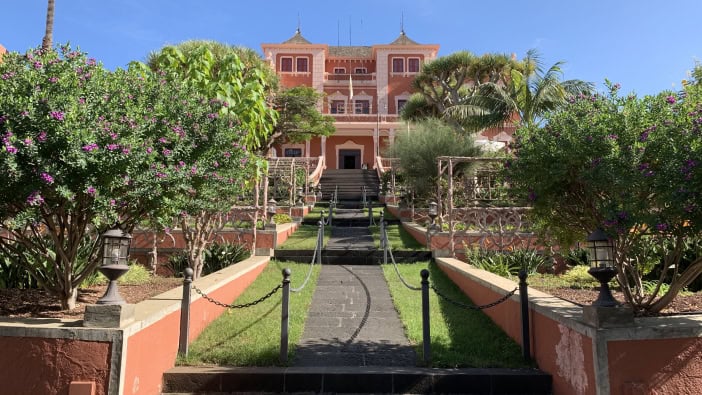
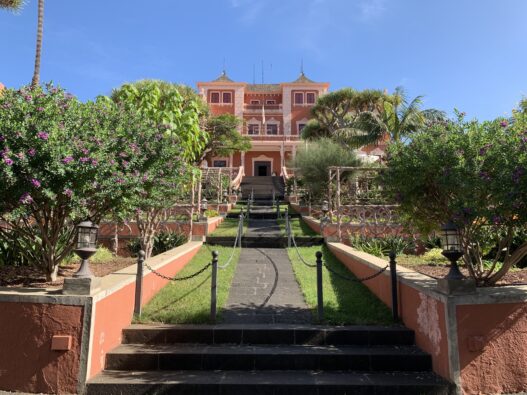
Photo: Johannes BornewasserThe flower park is a lovely place to linger, whilst the manor house is the perfect spot for a coffee. Photo: Johannes Bornewasser
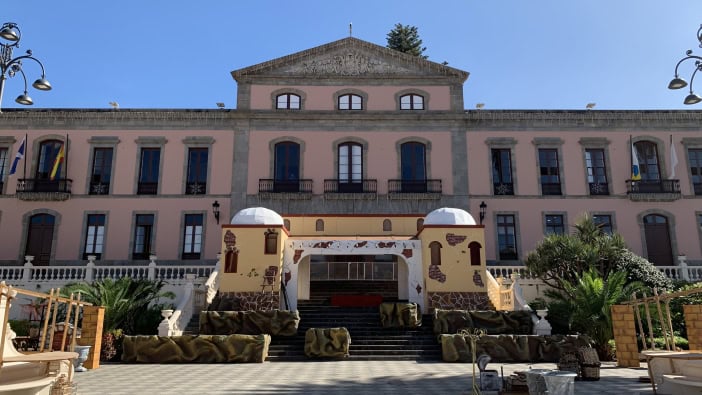
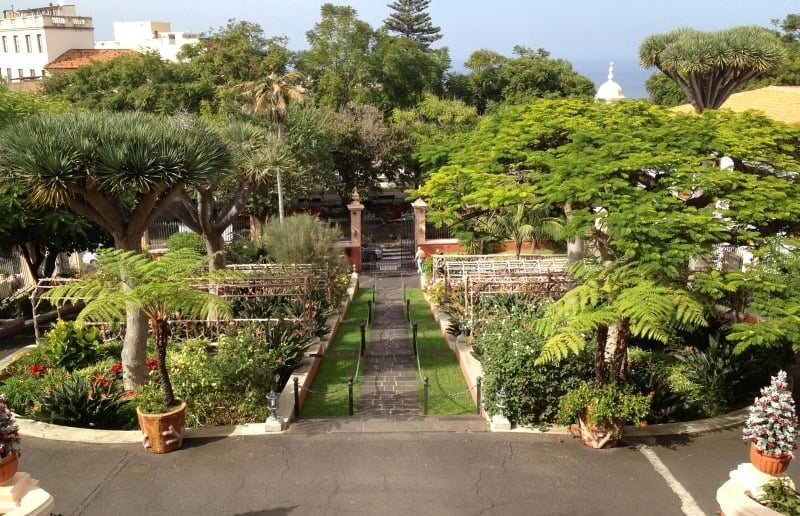
You can take a break, for example, at the «Liceo de Taoro». At the far end of a small park with a rose garden and strelitzia trees stands a manor house, which is now used for cultural events. It also houses a small café. The prices are a little higher – though only when compared to the otherwise quite reasonable prices at other Canary Islands cafés.
The house was once the family home of the Ascanio family. The property stands on a hill, which makes it appear even more magnificent. A combination of long, gentle slopes and steps leads through the lovingly landscaped garden. Along the way up, there are plenty of places to sit and relax.
Church of Nuestra Señora de la Concepción
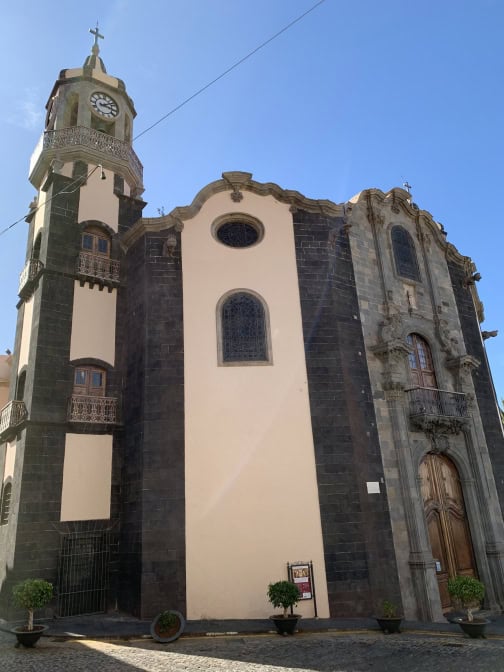
Photo: Johannes BornewasserThe exterior of the Church of Nuestra Señora de la Concepción in La Orotava. Photo: Johannes Bornewasser
Since 16 June 1948, the Church of Nuestra Señora de la Concepción has been a national historic monument by decree. The historical origins of this church are inextricably linked to the founding of La Orotava in the early 16th century. It was originally built on a small scale at that time, and was extended a few decades later.
At the beginning of the 18th century, the earthquakes that preceded the eruption of the Güímar volcano caused severe damage to the building. In 1758, it was finally declared a ruin. It was not until a decade later that construction work began to rebuild the church that still stands today. The work was carried out under the supervision of the architect Ventura Rodríguez.
In 1788, thanks to financial support from the Crown, the building was completed in its present form. Among other features, the sculptural design of the stone façade, the neoclassical layout of the interior, the magnificent coffered ceilings and the slender dome are particularly striking. The latter is considered one of the landmarks of Orotava.
The central nave is adorned with various works of art. These are regarded as testaments to different eras, schools and artists from both Spain and abroad. Anyone visiting La Orotava should definitely make time to visit the Church of Nuestra Señora de la Concepción.
Plaza de la Constitución in La Orotava
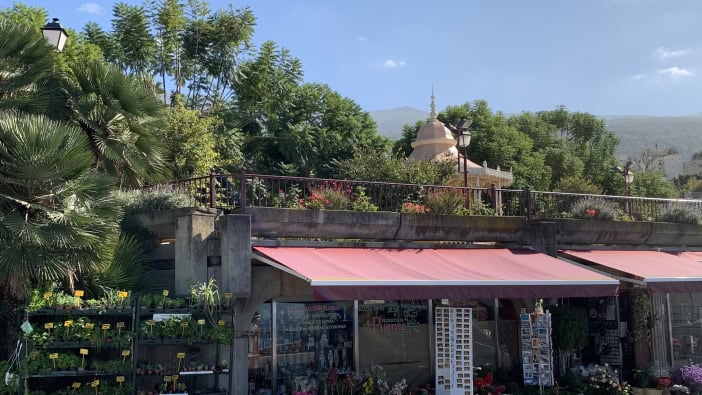
Photo: Johannes BornewasserThe Plaza de la Constitución is situated at the top, with shops below. Photo: Johannes Bornewasser
Despite all the places already mentioned, the heart of the town is to be found elsewhere: the Plaza de la Constitución in La Orotava is the town’s central square and a popular meeting place for locals and tourists alike. The plaza is surrounded by historic buildings, including the Church of San Agustín. The town hall is also not far away.
The history of the Plaza de la Constitución dates back to the 16th century, when the town of La Orotava was founded. At that time, the square was the place where all the inhabitants would gather for important occasions. Over the years, it has been redesigned and extended on several occasions.
These days, the small bar in the middle of the square is the go-to spot for locals and visitors alike. There, you can enjoy a drink in the shade of the trees before the guided tour continues.
The Church of San Agustín in La Orotava
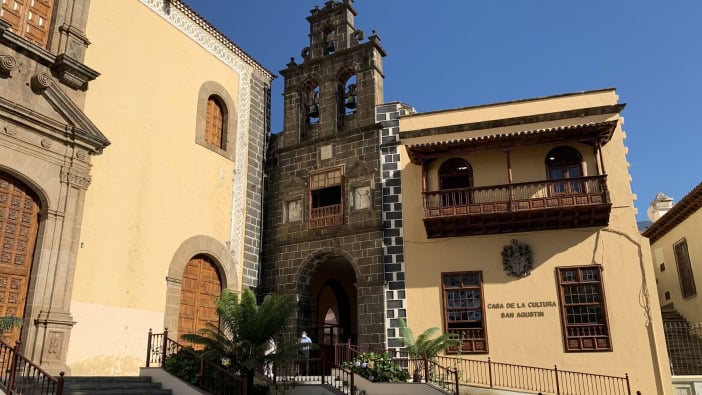
Photo: Johannes BornewasserThe Church of San Agustín in La Orotava. Photo: Johannes Bornewasser
The Church of San Agustín is an impressive Catholic place of worship. It was built between 1671 and 1694 on the ruins of the former hermitage of San Roque. The church belonged to the monastery of Nuestra Señora de Gracia, where Augustinian monks lived.
A distinctive feature of the church is the arrangement of the four round arches on the north side. Three of them have been bricked up, but one still houses the original doorway. In the past, the surrounding ground was level with the bottom of the door frame.
The church itself consists of three naves. The choir houses the impressive statue of the Virgin Mary, ‚Nuestra Señora de Gracia‘. It is of Portuguese origin and dates from the 17th century.
In the 19th century, the Augustinian monks lost the monastery through expropriation, and it was used as an infantry barracks. Today, the building houses the ‚Casa de la Cultura‘ cultural centre and offers visitors the chance to explore the history and beauty of this unique place.
A visit to the Church of San Agustín is also a must on any tour of La Orotava.
Victoria Garden in La Orotava
Victoria Garden is a real gem for nature lovers. It offers a wide range of ways to enjoy the plants and the surroundings. The garden is situated on a hillside next to the Sociedad Cultural Liceo de Taoro.
The view across the city all the way to the sea is also breathtaking. Unfortunately, only people can enjoy it, as dogs are not allowed in. The paths in the garden are suitable for wheelchair users and pushchairs, as they are at ground level.
The garden is open daily from 8 am to 8 pm and on Saturdays and Sundays from 9.30 am to 8.30 pm. The garden’s fountains are also in operation from time to time.
How to get to La Orotava
La Orotava can be reached via the Northern Motorway. There are plenty of parking facilities. Alternatively, 14 different bus routes run to La Orotava. The town’s central bus station is called «Estación la Orotava (T)». From there, the old town is within walking distance.
Exploring La Orotava on your own
Visitors can explore the town at their own pace. There are many details, remarkable architecture and wonderful spots to discover. You should allow at least half a day to explore this little town in the north of Tenerife. It’s well worth a visit!


«La Orotava Travel Guide - Pearl of the North»
No comments on this article yet.