


A beautiful beach does not automatically mean it is a safe place to swim. However, if you check for warnings, flags and water quality before going for a swim in the Canary Islands, you can minimise risks and assess them more accurately. We’ll show you what matters when it comes to the sea.
First of all: Good water quality does not automatically mean safe swimming conditions. Whether the water is clean and whether waves or currents allow for swimming are two separate questions. We’re here to help answer them.
Canary Islands: The Atlantic is different from the Mediterranean
Are you travelling to the Canary Islands for the first time? If so, you shouldn’t try to apply your experiences of other beaches, coastlines and seaside resorts in exactly the same way. High waves and currents on the islands often lead to official coastal warnings, meaning beach closures and bans on swimming. Check these before you visit the beach and decide each day anew whether to go in the water or stay on the beach.
Spend some time observing the surf at the beach. If the waves are high and you’re unsure, we advise you to stay out of the water and speak to the lifeguards at a supervised beach. It’s simply not advisable to give it a go in the Canary Islands – particularly in autumn and winter.
Why coastal warnings in the Canary Islands are not mere recommendations
In the first half of 2026, 31 people drowned in the Canary Islands. In the same period the previous year, the figure was 27. That is an increase of 15 per cent. The association «Canarias, 1500 Km de Costa», an organisation dedicated to warning bathers of the dangers of the Atlantic, analysed data from official bodies, including the emergency services, police and Civil Protection.
Particularly alarming: 19 of the deceased – 61 per cent – went into the water despite advance warnings or alerts from the Canary Islands government regarding high waves or strong currents. The bitter realisation is that the main cause has been, and continues to be, overconfidence – as it has been for years. You can find further details in our report on drowning incidents in the Canary Islands in the first half of 2026, which, regardless of the season or year, is synonymous with what happens on the Canary Islands‘ coasts when people fail to exercise caution.
Flags on Canary Islands beaches: green, yellow, red
Checking the flag is part of any visit to the beach, even before you unpack your swimwear. You should also always pay attention to information signs, barriers and instructions from lifeguards. For your day at the beach, we recommend these basic rules:
- Green: Despite the flag, keep an eye on the conditions and your own limits. The colour is no substitute for assessing the situation on the spot.
- Yellow: Exercise particular caution. If you’re unsure, ask for advice and, if in doubt, refrain from swimming.
- Red: Stay out of the water. Do not circumvent warnings or closures, even by entering the water next to the marked area. A red flag is not open to debate; it clearly means: danger!
And one more thing: are other people already swimming? That is no guarantee of safety. What matters are the on-site notices, not the behaviour of other bathers.
Why Canary Islands beaches are closed
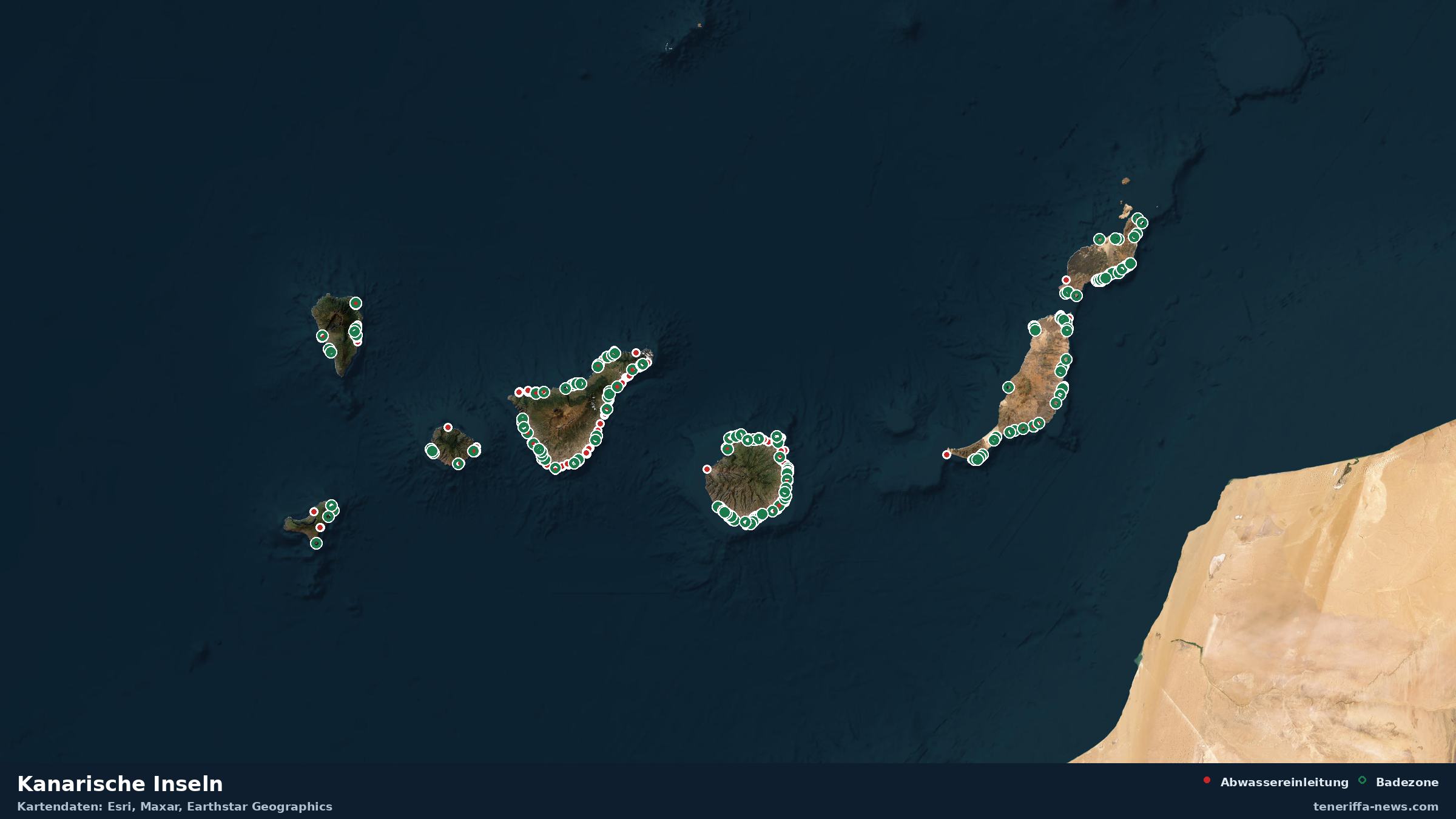
There are numerous sewage outfalls along the coasts of the Canary Islands, some of which do not have full authorisation. The water quality of the beaches is therefore monitored. If limit values are exceeded, the affected bathing areas must be closed. A follow-up test may subsequently clear the area.
There are examples of this across all the Canary Islands, so it is not an isolated problem. Nevertheless, Tenerife stands out in particular: Playa Jardín in Puerto de la Cruz illustrates just how long such a closure can last. This beach remained closed for 350 days. It is always best to check the current status of the beach in question before your visit.
Water quality in the Canary Islands: measured values or estimates?
Water samples are taken from beaches in the Canary Islands roughly every three weeks. This leaves a time gap between routine samples that is virtually impossible to bridge logistically. Our water quality service therefore takes into account not only measured values but also weather and currents to assess potential bacterial contamination.
Measured values and calculated estimates are not the same thing: An assessment of potential contamination is neither a new laboratory test nor official clearance for bathing. It is, and remains, a calculation.
Canary Islands: How to check your beach
Would you like to know the state of your next beach destination? Then, before you set off, open our map showing water quality at beaches in the Canary Islands. We collect data for more than 175 beaches and coastal areas across the islands. In addition, there is information on sewage outfalls as well as well over 11,000 laboratory samples – and the number is rising rapidly. Here’s how it works:
- Search for a beach: On the water quality page, you’ll find a search bar that suggests the section you’re looking for as you type.
- Assess the information: Evaluate the available details and measurement results for yourself.
- Decide on the spot: If you see flags, signs or closed access points, pay attention to them just as you would to the instructions from lifeguards.
- If a beach is closed, make alternative plans: There are plenty of beaches in the neighbourhood. If one is closed, look a little further afield to see if conditions are better there. Of course, this is no substitute for caution!
Is your beach missing from our water quality map? That’s a good sign. It means there has most likely been no official closure there in the recent past due to poor water quality. Of course, the absence of an entry does not constitute current laboratory confirmation or blanket authorisation. The local authorities always have the final say.
Our tips for your day at the beach whilst on holiday in the Canary Islands
- Choose supervised beaches!
- Don’t go swimming alone – ideally, set off in pairs at the very least!
- Supervise children at all times!
- Avoid rocks and cliff edges!
- If in doubt, don’t go in!
Particularly with children, an adult’s undivided attention is crucial, as nine out of ten water-related accidents involving children are due to a lack of supervision by parents or carers. Always plan to give them your full attention as naturally as you pack towels and sun cream.
See now: Water quality at the beaches of the Canary Islands








«Swimming in the Canary Islands: Beaches, flags and water quality guide»
No comments on this article yet.