

By Christoph Schönle
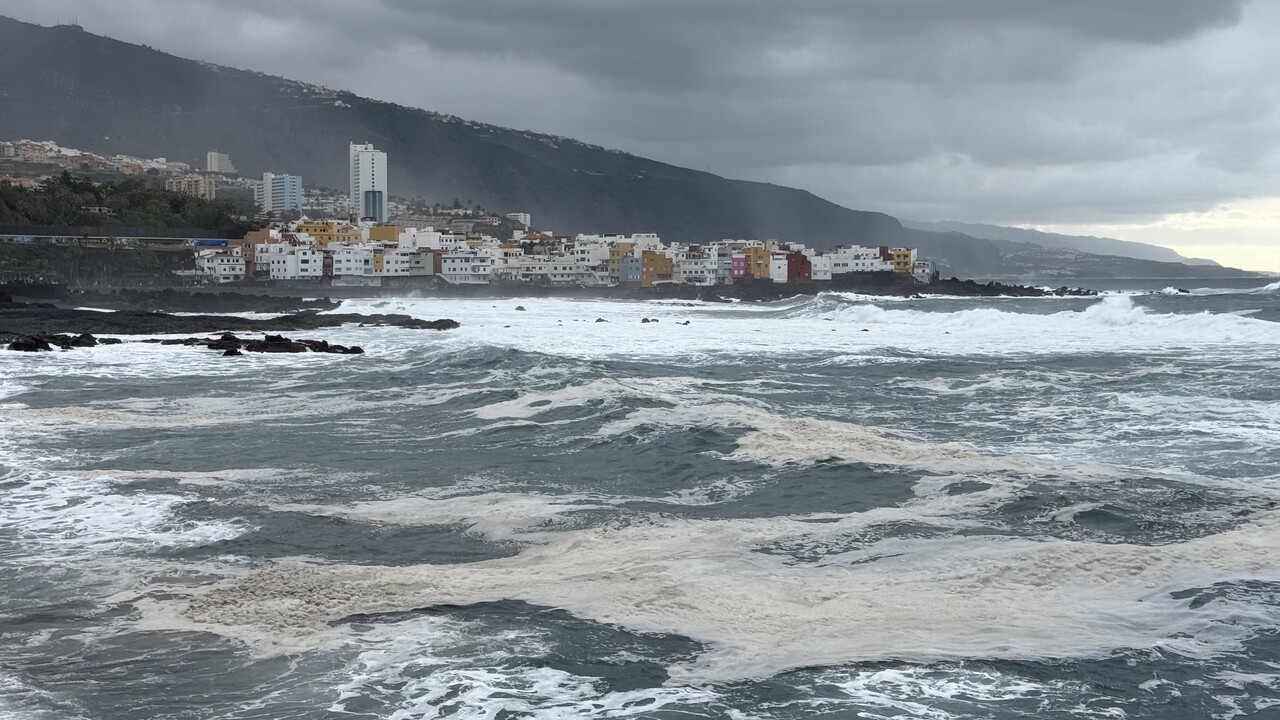
Throughout the Canary Islands, sewage has been channelled from coastal villages into the sea for centuries. The seabed usually drops off steeply, so the villages‘ waste is disposed of provided the pipe used is long enough.
However, if the wastewater is not allowed to flow directly into the sea from the beach, but is instead channelled through a long pipe, it must be borne in mind that, assuming a 45-degree angle of inclination of the seabed, a 1,000-metre-long pipe will cause the wastewater to rise vertically from the depths to the surface just 707 metres from the coast (according to Pythagoras‘ theorem). As a result, the warmer wastewater – which is lighter than seawater – will rise vertically back to the surface and spread out there.
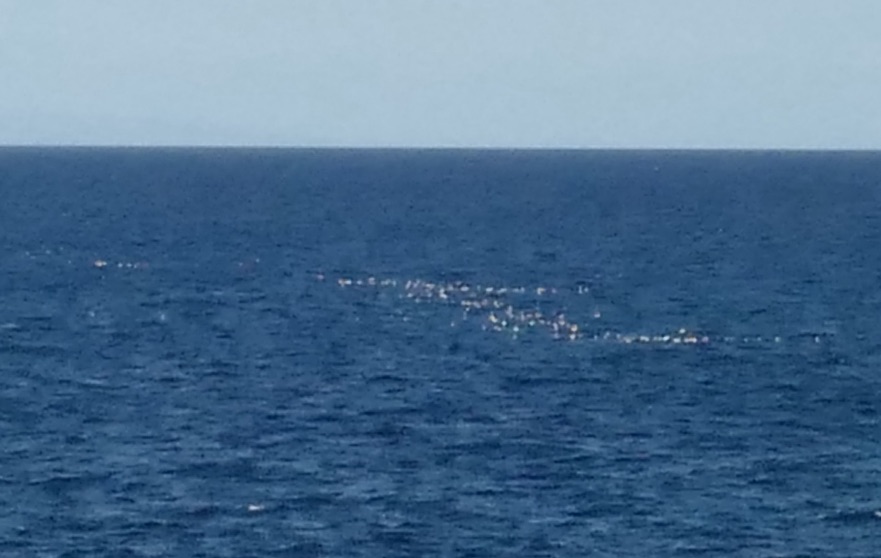
Similarly, in the German city of Kiel, as late as the 1950s, all wastewater was pumped to the coastal village of ‚Bülk‘ and discharged from there into the sea via a long pipeline without being treated. On calm days, a brown stain would spread across the sea’s surface there. One could then regularly observe, some 800 metres from the coast, a flock of seagulls swimming there in a large group to feed on the odd bit of rubbish. This is because, when sewage is discharged directly into the sea, not only excrement and hygiene products but also food scraps, lumps of fat and dead animals are flushed out to sea.
Seagulls reveal sewage – even off the Canary Islands
Similar flocks of seagulls can also be found off the coast of Tenerife, where, at some sewage outfalls several hundred metres offshore, large numbers of seagulls gather in a confined area of the sea.
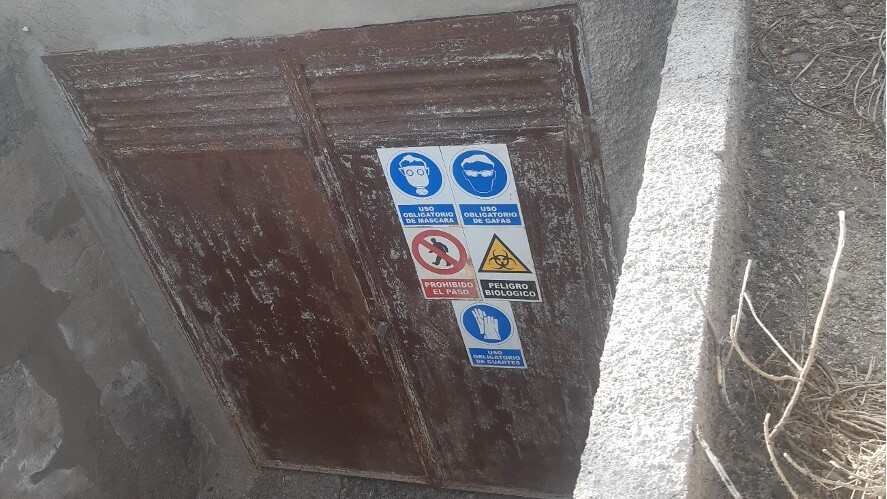
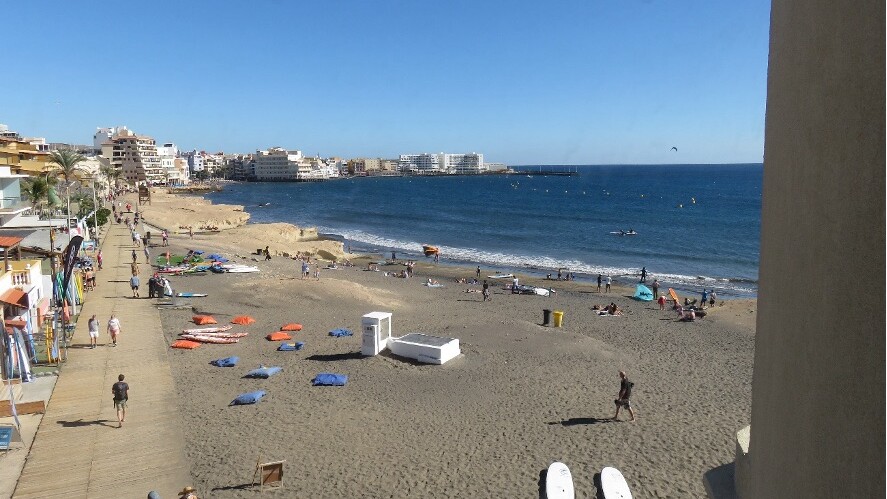
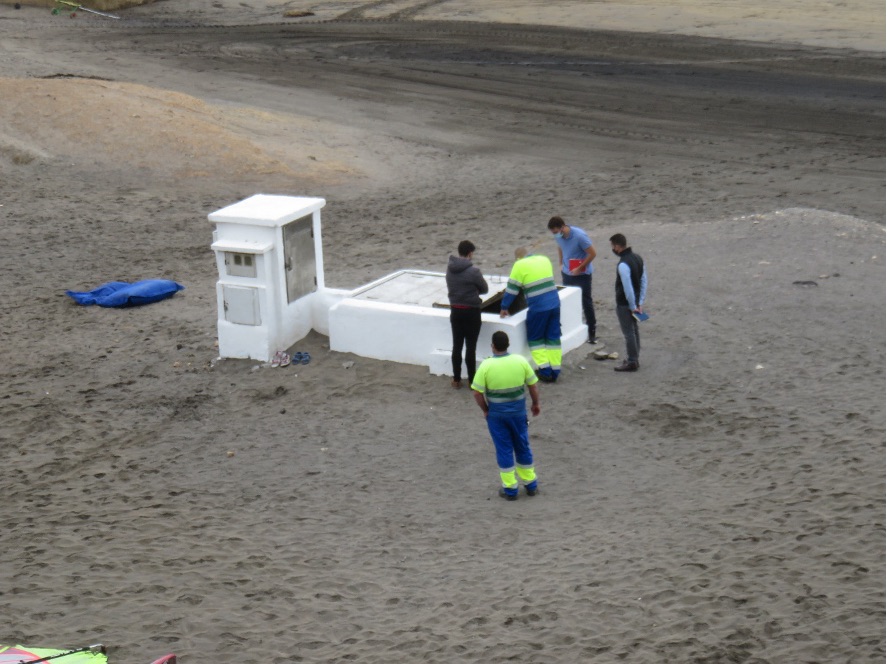
The fact that untreated sewage often flows into the sea – or is even pumped out – at many locations across Tenerife can be seen, for example, right on the sandy beach in front of the «Playa Sur» hotel in El Médano, near a small concrete box. When we were staying at the hotel in December 2021 and the water from the toilet stopped draining, a team arrived a few hours later, opened this concrete box and repaired it. There was a strong smell of sewage both in the hotel and near this concrete box.
After a few hours, the workmen left the beach and the toilet was working again. It can therefore be concluded that this concrete box contains a pump for untreated sewage, which is not pumped uphill to a sewage treatment plant (for example, to San Isidro), but directly into El Médano Bay.
It is precisely there that the official sewage maps show a sewage outfall into the sea. This raises the question of how far out into the sea the pipe extends. And as there is a large bay there, it could be that the water is not carried further out by the currents, but may instead circulate within the bay. Particularly when there are onshore waves, the surface water is certainly carried back to shore quite rapidly.
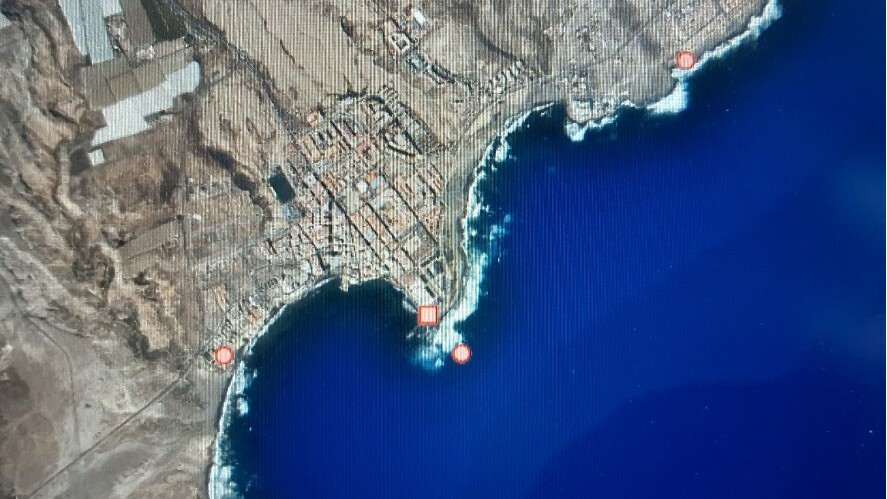
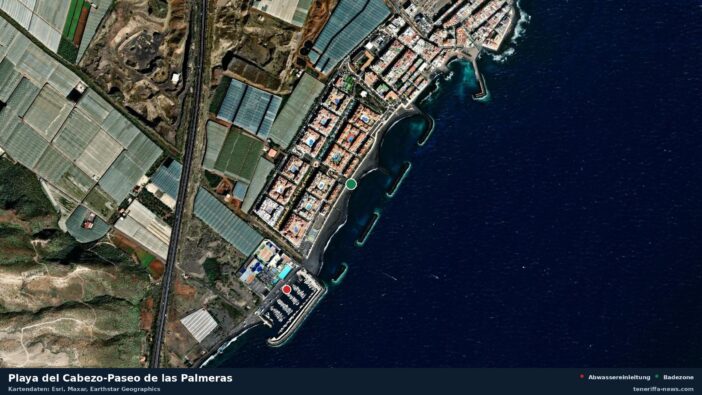
Whether the effluent discharges are authorised, unauthorised or not registered at all is actually irrelevant. What matters far more is knowing whether the effluent is treated or untreated. However, there is reason to fear that almost all of these discharges are completely untreated – including those in El Medano (see further red discharges on this map).
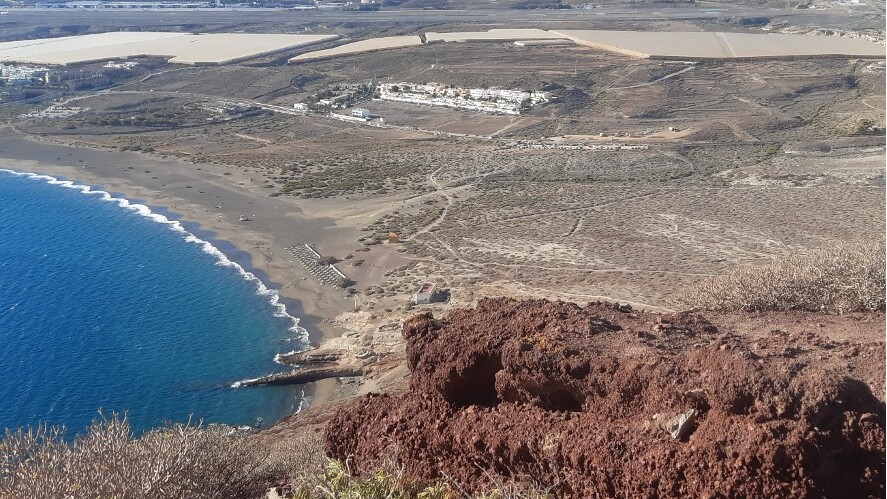
Furthermore, there appears to be a whole series of underground pipes buried right down to the sea, which are not officially known. For example, in the nature reserve near La Tejita, right next to Montana Roja, there is a light-blue plastic pipe buried in the sand that can only be seen whilst snorkelling at a depth of about two metres. It is highly likely that this is a drainage pipe leading into the large sandy bay:
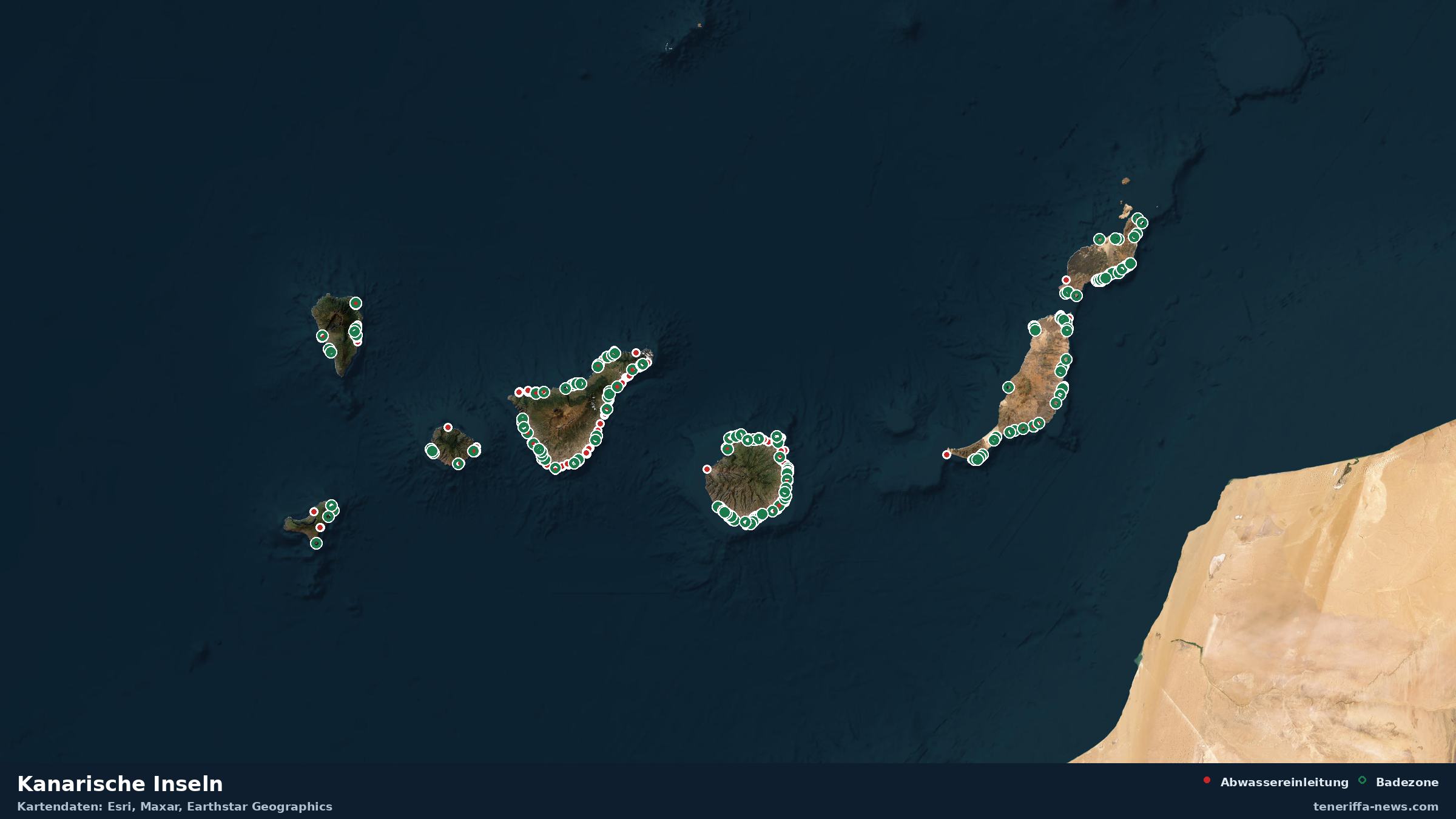
If one compares the sewage outfalls on the official maps of Tenerife, Lanzarote, Fuerteventura and Gran Canaria, it is striking that most of the sewage discharges into the sea are located on Tenerife. This is because the high mountains offer plenty of opportunities for settlement on their slopes. Beautiful towns with sea views have thus sprung up. Naturally, their wastewater must also be disposed of. This is apparently done in some cases via sewage treatment works, though these are rather sparsely distributed. Consequently, most of the wastewater from these larger settlements on the slopes also flows towards the coast. For several years now, the EU has been imposing heavy fines on Tenerife for its lack of sewage treatment plants. However, the planning and expansion of such facilities have made very little progress so far.
In contrast, tourism has increased significantly: more than nine million tourists visit Tenerife every year. Whilst the supply of food is well catered for, waste disposal remains a completely unresolved issue – in the truest sense of the word. A monstrous super-hotel is being built right by the sea, particularly on the edge of – and in some cases within – the nature reserve at La Tejita.
It remains unclear how the sewage disposal system is planned for this. There appears to be a sewer pipe beneath a small path which branches off at the top of Avenida de los Abrigos and runs down towards the sea and the hotel. You can smell the sewage from the manhole covers along the path. So the pipe is vented. However, this means it is unable to pump the sewage from the future hotel up to the main sewer on the road. Here, too, the waste will presumably flow directly into the sea within the nature reserve, more or less untreated.
The Canary Islands and their sewage disposal
This article describes only small-scale observations in the south of Tenerife. However, if one reads the reports by the activists campaigning against the sewage crisis on Tenerife, it becomes clear that virtually everywhere the same principle applies: namely, channelling untreated water directly into the sea.
This is a cause for concern from a medical point of view. Wastewater, which is normally treated in stages at a sewage treatment plant – using mechanical filters, the breakdown of contaminants in several biological tanks containing sewage sludge, filtration systems, digestion tanks and so on – is often discharged directly into the sea in the Canary Islands. As a result, the seawater contains not only bacteria from fields, woods and meadows, but also bacteria from the human gut, such as E. coli, which are beneficial to the gut flora but can become quite dangerous if they enter the eyes, throat, ear canal or lungs. Not to mention other disease-causing pathogens; during the coronavirus pandemic, the incidence of the disease amongst the population was estimated on the basis of the concentration of the virus in sewage treatment works. Bacteria, viruses and many parasites thrive in wastewater and also in seawater.
Humans have two surfaces colonised by bacteria: firstly, the skin, on which many – mostly harmless – bacteria thrive; and secondly, the internal surface, namely the digestive tract, which is home to a range of aggressive bacteria. This is not a problem as long as the gut bacteria do not penetrate further into the body. However, if they reach the bladder, the bloodstream or the lungs, serious illnesses can result. Without internal injury or surgery, however, the gut bacteria remain where they belong and can cause little harm.
However, swallowing or even inhaling intestinal bacteria can lead to dangerous cases of pneumonia. This can happen, for example, when swimming in the waves and inhaling contaminated spray.
Sewage as a possible cause of pneumonia – as in this example
As a doctor in El Médano, I noticed that two previously completely healthy, athletic people developed similar symptoms of severe bacterial pneumonia. One male athlete went swimming and snorkelling in the sea at La Tejita beach in October 2023, and one female athlete did so in November 2024.
A few days later, both patients developed symptoms suggestive of so-called atypical pneumonia: the symptoms developed gradually and began with a progressively worsening urge to cough without sputum. There was no sore throat, nor any inflammation of the nose or sinuses. Bronchitis was also absent. On auscultation of the lungs with a stethoscope, rattling sounds and bubbling could be heard in the right middle lobe of the lung in one patient, and in the left lower lobe in the other. The bronchi were clear. There was no fever, but both patients experienced severe physical exhaustion and weakness for around three weeks.
The tests for COVID-19 and influenza A and B were negative. A marker of inflammation in the blood (CRP) was significantly elevated. In one case after a week, and in the other after ten days, a course of intensive antibiotic treatment (azithromycin) was started. The symptoms improved after just one day. Two days later, the rattling sounds in the lungs had disappeared in both patients. The fatigue persisted for a further week. It is therefore clear that these were cases of bacterial pneumonia.
It cannot be proven that these illnesses are caused by sewage in the sea. This is because it was not possible to carry out a precise bacterial analysis of the blood or sputum of the patients on Tenerife. However, it would be extremely useful to conduct such a study as a research project involving surfers, swimmers or divers who have fallen ill. Some surfers and swimmers in the El Médano area also report eye and ear infections, swollen lymph nodes in the neck area, or diarrhoea.
The sewage and faecal matter on the beaches around Tenerife are disgusting and probably also a health hazard. Furthermore, there is evidence of increasing resistance to antibiotics, particularly amongst intestinal bacteria (especially E. coli, Klebsiella and Enterococcus faecalis) (source: Noll, Ines; Eckmanns, Tim: Deutsches Ärzteblatt, 2018). In future, this could mean that infections caused by these germs will be difficult or even impossible to treat.
Canary Islands wastewater: what you should be aware of
If you swim in this seawater without any open wounds and without submerging your head, it is unlikely that anything serious will happen. However, as soon as a higher concentration of pathogens is swallowed or inhaled, or enters the eyes, ear canals or nasal cavity, serious infections can result. These include inflammation of the ear canal, eyes and throat, but pneumonia, gastrointestinal infections or even encephalitis are also possible. Swimming in choppy seas in particular can lead to bacterial or viral pneumonia if droplets are inhaled.
Accurate statistics would be important for assessing the prevalence of the disease and analysing the pathogenic bacteria and viruses. However, as most tourists only stay in Tenerife for one or two weeks before dispersing across Europe again, accurate data are not available.
The public health authority on Tenerife carries out regular tests on the beaches. However, it appears that the concentration of coliform bacteria is only tested at a single location every few weeks; all other pathogenic viruses, bacteria or parasites remain undetected.
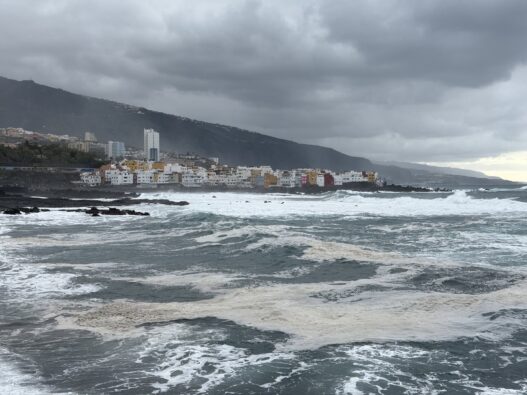
It is therefore strongly recommended that you do not submerge your head whilst swimming in the sea off Tenerife. Particularly when there is an onshore wind, you should avoid swimming near sewage outfalls. You should also be aware of any unpleasant odour in the seawater (foul?) as well as any discolouration (brown) or excessive foaming. The presence of large amounts of green algae growing on rocks is also a sign of over-fertilisation, as can be seen, for example, at the El Médano harbour breakwater.
If you have any doubts, you might be better off simply opting for a hotel swimming pool in the Canary Islands.
«Swimming in Tenerife's 'sewage tank': what a doctor says»
No comments on this article yet.