

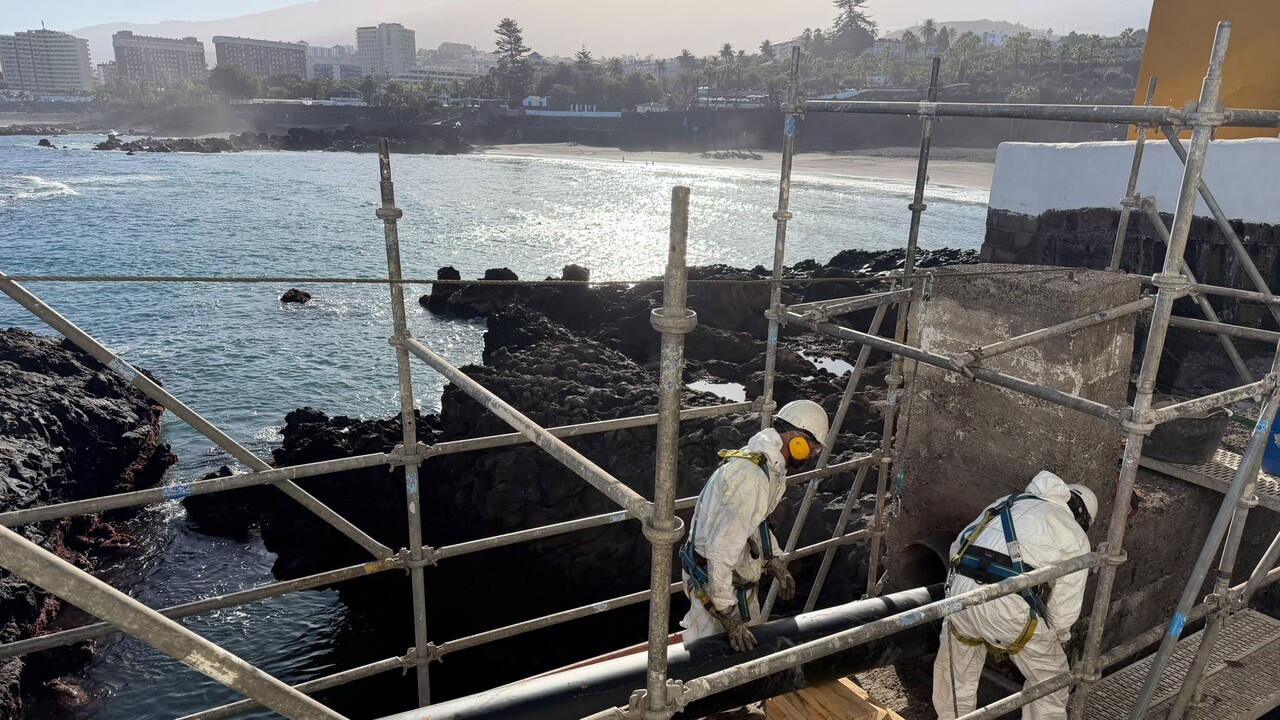
Anyone walking through Punta Brava these days will see scaffolding, tankers and workers right above the waves. The town hall commissioned the work as an emergency measure, and Mayor Leopoldo Afonso visited the site in person. In a statement from the town, he says: «We are not waiting for the pipeline to fail before we act. We are taking pre-emptive action on a key piece of infrastructure, eliminating the risk of leaks or discharges and directly strengthening the protection of our coastline.» But that is not the whole truth.
Local residents and holidaymakers are being led to believe that the sewage problem at Playa Jardín – which has been known about for years – is finally being resolved. However, this is only part of the story behind the construction site, which has been photographed for publicity purposes. Around Punta Brava and Playa Jardín, there are two separate pipes, each managed by a different authority. The municipal pipe, which is intended to safely channel sewage to the treatment plant, is now being replaced. The Cabildo’s broken outfall, however, remains as it is. And for the time being, there is no solution in sight for this either.
Pipe number one: the Punta Brava ‚aqueduct‘
A section of the municipal sewage collector – known locally as the ‚aqueduct‘ – is being replaced. Until now, this has been a cast-iron pipe. It has a diameter of 300 millimetres and runs behind Calle Añaterve, freely between two piers, towards the sea. The neighbourhood’s untreated sewage flows through this pipe to the El Caletón and Playa Chica pumping stations. These pump it directly uphill to the district sewage treatment plant.
The salty sea air, high waves during storms and strong winds have taken a heavy toll on the pipe over the years. Moisés García from the utility company Aqualia told El Día that the pipe had exceeded its service life and could collapse. The town is responsible for ensuring the repairs are carried out in good time: Aqualia operates the municipal sewerage network on behalf of Puerto de la Cruz and has been commissioned accordingly by the town hall. The engineering firm Trazas Ingeniería is in charge of the construction management.
The work is considered to be labour-intensive; Aqualia says it took several weeks of preparation. The company was given a seven-hour window to carry out the replacement. During this time, a temporary bypass diverted the neighbourhood’s sewage into tankers. The resulting message from the city: sewage is no longer being discharged untreated into the sea – at least not in full view of the public.
The old cast-iron pipe has now been replaced with one made of fibre-reinforced material, which promises a longer service life and significantly fewer reactions with the Atlantic salt at Playa Jardín. Afonso describes it as a «complex but meticulously planned project», in which every single step is designed to «minimise any possible disruption to local residents and the coastal environment». The new pipe is now in place. Next come the concrete works and new manhole covers.
The city repeatedly uses the word ‚preventive‘ in connection with this work. The operator, however, takes a far more sober view: as far as Aqualia is concerned, the pipe has long since reached the end of its service life. Years ago, two other sections of the sewage pipe – at Punta Brava near Playa Chica and on Calle Víctor Machado – had to be repaired. Even back then, it was said that the pipe had reached the end of its service life.
Pipe number two: the broken outfall off Playa Jardín
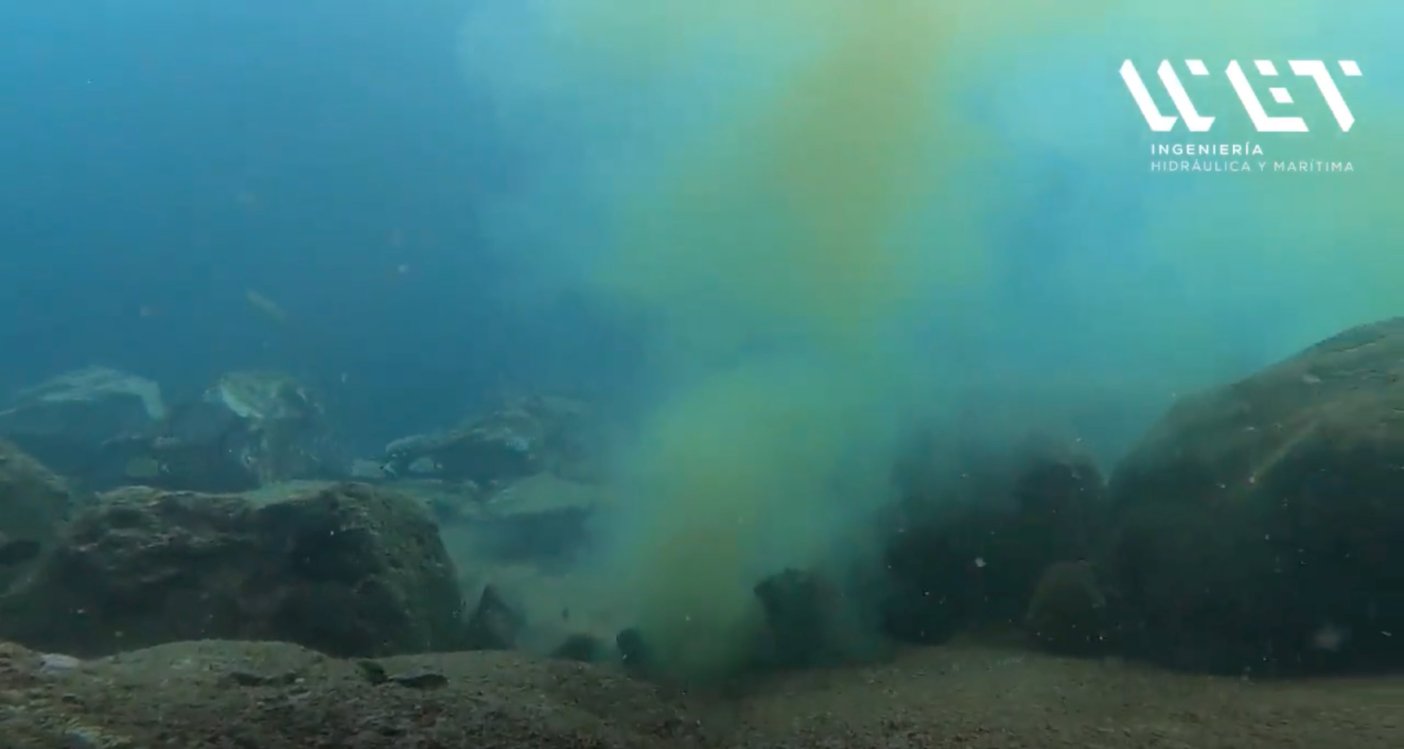
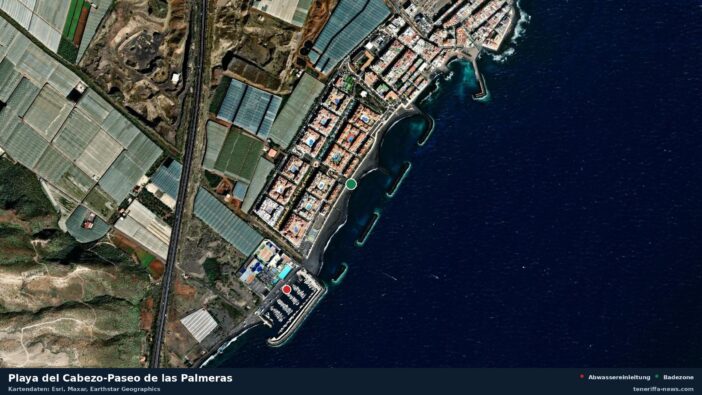
The pipe that springs to mind for many residents of Puerto de la Cruz when they hear the name Playa Jardín is, however, a different one. The Punta Brava outfall – a pipe on the seabed – carries partially treated water from the district sewage treatment plant out to sea. It is just over 1.1 kilometres long, with around 950 metres of it running underwater to a depth of approximately 30 metres. The pipe has ruptured about 95 metres off the coast, and around 240 metres of it is considered to be in a state of disrepair.
Responsibility for this pipe does not lie with the city, but with the Island Council of Tenerife and its Island Water Council (Consejo Insular de Aguas). Aqualia also operates the district sewage treatment plant on its behalf. A contract signed in July 2025, which was intended to initiate the replacement of the 240 metres of dilapidated pipework, has not yet been implemented. Most recently, the project was put on hold for technical reasons.
In August, the Consejo Insular de Aguas concluded that none of the planned options was feasible. Tenerife’s President, Rosa Dávila, now says herself that the best solution would be to build a completely new outfall. However, this would require new planning, a new tender process and a great deal of time.
The extent to which the rupture affects water quality on the beach is a matter of political controversy. Dávila emphasises that no technical report links the pollution at Playa Jardín directly to the outfall. Another contributing factor is that houses in Punta Brava were not connected to the sewerage system for a long time. One thing is undisputed: the leak has been known about for years; Dávila himself dates it back to 2022. The partially treated water continues to leak off the coast, and photos of it certainly do not suggest that the water is clear:
Meanwhile, the town is calling on the Island Council to carry out immediate repairs and refurbishment of the outfall, most recently in a public statement dated 27 September. In doing so, Puerto de la Cruz clearly attributes responsibility for the outfall to the Cabildo itself.
Sewage off Puerto de la Cruz: where the two issues overlap
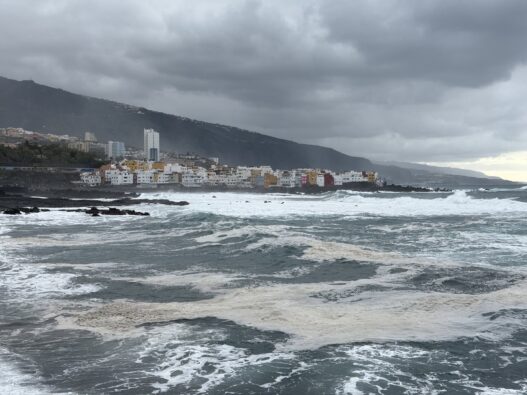
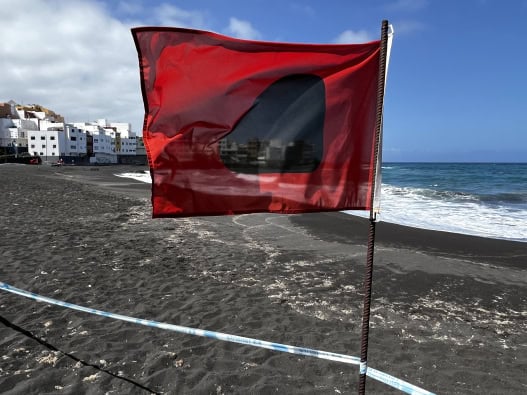
On Wednesday at midday, the city was once again forced to close part of Playa Jardín to bathers: swimming was banned at Playa Grande, the largest of the three bays. This had been ordered by the Tenerife Health Directorate of the Canary Islands Health Service. Samples taken on Monday had previously shown elevated levels of enterococci – i.e. faecal bacteria – in the bathing water at the most popular beach.
The beach was closed continuously for just under a year between 2024 and 2025. After it was reopened, Playa Jardín remained open for months, but within a few weeks this is already the third official closure due to elevated levels of sewage.
The town says it is complying with the order «out of respect for and obedience to the health authorities». At the same time, Puerto de la Cruz Town Hall has repeatedly questioned the test results: Biocontrol Labtec, the laboratory commissioned by the town, found no levels exceeding the limit in samples taken just one hour apart. The town is demanding a technical explanation for this. Back in early September, a ban had already been lifted after just one day when new samples proved to be within safe limits. On that occasion too, the city’s leadership had expressed their displeasure at the swimming ban.
In addition, the city has publicly set out the measures it is taking pending clarification of the situation. These explicitly include the more or less precautionary replacement of the Punta Brava collector, which is intended to improve the safety of the sewer network, protect the coastline and ensure the water remains in good condition. This is precisely where the two issues become blurred. With regard to the collector, Afonso told *Diario de Avisos* on Wednesday that there had been «no problems whatsoever with sewage discharges into the sea», but that the pipe was decades old and had been corroded by the sea.
According to the city, no sewage entered the sea from the pipe. Consequently, this cannot explain the current readings taken on the beach. The replacement, often described as ‚preventative‘, is intended to prevent future leaks. However, the current water quality is not affected by the building site. Even though the city does not directly claim such a link, images and descriptions of the work give precisely this impression. It is at least conceivable that this was the intention.
The report on the works makes no mention of either the recent closure or the outfall. Instead, it promotes an infrastructure that is «safer, more resilient and better equipped» to «prevent future environmental and health incidents». Whilst this may be plausible for the future sewerage network in Punta Brava, it is not the case for the current water quality at the beach.
Chemical accident at the sewage treatment plant near Puerto de la Cruz
Meanwhile, the district sewage treatment works is also facing further disruption. After local residents complained about persistent construction noise, the authorities must now address another issue: on Saturday, around 1,000 litres of a solution containing 25 per cent ferric chloride leaked there. The cause is believed to have been a broken pipe. The chemical binds fine suspended solids so that the treated water can be used for agricultural irrigation.
According to the Cabildo, the liquid remained within the plant. However, investigations are underway to determine whether chemicals may have entered the sea via the rainwater drains. Aqualia filed a report as a precautionary measure, as the possibility of a deliberate act cannot be ruled out. The Island Water Council has already launched an internal preliminary investigation, and the city is now awaiting the results. The incident is said to be unrelated to either the current beach closure or the aqueduct in Punta Brava.
Puerto de la Cruz and the sewage: what this all means for beachgoers
The city believes it is on the right track. In Punta Brava, a corroded pipe on the coast is being replaced before it bursts. Meanwhile, the sewerage network continues to operate as normal. Since Afonso took office in August 2024, he has highlighted more than a hundred measures to improve water quality and the reopening of Playa Jardín in June 2025. He is also calling on the Cabildo to replace the outfall.
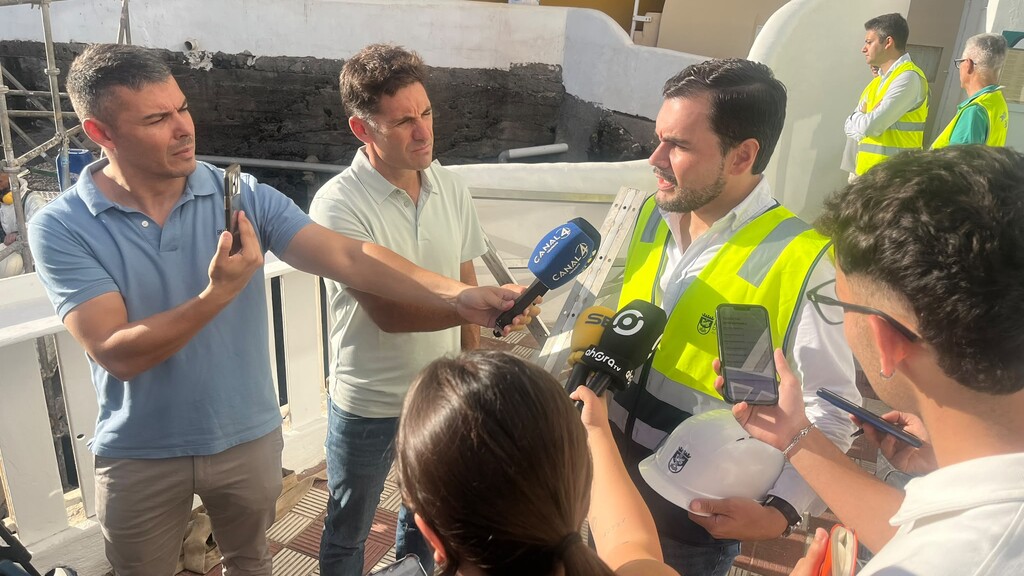
The opposition takes a more critical view. The PSOE in Puerto de la Cruz, whose spokesperson, Marco González, was mayor himself until 2024, is demanding that the town council leadership participate as a party in the proceedings relating to the chemical accident and that the Canary Islands environmental authority be called in. The PSOE at island level accuses Dávila of having announced work on the outfall for years without actually carrying it out.
That said, one criticism of the council’s communication remains: anyone who mentions the replacement of the aqueduct in the same breath as beach closures and good water quality raises expectations that this construction site simply cannot meet.
The fact is: the recent works, which have been widely publicised, will not change anything for bathers or water quality for the time being. The broken outfall pipe remains off the coast and there is no date set for its replacement. Anyone wishing to swim at Puerto de la Cruz’s most popular beach should therefore continue to keep an eye on the water quality at Playa Jardín here.

«Council replaces a pipe at Playa Jardín but sewage problem persists»
No comments on this article yet.