

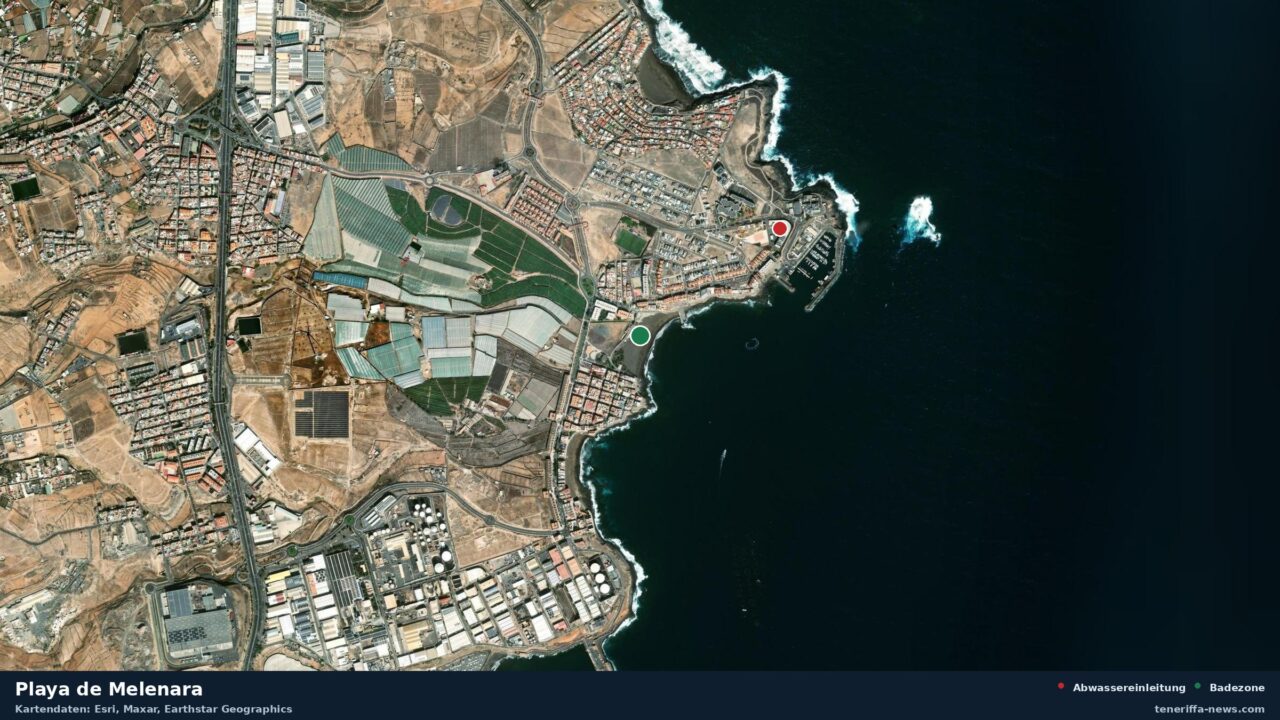
The Telde local authority has closed the northern section of Playa de Melenara on Gran Canaria after elevated bacterial levels were detected there.
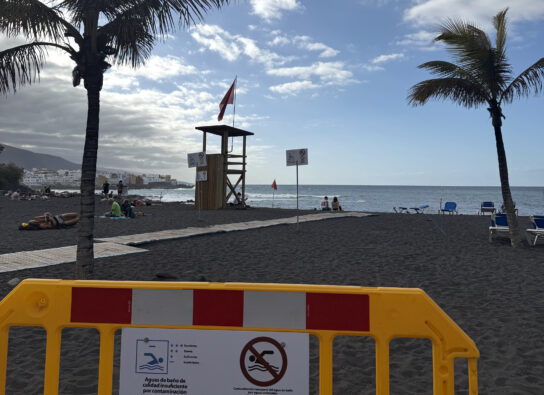
Since Friday, swimming has been prohibited in the northern zone – the area next to the harbour and near the Neptune sculptures. A water sample taken from this area contained elevated levels of faecal enterococci. These gut bacteria are used as an indicator of the hygienic quality of bathing water.
The Canary Islands Government’s health authority discovered the contamination during its routine inspections; on Wednesday, it took samples from the northern and southern parts of the beach. Mayor Juan Antonio Peña imposed the ban on swimming on the authority’s recommendation. According to him, the levels in the southern part were significantly lower.
As Monday is a public holiday, new tests are not scheduled until Tuesday, when experts will take samples at both low and high tide. If the results are favourable and the health authorities give their approval, swimming will once again be permitted in the northern section of Playa de Melenara.
Telde is investigating possible sources of enterococci
The town hall cites several possible causes for the localised change in water quality. Investigations are focusing on the unusually high sea temperatures in recent weeks, the large numbers of bathers, a factor originating from the mainland, and substances that may have been carried in by ocean currents. According to Peña, enterococci may indicate the presence of faecal matter of human or animal origin, and the city is not ruling out any possibilities. «It could be excrement from animals, seagulls, dogs or other animals; it could also be faecal matter from a sewage network unknown to us,» said Mayor Juan Antonio Peña.
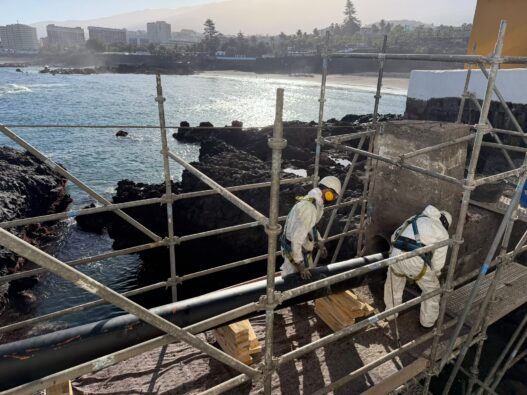
In his view, the indicators suggest that the contamination is more likely to be older rather than fresh, and may have been carried onto the beach by the currents. At the same time, the mixed-ownership company Aguas de Telde is scrutinising the sewer network using cameras and dye tests. The aim is to identify any faults or to rule out the sewers as the source.
Gran Canaria: Melenara is rarely closed; neighbouring beaches are unremarkable
Since 23 January 2023, the official bathing water register has recorded two bathing bans for the Playa de Melenara bathing area, based on 183 samples. In Gran Canaria, local authorities were also recently forced to close several beaches due to a yellow slime blanket. Coastal water quality was also an issue in connection with the four black flags for the Canary Islands.
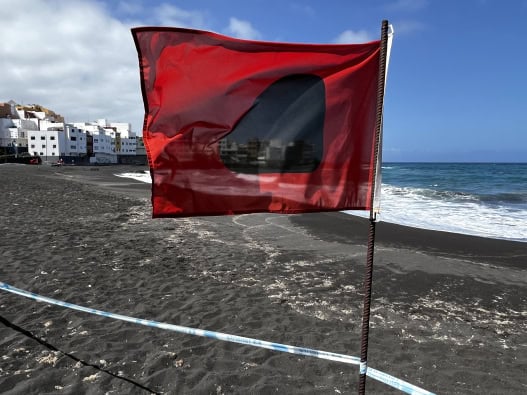
According to Peña, the other beaches along the Telde coastline show normal levels, including Salinetas, Hoya del Pozo, Playa del Hombre, Aguadulce and Tufia. At closed sections of the Canary Islands‘ coastline, a red flag with a black dot is flying, indicating that swimming is prohibited for reasons other than rough seas. The town hall is asking residents and visitors to observe the ban until further notice.
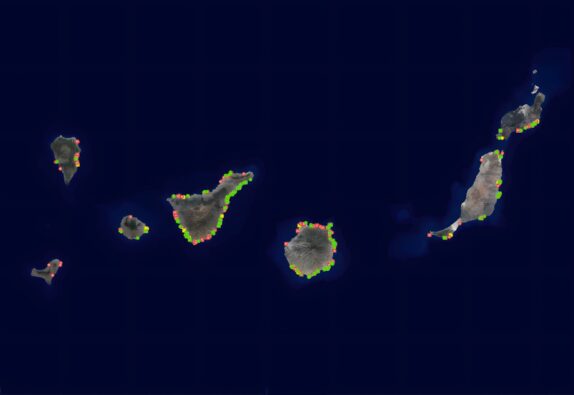
You can now find the latest figures, updated hourly for all beaches in the Canary Islands, along with details of nearby sewage discharges and trends in the figures, in our regularly updated Water Quality Overview. Click here for water quality information for Playa de Melenara.



Comments (0)
No comments on this article yet.