

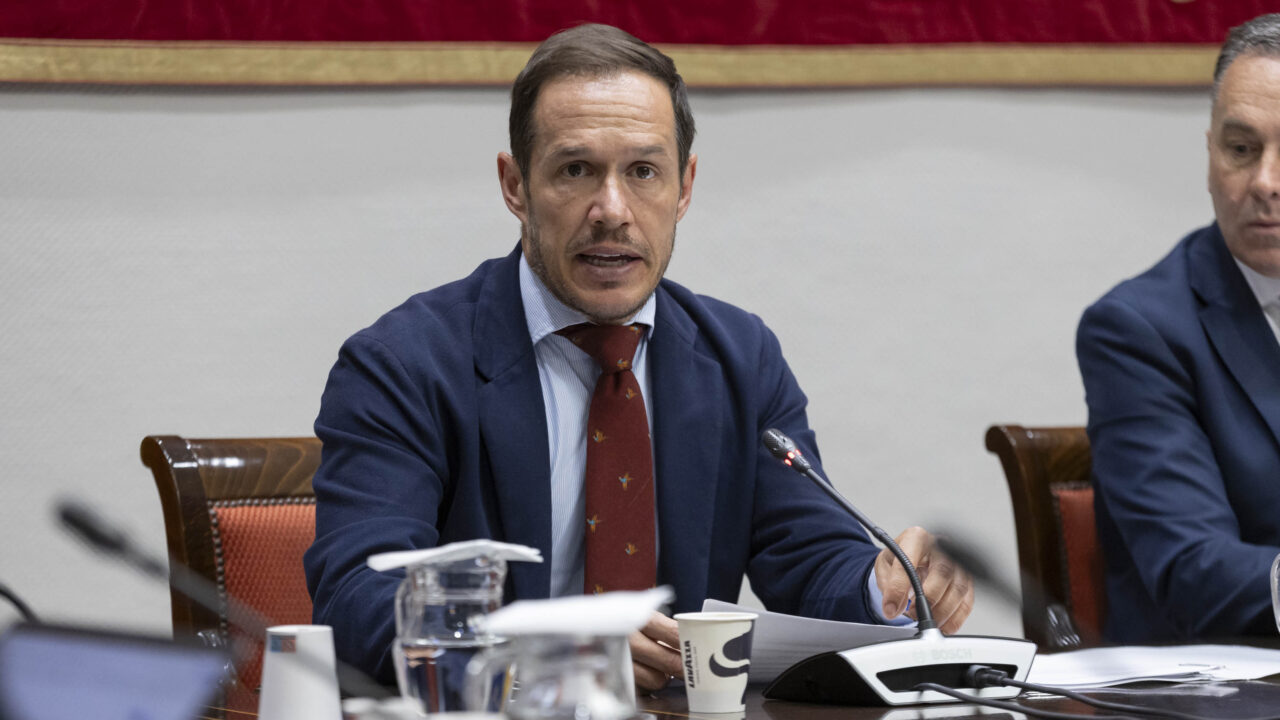
The Canary Islands Government’s Minister for Ecological Transition and Energy, Mariano Hernández Zapata, stated on Friday that he cannot specify when the Turkish power-generating vessel, intended to bolster the island’s energy system, will arrive in Gran Canaria, whilst the company in charge of the initiative is drawing up the technical plans required for its installation in the port of Las Palmas.
Zapata explained to the Canary Islands Parliament that a viable location has already been identified for the floating power station, with a capacity of around 100 megawatts, and that work is now underway on a project that must meet the port authority’s requirements and comply with environmental, technical and safety standards.
The minister emphasised that the vessel will fly the Spanish flag and be crewed by Spanish nationals, and must comply with the safety measures and environmental requirements laid down by Spain and the European Union.
Gran Canaria: Floating power station set to partially bridge the generation gap
The floating installation forms part of the government’s specific response to the electricity generation shortfall in Gran Canaria, after the emergency energy tender secured only 15 of the 138 megawatts the island needs, Mr Zapata said.
The Government has also authorised the construction of two onshore emergency power stations in El Goro, on Gran Canaria, and another in Los Realejos, on Tenerife. Furthermore, the regional minister has pointed out that two emergency power stations are already operational on Tenerife, in Los Realejos and La Campana, and that two more will be operational on Fuerteventura before the end of the year.
Zapata has put the electricity generation shortfall faced by the current administration upon taking office at 268 megawatts, broken down as follows: Gran Canaria, with 138 megawatts; Tenerife, with 80; and Fuerteventura, with 50.
Emergency power stations cost more than 500 million euros
The minister argued that emergency power stations are temporary facilities designed to meet specific needs whilst solutions aimed at modernising thermal power stations are being implemented.
He also highlighted that the Ministry funds 100 per cent of the emergency power stations, with an investment of over 500 million euros.
At the same time, he pointed out that the Government continues to promote renewable energy, photovoltaic self-consumption and geothermal energy in order to move towards an electricity generation system that progressively reduces emissions.
Vox warns of power and water supply disruptions
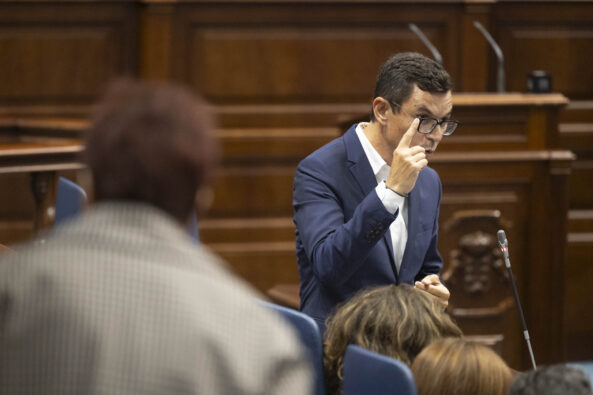
The minister gave this response when asked by Vox about the expected arrival in Gran Canaria of the Turkish vessel that will provide support for the island’s energy system.
Vox MP Nicasio Galván has expressed concern about the energy situation on the islands and has warned that power cuts could also lead to disruptions to the water supply.
Galván pointed out that the energy system’s modernisation is set to continue until 2031 and warned that, until then, the islands must put measures in place to prevent any potential power cuts.
The MP pointed out that energy security will be a key issue in the next parliamentary term and called for decisions on electricity generation to be taken on the basis of technical criteria, with the aim of ensuring a stable supply.


Comments (0)
No comments on this article yet.