

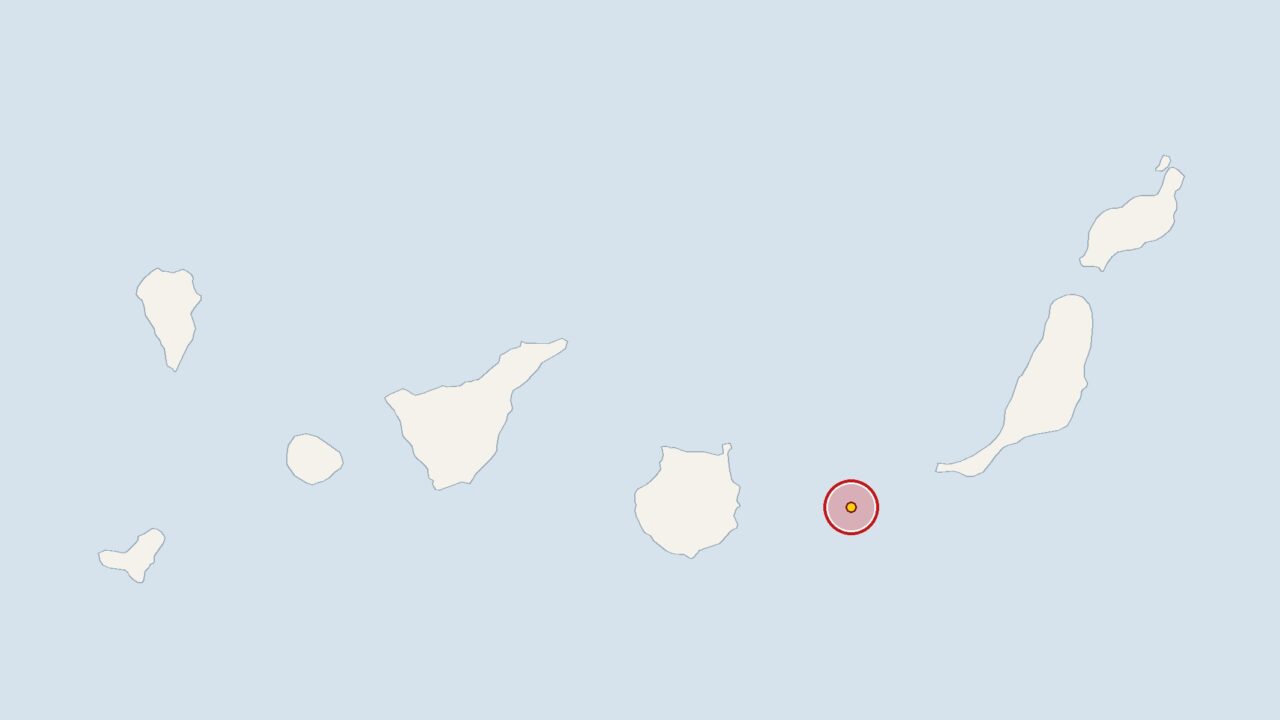
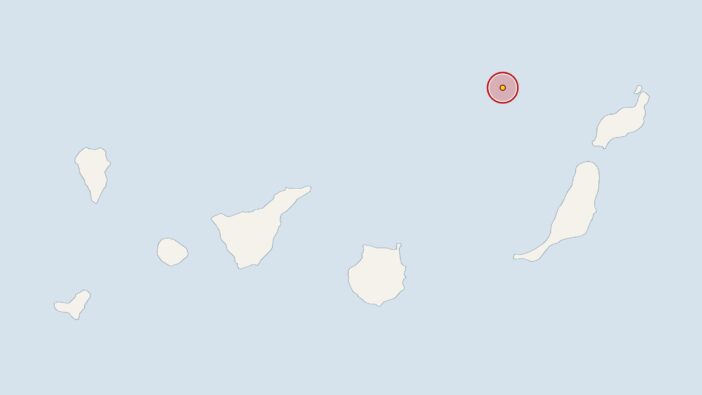
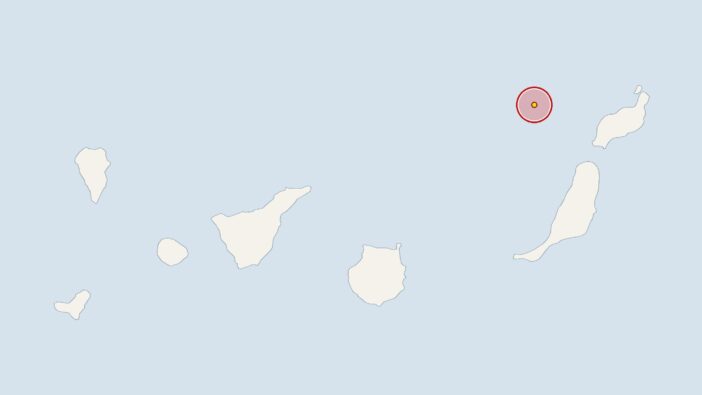
At 5.45 am on Tuesday, an earthquake measuring 2.2 on the Richter scale shook the earth 60 kilometres off the coast of Gran Canaria.
Its epicentre was at a depth of 18 kilometres. The tremor was recorded by the Spanish National Geographic Institute (IGN), whose data is in turn analysed by the European-Mediterranean Seismological Centre (EMSC).
Tuesday’s earthquake was therefore slightly stronger than the average for the past few weeks. In the Canary Islands, the IGN has recorded 46 earthquakes over the past 30 days, an average of 1.5 per day with an average magnitude of 2. The institute recorded twelve tremors over the last seven days and classified this figure as normal.
Gran Canaria: Fibre-optic cables to monitor earthquakes in future
Off the coast of Gran Canaria, a second method of detecting seismic activity will be available in future, alongside the IGN stations. As was announced on 3 November, researchers on the island have converted underwater fibre-optic cables into acoustic sensors. These cables have been lying on the seabed for decades and, as well as measuring earthquakes, also monitor temperature and pressure.
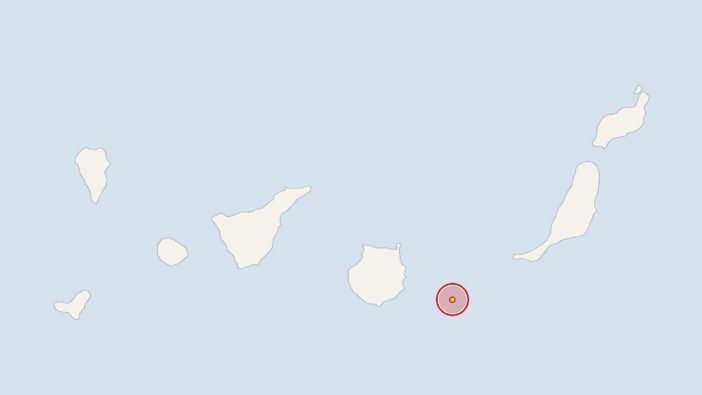
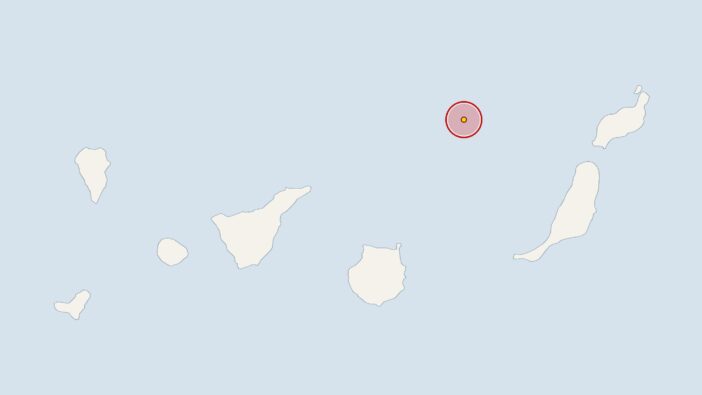
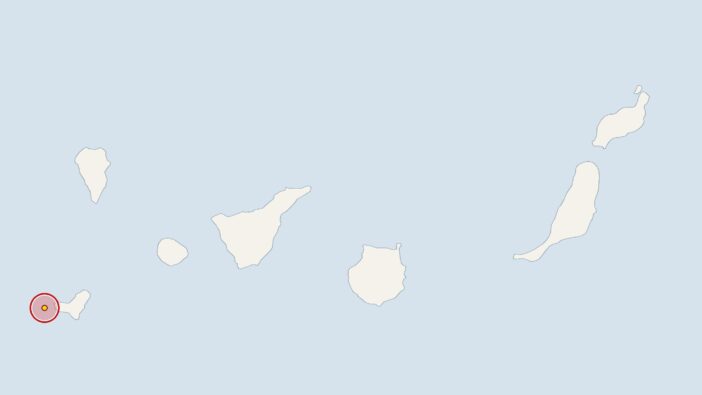
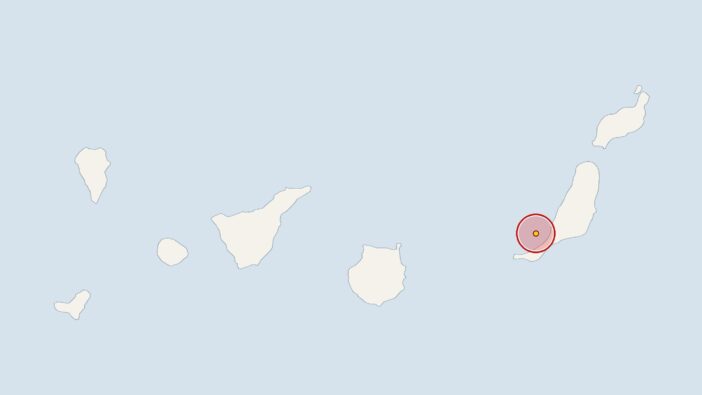
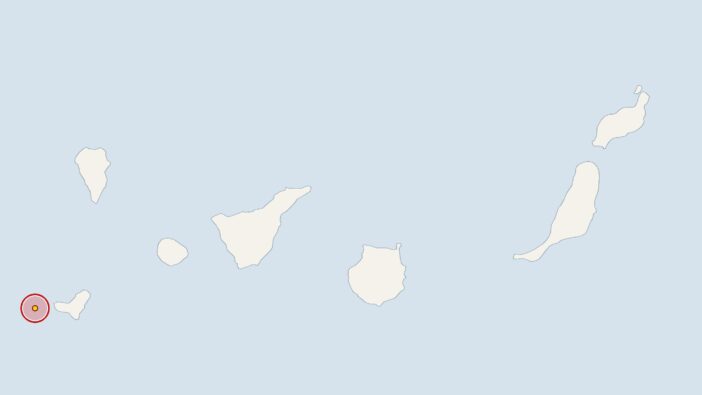
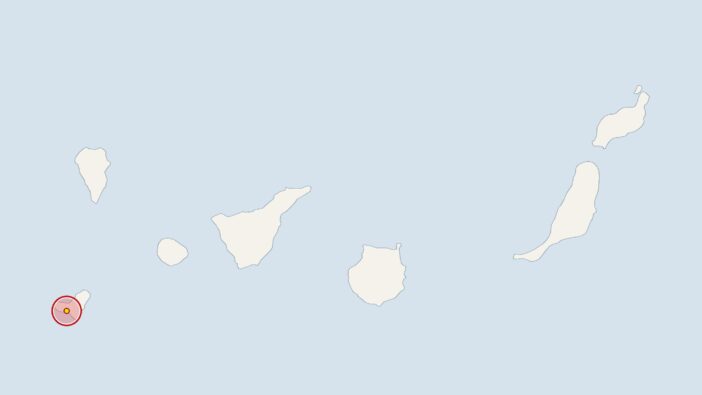
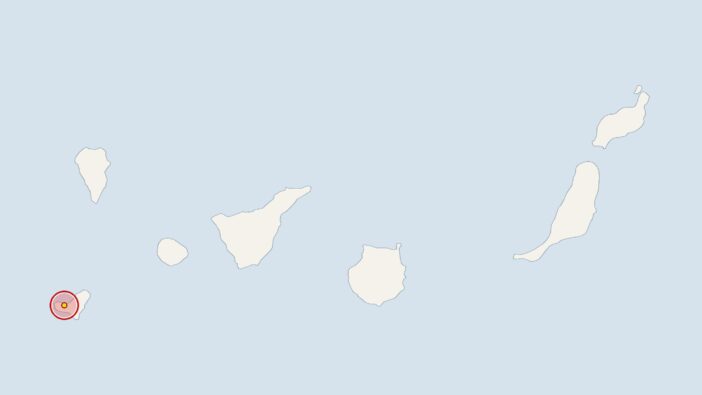
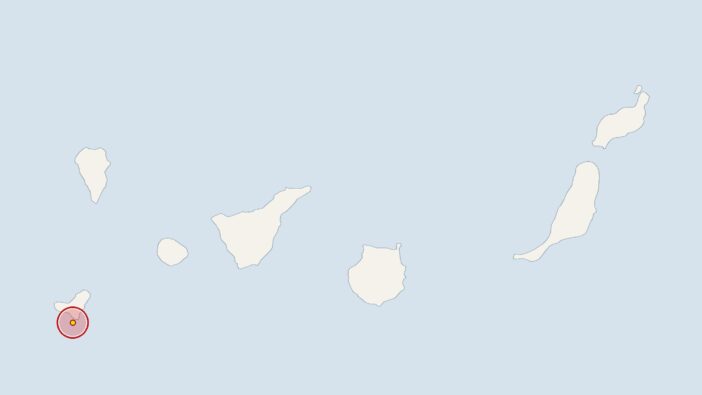
Earlier on Friday at 9.35 pm, the IGN had recorded an earthquake near El Hierro with a magnitude of 2.1, with its epicentre at a depth of 27 kilometres. On Thursday at 11.15 pm, the earth trembled near Tenerife with a magnitude of 2.3 at a depth of 16 kilometres. And on 5 November 2026 at 6.01 am, the stations recorded a 2.5-magnitude earthquake 50 kilometres off Gran Canaria, with its epicentre at a depth of 17 kilometres.
Comments (0)
No comments on this article yet.