

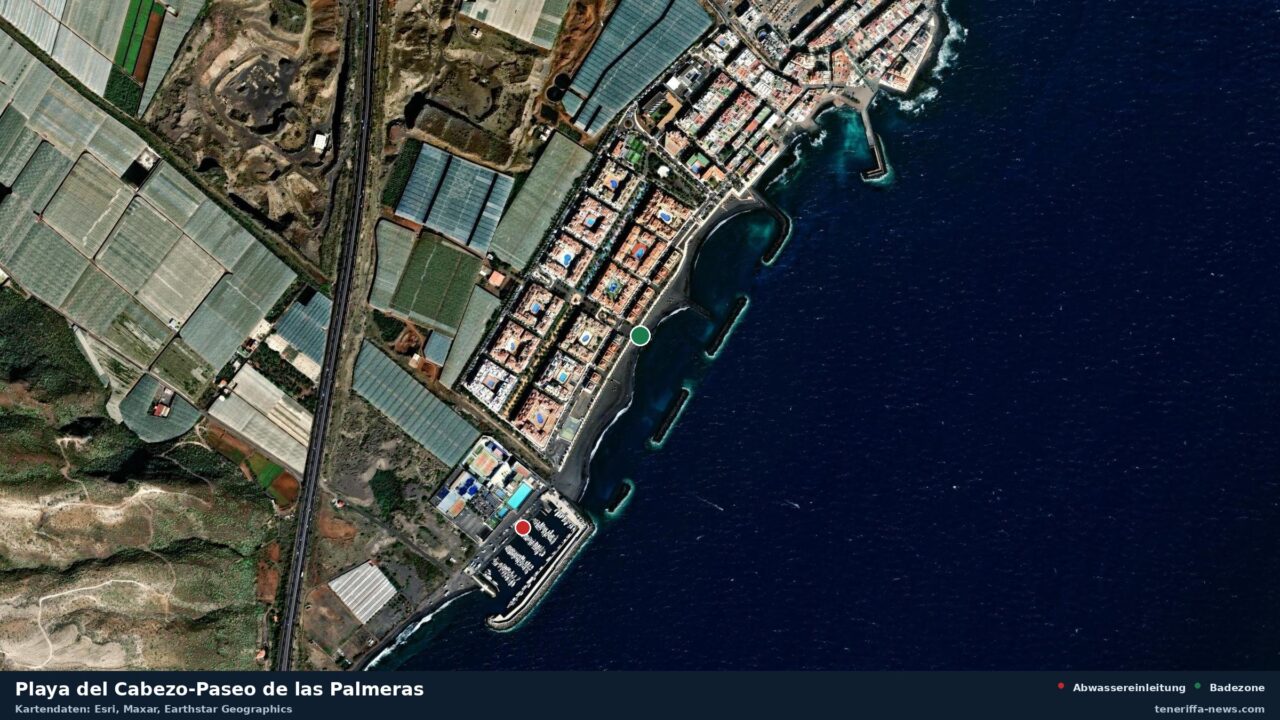
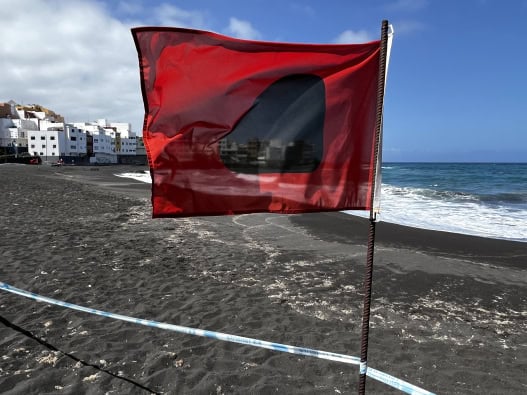
Playa del Cabezo-Paseo de las Palmeras in Güímar has been closed. This is due to excessively high bacterial levels, presumably from sewage. The closure is directly linked to a water sample taken on 9 September. The result has been recorded in the NÁYADE bathing water register maintained by the Spanish health authorities.
The closure was due to the presence of intestinal enterococci, with 410 colonies per 100 millilitres. The limit is 185. This bacterium is one of the two faecal indicators used by the European Bathing Water Directive to measure the presence of sewage in seawater. The latest finding was recorded at the Playa Cabezo monitoring point.
The Escherichia coli count, at 30 colonies, remained below the limit of 500. Both strains of bacteria are found in human and animal faeces. Due to the numerous discharge points for wastewater from the Canary Islands into the sea, the beaches are closely monitored. The assessment of the most recent sample concluded that bathing had to be temporarily prohibited. The beach was marked accordingly in the register.
Sewage sample on Tenerife leads to beach closure
For each sample, the register records the date of collection, the two bacterial readings and the authorities‘ final verdict. The order is usually issued with a slight delay, as the samples must first be analysed and the results forwarded to the local councils. These councils are then responsible for any closures.
The bathing zone’s archive records 73 samples taken since 22 May 2023. This is the first closure in this series. The Canary Islands Government’s discharge register lists four discharges within a one-kilometre radius off the coast of Güímar. The nearest is just 443 metres away and discharges salt water from seawater basins. A second pipe carrying domestic sewage is located 595 metres away.
The structural condition of the discharge point is classified as ‚poor‘ in the register. There is no evidence of a link between the discharges and the sample taken on 9 September, although this seems likely.
The duration of a closure depends on the results of the follow-up sample analysis. Following a closure, these samples are usually collected and analysed on a daily basis until the area can be reopened. The longest closure in recent times was at Playa Jardín in Puerto de la Cruz. Swimming was prohibited there from 1 July 2024 until 16 June of the following year.
You can find the series of measurements, nearby discharges and the trends in the water quality readings for the closed beach in our regularly updated overview of water quality at Playa del Cabezo-Paseo de las Palmeras.



«Wastewater limit exceeded: Playa del Cabezo and Paseo de las Palmeras closed»
No comments on this article yet.