

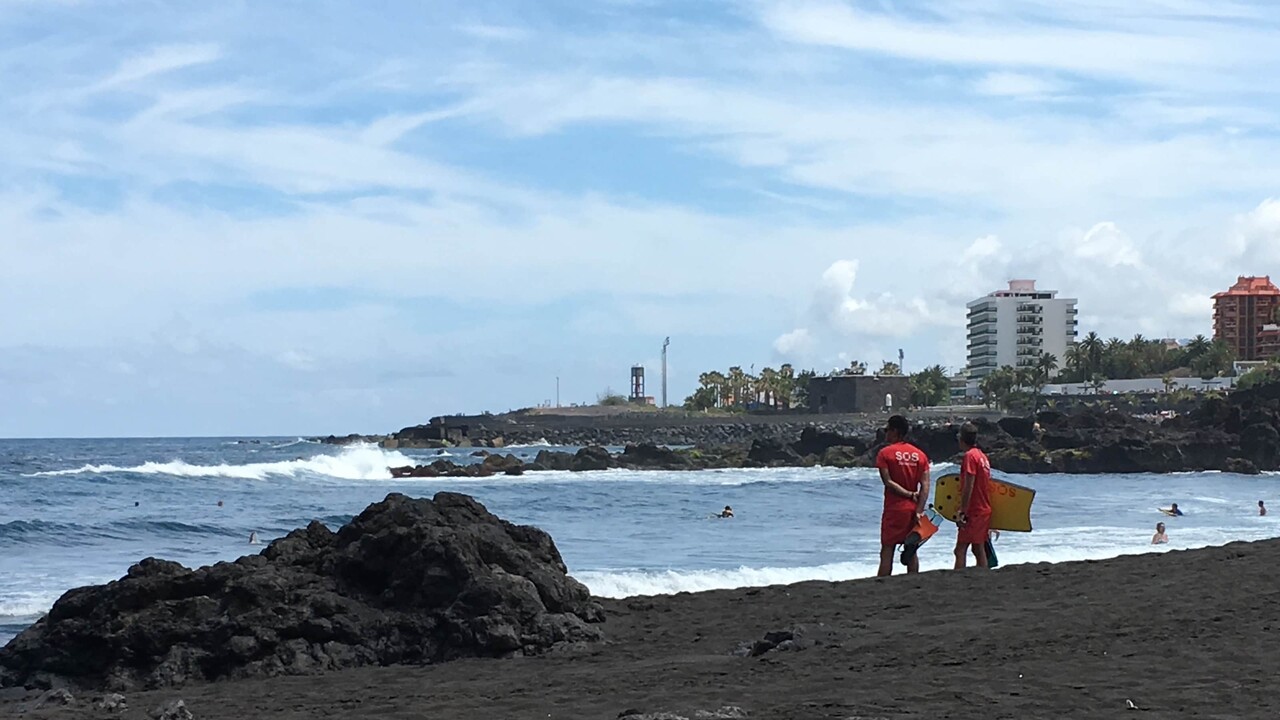
45 people have drowned in the Canary Islands since the start of the year. That is six more than in the same period last year. On Tuesday, the association «Canarias, 1500 km de Costa» presented its figures for the period from January to the end of August. Compared with the 39 deaths recorded last year, this represents a 15 per cent increase.
Tenerife accounted for the highest number of fatalities: 18 people drowned there. This was followed by Fuerteventura with ten deaths and Gran Canaria with eight. Three people drowned on both El Hierro and Lanzarote, two on La Gomera and one on La Palma. Only La Graciosa remained free of fatal incidents.
The association recorded 156 people affected by accidents on the coast, in swimming pools and similar facilities. In addition to the fatalities, lifeguards recorded 13 people with life-threatening injuries, 26 with serious injuries, 22 with moderate injuries and 23 with minor injuries, as well as 27 people rescued unharmed. August alone saw 27 people affected, including six fatalities.
Canary Islands: Six minors drowned – highest figure in eleven years
Last month, one person in an extremely critical condition was rescued, along with nine seriously injured, three moderately injured and four slightly injured people; four people were rescued unharmed. The monthly average remains at six fatalities. Of particular note are the six children and young people who drowned: this is the highest number in eleven years.
The most recent of these incidents took place in August off the coast of Mogán on Gran Canaria. A 14-year-old minor lost his life there. In the same month, seven minors aged between three and 17 were involved in accidents in the water; six of them were seriously injured, whilst one was rescued unharmed.
Since January, the association has recorded 27 minors affected. In addition to the victims, there were eleven people with serious injuries, four with moderate injuries and two with minor injuries, as well as four children and young people who were rescued unharmed.
21 of the 45 fatalities – just under one in two – were on the coast at the time, whilst the Canary Islands government had issued a pre-alert or alert due to dangerous coastal conditions. A review of all incidents reveals a rate of 37 per cent (57 out of 156 victims).
Chano Quintana, chairman of the association named after the Canary Islands‘ coastline, said at the presentation that rip currents in particular were the second most common cause of death in fatal water accidents worldwide. In his experience, around 95 per cent of the population do not know how to behave when caught in such a current. Quintana had already voiced similar criticism at the end of July following a fatal water accident.
Two Brits drowned off the Canary Islands
Among the dead were 31 men (69 per cent) and 14 women (31 per cent). Sixteen of the victims were adults, eight of whom were over 60 years of age; for 15, no official age details are available. The largest group consisted of bathers, accounting for 27 deaths, or 60 per cent. Seven people (15 per cent) died after being swept away by waves or falling from piers, cliffs and promenades. A further four each were anglers and divers, whilst specific details are missing in three cases.
62 per cent of the accidents occurred on beaches, 22 per cent in harbours and other coastal areas, and eight per cent each in swimming pools and natural pools. Eighteen victims from ten countries were identified as foreign nationals, including three Germans, two Britons and two Equatorial Guineans, as well as one Frenchman, one American, one Venezuelan, one Belgian, one Norwegian, one Italian and one Dutchman.
The nationality of four further foreign nationals remained unknown. Three of the victims were Spanish; in 24 cases, no information on the country of origin was available. Even in the interim report covering the period up to July, more Germans than Britons had died by drowning. Most holidaymakers are from the UK, followed by Germans.






Comments (0)
No comments on this article yet.