

The key points: Show summary Hide summary
- The National Institute of Statistics (INE) expects demand for around 100,000 additional households in the Canary Islands within 15 years.
- Six local authorities provide more tourist accommodation than housing for residents, whilst housing for local residents is becoming scarce.
- Declining household sizes and a sharp fall in new-build figures are exacerbating the demand for permanent housing by around 11.5 per cent.
According to one projection, the Canary Islands are set to gain around 100,000 additional households. This will lead to a significant change in the archipelago. It is therefore worth taking a look at the demographic structure, which reveals some fascinating insights.
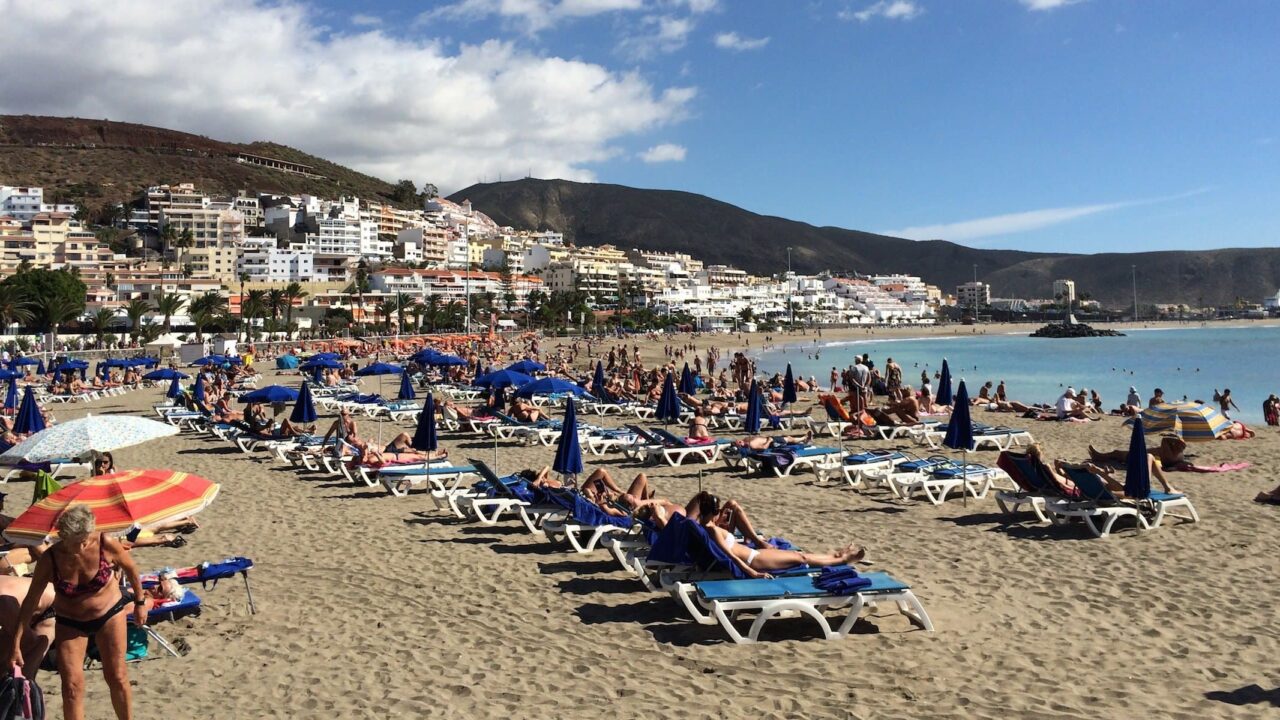
Six municipalities in the Canary Islands have more accommodation available for tourists than for residents. This is shown by data from the Canary Islands Tourism Observatory. According to the data, there are not consistently more holidaymakers in the area, but the occupancy figures suggest that this is likely to be the case for most months of the year.
At the same time, the National Institute of Statistics (INE) expects the number of households in the Canary Islands to rise from the current 871,000 to 971,000 in 15 years‘ time. This means the Canary Islands urgently need more permanent housing. These two trends are therefore at odds with one another.
This is where tourist density is highest in the Canary Islands
The municipalities with the highest concentration of tourist accommodation are Pájara on Fuerteventura, Yaiza and Tías on Lanzarote, Mogán and San Bartolomé de Tirajana on Gran Canaria, and Adeje on Tenerife. In Pájara, there are places such as Morro Jable and Costa Calma. Yaiza is largely characterised by Playa Blanca. Tías is home to Puerto del Carmen, whilst in Mogán, destinations such as Puerto Rico and Puerto de Mogán attract more holidaymakers than local residents. San Bartolomé de Tirajana is heavily influenced by tourism due to Playa del Inglés and Maspalomas, and Adeje is home to the tourist hotspots of Playa de Las Américas and Costa Adeje.
In towns in the Canary Islands heavily dependent on tourism, up to 71 per cent of the population are holidaymakers. This is shown by a report from the boom period of Canary Islands tourism during the 2024 high season. These municipalities are clearly designed to have, in most cases, more tourists than residents. Over decades, the infrastructure and the local economy have been geared towards large numbers of holidaymakers.
The Canary Islands need more housing
However, looking beyond the present situation reveals that the islands are sliding into a housing crisis. Currently, around one in two tourist beds is in a hotel. The rest are spread across apartments, flats, fincas and entire houses let out to tourists. It is precisely this accommodation that is lacking in the rental market. If a good 100,000 additional households are needed by 2041, this will present a Herculean task for policymakers.
Not all of these homes will need to be built from scratch, but at the very least they will need to be refurbished. This is because some housing can be created from flats that are currently vacant, as well as derelict houses and plots of land. However, new residential areas will also need to be developed (more on this here). That said, the number of new builds has recently fallen sharply.
The Canary Islands have at least recently responded by announcing that building permits will be issued much more quickly in future. However, it is doubtful whether this will be enough to meet the demand for around 11.5 per cent more housing. At least the Canary Islands are not alone in facing this problem. According to the report, the increase would amount to just under 21 per cent in Murcia, 16 per cent in the Valencia region and just under 15 per cent in the Balearic Islands.
Canary Islands: Will there soon be fewer generations living under one roof?
One reason for this trend is the housing model. At present, several generations often live together. A trend towards younger generations leaving the family home is expected, which, amongst other things, will lead to a falling number of people per household. Whilst an average of 2.6 people currently live together in each household, the forecast suggests this figure will fall to 2.56 in 15 years‘ time.
What sounds like a minor change has enormous implications when combined with a rising population. More than 161,000 people currently live in La Laguna on Tenerife. There, this small change alone would mean a demand for around 965 additional flats or houses. Single-person households are then expected to account for 29 per cent of the total.
The Canary Islands are therefore faced not only with the task of developing more land, but above all with making smarter use of existing housing stock. And with addressing the issue of rezoning. Initial steps in this direction have already been taken (see below). Above all, however, this would mean an even greater distinction between tourist resorts and towns with a predominantly local population.






«Canary Islands face surge in tourists and smaller families»
No comments on this article yet.