

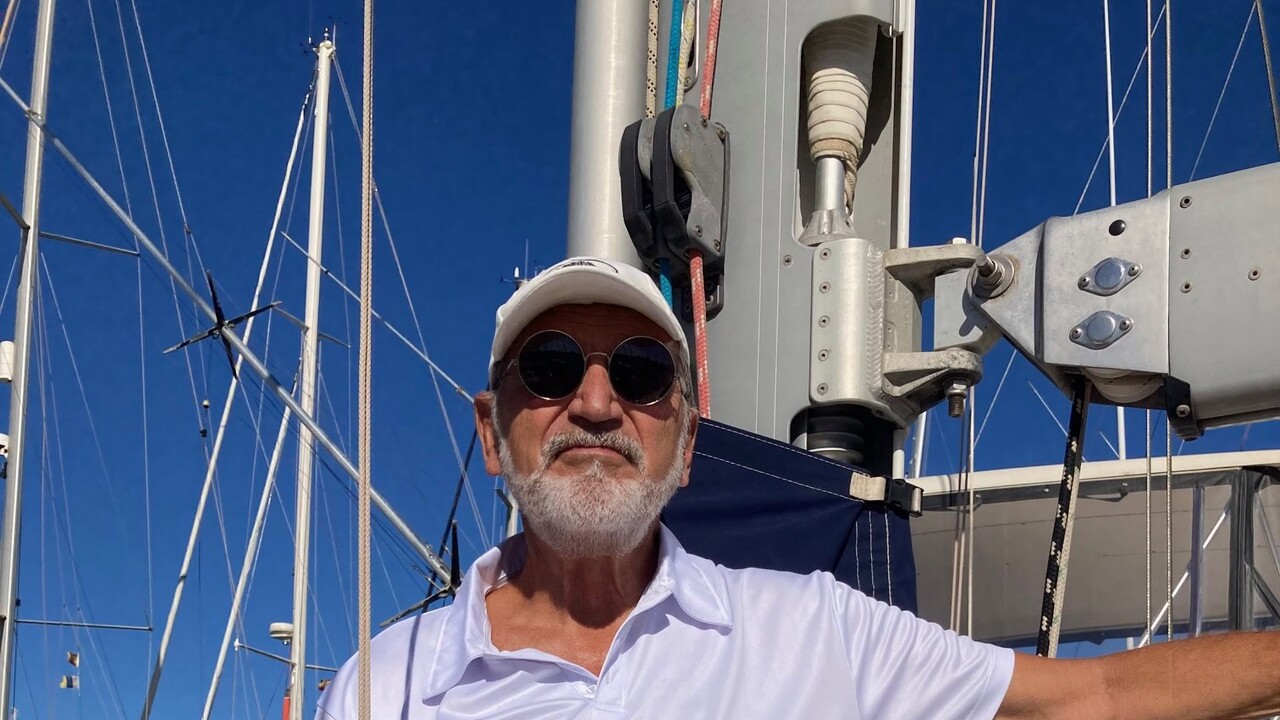
Von Renato Hertel
The ‚green bridge‘ provides an attractive link between the marina and the city centre of Tenerife’s capital. The regeneration work to connect the city centre to the sea is already visible. Further developments are certainly planned for the next phases of the redevelopment to enhance the marina’s appearance and make it more functional.
Unfortunately, apart from the designs by Studio Herzog & de Meuron, I am not aware of any public information.
The history of the marina at Santa Cruz de Tenerife
I have known Santa Cruz for more than 45 years and, as a professional skipper, have visited marinas all over the world. Since 2017, I have been delighted to be back in Tenerife, where I now have my permanent residence. Unfortunately, the harbour does not even remotely qualify as a yacht marina.
Marinas can be found all over the world. Whether they are simple converted fishing harbours on the Greek islands or luxurious mega-yacht marinas in France and Italy, or marinas on the Spanish mainland: all these facilities have one thing in common – a small café or club restaurant where visiting water sports enthusiasts can meet to share their experiences or socialise with the local community.
In most marinas, you can also find yacht service companies, spare parts shops, repair workshops, sailmakers and laundries – right through to charter agencies, tourist information centres, car hire companies, a boat refuelling station, fashion boutiques, souvenir shops, supermarkets, police and salvage and rescue control centres.
One service that should not be overlooked is a dry dock for vessels undergoing general overhauls, repairs, underwater cleaning and maintenance, or used to provide shelter from the elements for long-term moorings; these vessels are moved ashore and secured using a travel lift. All these types of business operate highly efficiently in the world’s leading and largest marinas, and have created many new jobs.
The situation at the marina in Santa Cruz de Tenerife
Although the Marina de Santa Cruz would have had sufficient space and areas available for all the aforementioned purposes, these areas are either used for other purposes or not used at all. There is no café, despite a suitable building being available in the marina, and no on-site yacht services. There is not even the option of securely storing bicycles in the marina car park.
Furthermore, mooring fees for sailors are in the top quarter of all marinas, and Santa Cruz Marina is regarded in sailing circles as „the most expensive Canary Islands mooring without services“. Apart from toilet and shower facilities and a laundry room, there are no other services apart from the compulsory harbour master’s service at the jetties.
International cruise tourism and ferry visitors to Tenerife
A blue line runs through the marina, guiding cruise tourists into the centre of Santa Cruz. There are only three wooden benches where visitors can linger for a while and watch the boats come and go. Perhaps the odd tourist might order a cortado or buy a souvenir in the future sailors‘ café?
A look to the future: „Yachting is the Future“
If the existing space is used with an eye to the future, Santa Cruz Marina could become the premier destination for all transatlantic sailors from Europe, Africa and the Middle East. It would also serve as a safe port of departure for voyages to all transatlantic nations. At the same time, it would relieve the strain on the overcrowded marina in Las Palmas de Gran Canaria during the annual regattas.
Marina comparison between Gran Canaria and Tenerife
The large marina on Gran Canaria has space for more than 1,000 vessels and is permanently overbooked. As well as a small shipyard with a travel lift, the marina features nine restaurants, spare parts shops, diving shops, fashion boutiques and a small supermarket.
Every year, several transatlantic regattas set sail from there, with more than 300 boats taking part. Mooring fees in Las Palmas are also 50 per cent cheaper – whilst still offering proximity to the city and good facilities. 20 per cent of the annual moorings must be vacated between October and December, as the major transatlantic regattas have booked these spaces years in advance.
An opportunity for Santa Cruz de Tenerife
At present, there is no prestigious, service-oriented yacht marina worthy of the name on either the European or African Atlantic coastline. Thanks to its location, climate and safety, Santa Cruz has the opportunity to claim this distinction for itself.
Internationally renowned marina operators can ensure smooth operations from the ground-breaking ceremony right through to the letting of the final retail units. A significant proportion of the financing is covered by the letting of the premises to the businesses based there. Mooring fees for yachts are kept within reasonable limits.
If there is a prospect of initiating a forward-looking discussion, I am more than happy to do my bit to help ensure a positive outcome. I have been running the TRANS-OCEAN.ORG station in Santa Cruz for the whole of Tenerife since 2020, and as such I am the point of contact for international round-the-world sailors seeking assistance of any kind.






No comments on this article yet.