

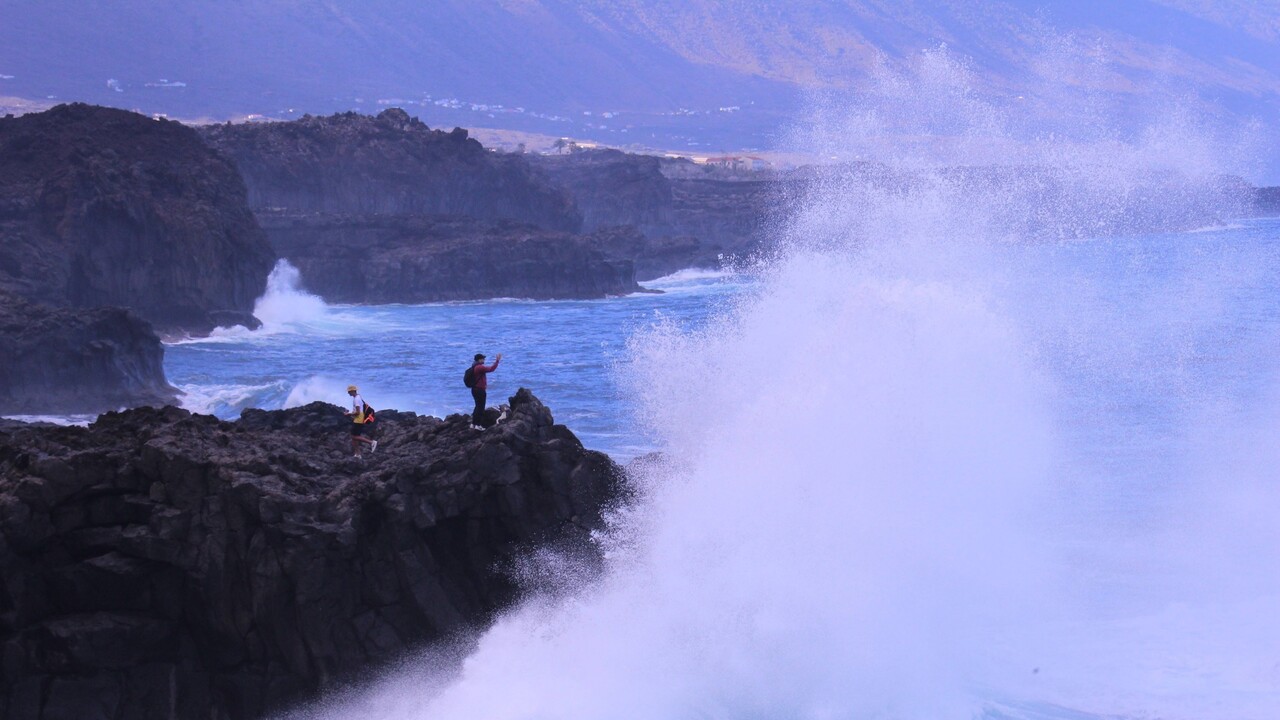
There are three types of people on the internet: one is mostly silent and just consumes content. The second has always known better. In their quest for validation, they comment on absolutely everything. Just like this week.
The Canary Islands lie in the middle of the Atlantic. The weather there can change very quickly. Weather warnings are issued accordingly at an early stage. When the media pick up on such warnings, it doesn’t take long before the first commenters post a photo of where they are. The narrative: «You lot with your scaremongering, but look at this: I know better – and I want everyone to see it!»
This week was no exception. The authorities issued a weather warning for several of the Canary Islands, and we reported on it. A Calima, bringing dry conditions, was forecast for the second half of the week. From the weekend onwards, waves and an increasing likelihood of rain were expected. It wasn’t long before the first Facebook commenters were gearing up for a counter-attack.
Our post from Wednesday reads, word for word: «It is getting warm and dry in the Canary Islands. The Met Office has issued a Calima warning. The government is concerned about forest fires. Rain and high waves are then expected towards the weekend.»
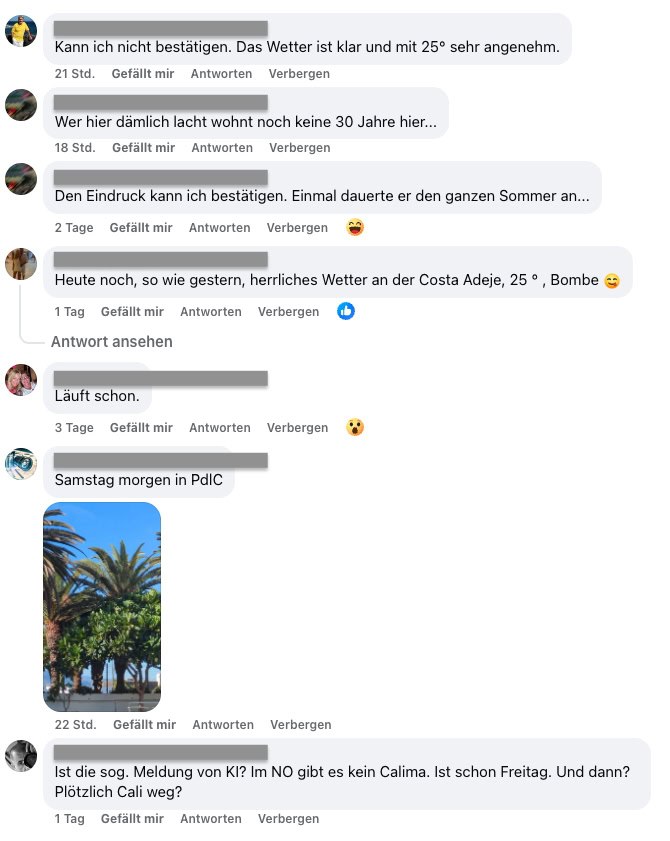
No sooner had it been published than the first comments appeared on Facebook: «I can’t confirm that. The weather is clear and, at 25°, very pleasant,» it says there. Just below that, another commenter asks: «Is this so-called report generated by AI? There’s no Calima in the north-east.»
«There isn’t just one type of Canary Islands weather»
Terms such as ‚locally‘ and ‚in places‘ are used deliberately in weather warnings. The aim is to make it clear that an archipelago covering 7,492 square kilometres does not have just one type of weather. It can be hot with Calima in the east, whilst it’s raining in the west. In between, for example on Tenerife, high waves are possible which, in the worst-case scenario, could sweep several people off the harbour piers.
The average Facebook commenter isn’t bothered by this. They usually only read part of the post; often, the headline alone is enough to form an opinion. After hastily skimming through the news snippet, a photo of the sun is quickly posted as supposed counter-evidence. If the event does turn out as predicted, the comment is hastily deleted. If not, well, we’ve always known: ‚The media at it again with their scaremongering!‘
It becomes dangerous when other people take such warnings less seriously – partly because they are played down by so-called Facebook experts – and put their lives at risk.
Incidentally, the person who then loses their life in the waves is the third type of ‚internet person‘. They, too, are seeking validation – through photos that are as spectacular as possible. Just 15 years ago, hardly anyone would have willingly put themselves in danger. Today, things are different: a selfie taken right out in the surf off Tenerife is perfect for one’s online followers back home. At least, if you manage to post it.
«Social media bears some of the blame for the drownings on Tenerife»
No comments on this article yet.