

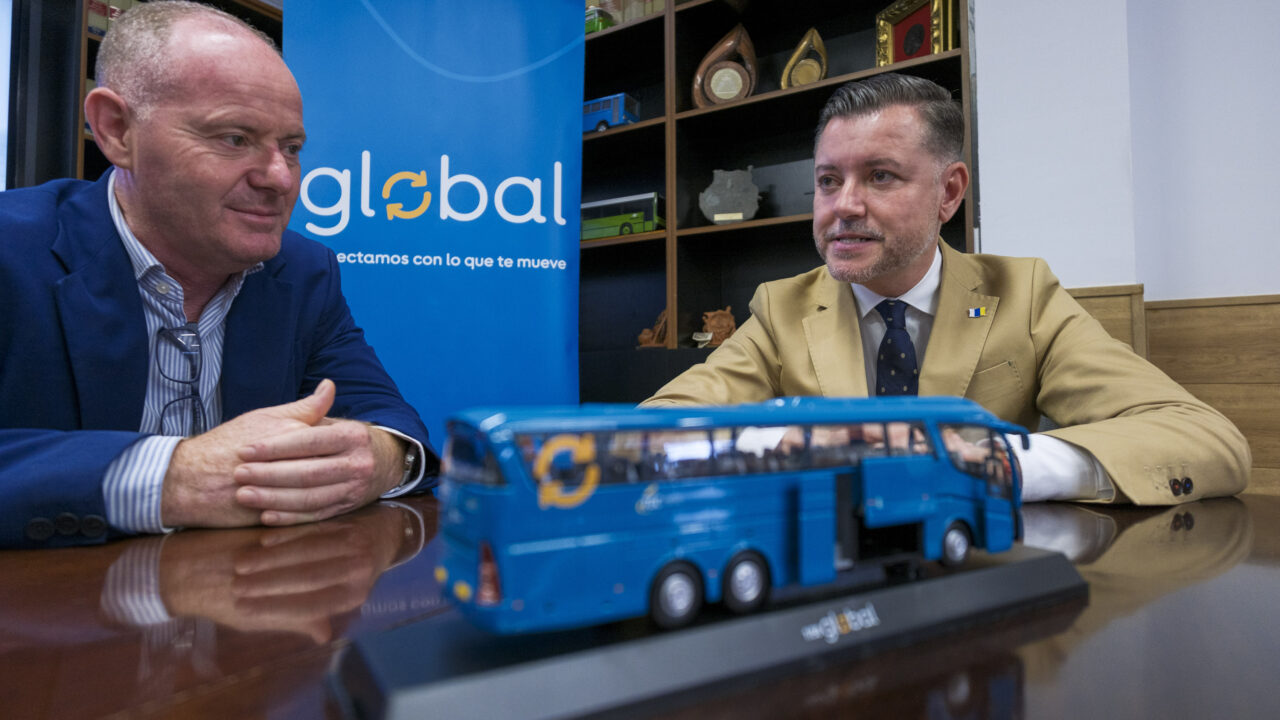
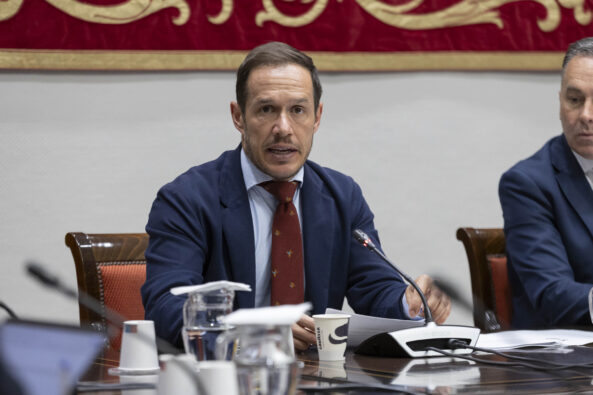
Teodoro Sosa, the CC-Primero Canarias candidate for Congress in the province of Las Palmas, will call on the State to «update the true cost of regular passenger transport» because «as recently as last week, the Gran Canaria Island Council was owed 75 million».
In a meeting with Guaguas Global, Sosa, the councillor responsible for this area on the Gran Canaria Island Council, has announced that he will request that the funding be allocated through the REF and has explained that the island council is working «to set up the public company for regular passenger transport in Gran Canaria».
The candidate has emphasised that he wants to «state the figure of 75 million loud and clear», because «promises are made, but then no commitment is made».
Gran Canaria: Sosa calls for full funding for free bus travel
For Sosa, «it’s easy to make promises, but let someone else foot the bill», which is why the nationalist coalition has stated that «as for these cash flow problems, which are being felt by the transport operators, mainly Global and Guaguas Municipales, we are not going to back down».
«If trains are subsidised on the mainland, we demand that buses be subsidised here,» said the candidate, who regards this as a «logical» measure, all the more so given that the islands have experienced «a revolution in regular passenger transport», with passenger numbers rising from «66 million to 104 million over the past year».
According to the leader of Primero Canarias, this increase in the number of passengers using public transport has prevented «our roads from becoming even more congested, particularly in Tenerife and Gran Canaria».
CC-Primero Canarias has announced that it is demanding that «funding be brought up to date; free transport does not cost 120 million; it costs at least 160 million euros for the whole of the Canary Islands».
Canary Islands discounts on air and sea transport to be included in the REF
He also argued for the need to «enshrine» the 75 per cent discount on air travel in the Economic and Fiscal Framework, stating that this «is not a gift» but «a requirement», because «it is essential that a ticket which previously cost 400 euros should now cost 100 euros».
Sosa pointed out that «no one in the Canary Islands needs to be told what a revolution this has been in terms of connectivity between these islands and the mainland, but we have to keep demanding it year after year» because, he complained, «the airlines are paid late and inadequately, as the budget allocation for this is always insufficient».
He has extended the demand to the maritime transport sector so that «the 50 per cent currently being paid, given that the other 25 per cent is being covered by the Canary Islands Government, is also included in the REF».
Connecting the islands «is also necessary, whilst always championing the non-capital islands», because «everything is more expensive in Lanzarote or Fuerteventura» and, in the same vein, he highlighted La Graciosa «since the cost of maritime transport between Órzola and Caleta de Sebo, which is ‚the bus‘ for this eighth island, is not being covered there».
Guaguas Global complains about delayed and insufficient funding
For his part, Global’s chief executive, Víctor Quintana, expressed his gratitude for the visit, which had been arranged to «convey to them our concerns regarding the funding for free transport», and regarding that money which «we believe is insufficient, does not cover our needs and, on top of that, arrives late».
During the various meetings with the political party candidates, he explained, «we have asked that these funds be provided in a timely and proper manner so that we can manage day-to-day operations in a coherent way».
As Sosa has pointed out, he said, «around 75 million euros, comprising this year’s allocation and the remaining portion from last year, is due to arrive in Gran Canaria» and, of that amount, «a significant portion is allocated to us and we have to be constantly dealing with the banks to secure that money in advance», which «creates cash flow pressures».
According to Global’s managing director, these sums «not only are meagre, but they do not fully subsidise the free service because they do not cover the full cost», and this «creates an initial shortfall for the company, which the Island Council must then make up to restore the balance».
Quintana has called for «the necessary funding to be secured so that policies on free access can be implemented properly».



Comments (0)
No comments on this article yet.