

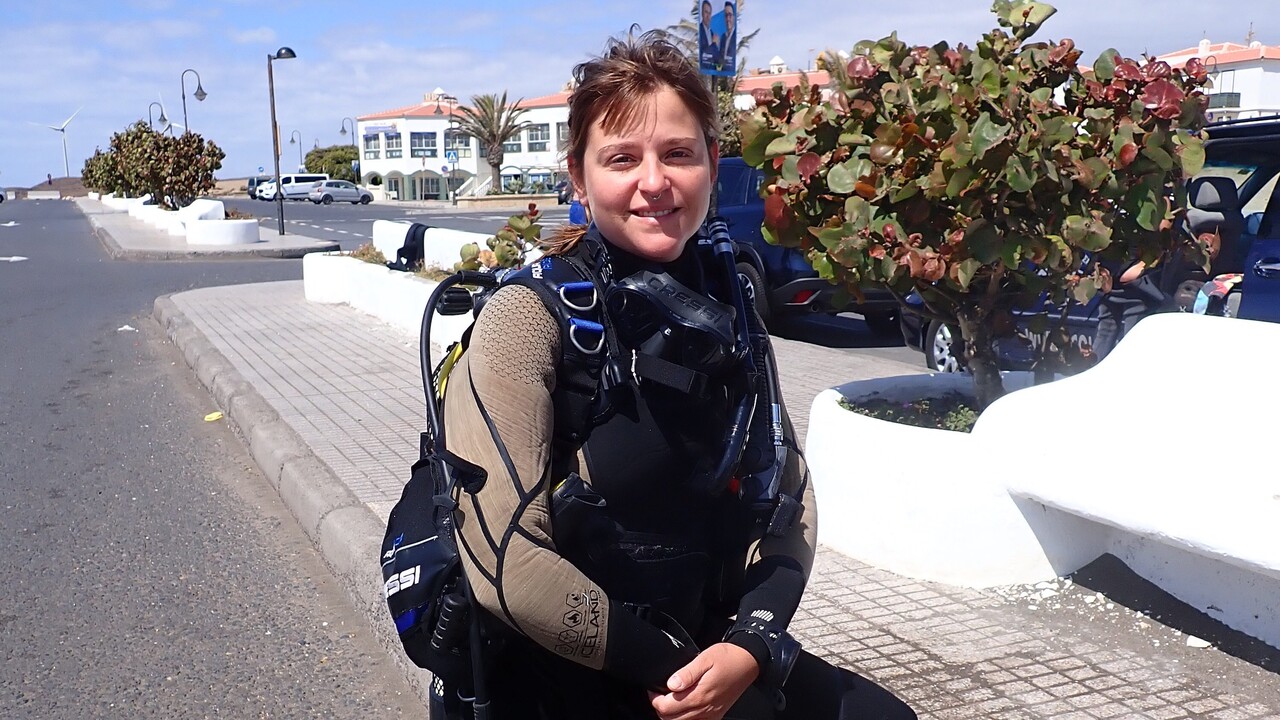
«I think every dive has an impact on your personal development, and I love the ocean a little bit more each time.» Alice Glenda Bianchi is a marine biologist from Italy. During her studies, the 31-year-old came up with the idea of opening a diving school on Tenerife that combines underwater sampling with diving activities for beginners and ocean lovers. In this interview, she talks about her career, the impact of climate change and what each of us can do to protect our oceans.
Your career path took you from Germany to Tenerife. How did that come about?
«I studied marine biology at the University of Genoa and wrote my thesis there. I had the opportunity to publish the results in collaboration with the Institute of Marine Biology at the University of Bremen. Following that, we decided to move to Tenerife and open a diving school.»
How did a qualified marine biologist come up with the idea of opening a diving school in Tenerife?
«The idea for the diving school is linked to a work placement. I came up with it during my second year of my Master’s degree. This was because I was doing a work placement abroad at the time and really enjoyed it. I thought it was a brilliant idea to foster cultural exchange between different cultures – and, of course, because of my love of diving.»
How does the diving school fit in with your job otherwise?
«The aim of the diving school is to collect samples for a long-term analysis of data at the same location. It would be great if, in five to ten years‘ time, we had a complete data analysis that we could refer to in order to see how a seagrass bed or a community on the hard seabed changes over the years. The focus here is on diving and underwater sampling, particularly of invertebrates, seagrass and algae.»
Why did you choose Tenerife as your location?
«We chose Tenerife because it’s always summer here. So it was mainly for business reasons. Thanks to the weather, we can work all year round and are able to offer two internship periods. This makes it easier for students from different universities to plan their internships with us.»
Have you noticed any changes in the sea over the past few years?
«Yes, I’ve noticed changes in the sea, though not that many yet, as we’ve only had the diving school since 2022. But every time I go into the water, I notice changes caused by the algal bloom.»
You mentioned algae: visitors have also been noticing them more and more recently.
«At the moment, there are problems with the algae 'Rugulopteryx', an invasive brown algae from Asia. I can see it spreading to various diving spots where it wasn’t found before.»
What inspired you to work at sea?
«For as long as I can remember, I’ve always loved being in the sea. I got my first diving qualification when I was ten years old, and as a teenager I qualified as a diving instructor. So I was very sure from an early age that this was the career path for me.»
Have you ever had a particularly memorable moment at sea that left a lasting impression on you?
«I’ve done so many dives that I can’t single out one in particular. I think every dive has an impact on your personal development, and I love the ocean a little bit more each time.
My father probably had a huge influence too, because he always took me diving and introduced me to the water when I was a child. So my father has had a huge impact on my dives and my life underwater.»
Do you have any particular concerns about the environment and the sea?
«The temperature. Climate change is a reality and something we need to address. We can see – not just me, but all divers – how the environment is changing. You can tell from the animals and the currents. So, naturally, it’s an issue that’s very much on my mind and one I worry about.»
You said that you only experience the temperature for a short while. What exactly do you notice in your day-to-day life?
«Another issue that’s on my mind is the rubbish that we produce and leave in the sea. We’ve adopted a specific approach to this: ‚Dive Against Debris‘, where we collect rubbish from the sea once a month during our work placement. We often end up with several kilos of rubbish. That’s great because it means we can do something for the environment. At the same time, it’s also very sad because we see just how much rubbish there really is. Last month, eight of us collected about four kilos in 45 minutes.»
What would you like to encourage people to do? What can they do to protect the oceans?
«I’ve got a few tips I’d like to share. Always take your rubbish with you. Don’t leave anything behind, and even if you see rubbish that isn’t yours, pick it up. Leave the animals in peace; please don’t take any shells or stones with you. They don’t belong to you; they’re part of the environment. Every material that exists in the world is needed by the animals and the earth to create new life.»
Do you have any further information?
«Yes. Now that it’s summer, people like to get a tan and use sun cream. So here’s another tip: only use sun cream that’s environmentally friendly and free from chemicals. Make sure the ingredients aren’t harmful to the corals and the reef. It’s also important to note that sun cream should be applied some time before you go into the water – ideally half an hour beforehand, or as per the instructions on the packaging. Otherwise, it will spread in the water and become part of it.»


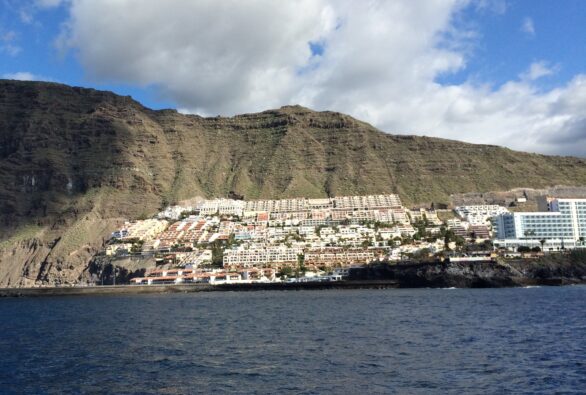
«Divers collect four kilos of rubbish in 45 minutes off Tenerife»
No comments on this article yet.