

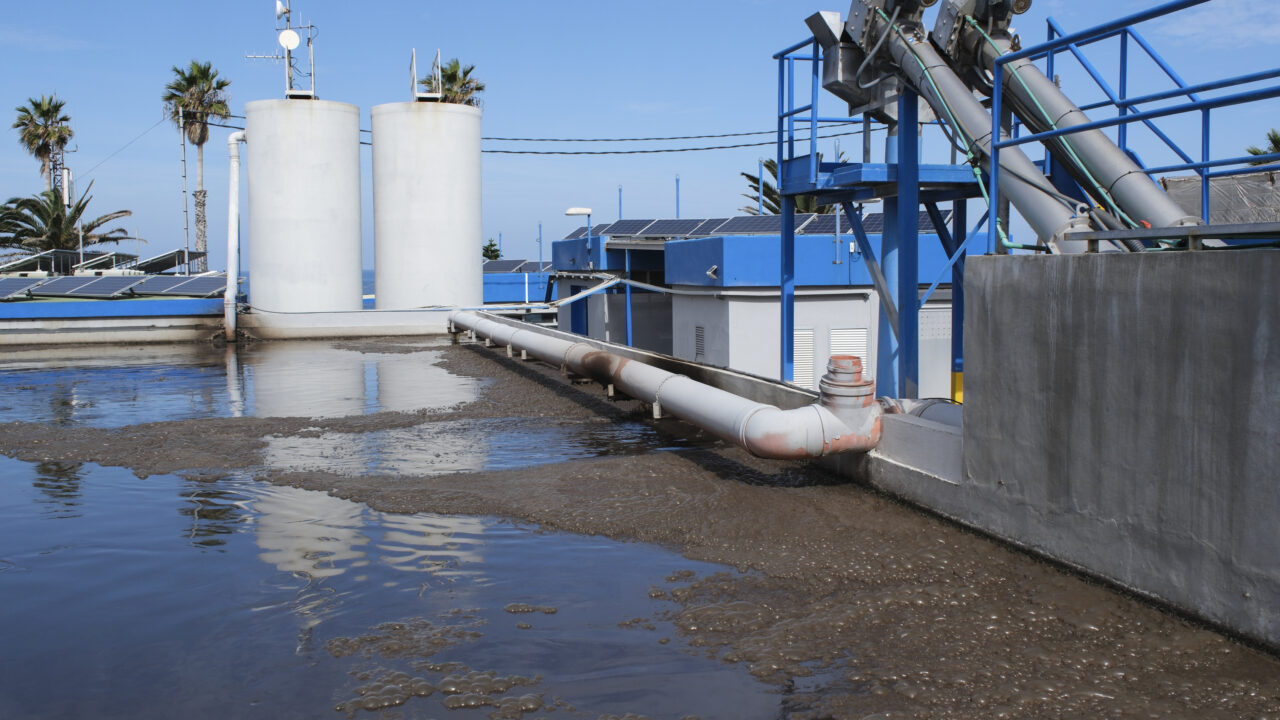
According to Javier Davara, the manager of the Tenerife Island Water Council (CIATF), the inadequate development of municipal sewerage networks and the fact that some homes are not connected to this infrastructure are the main «obstacle» preventing an increase in the proportion of wastewater treated on the island.
Davara explained in an interview with EFE that Tenerife currently has a «very, very advanced» wastewater treatment capacity, but that much of this wastewater does not reach the treatment plants because local councils have not yet completed their sewerage networks or because homes that have sewerage connections are not connected to the network.
Tenerife treats 71-72 per cent of its wastewater
Tenerife: Wastewater treatment capacity rises to 152,000 cubic metres per day
As he pointed out, approximately 71 to 72 per cent of wastewater is currently being treated, although this percentage is rising as new treatment works come into operation and more wastewater is fed into the system.
The head of the CIATF has highlighted that the potential wastewater treatment capacity has increased significantly in recent years, rising from eight to fourteen treatment plants and from around 80,000 to 152,000 cubic metres per day in treatment capacity.
Davara, who has emphasised that the problem now lies in channelling wastewater to the treatment facilities, cited Santa Cruz de Tenerife as an example, where there is a «virtually house-by-house» inventory of properties connected and not connected to the sewerage system, with a connection rate of between 97 and 98 per cent.
However, he pointed out that there are municipalities and villages in the mid-altitude areas where the municipal sewerage networks are «very underdeveloped», including parts of the Acentejo region and certain areas in the mid-altitude regions of the south of the island.
In this regard, he pointed out that completing these networks and connecting households would enable progress towards a sanitation coverage rate of over 95 per cent.
Around 600 million to complete the networks
The CIATF manager has estimated that the development of the municipal sanitation networks envisaged in the Tenerife Hydrological Plan could require an investment of around 600 million euros, although he has pointed out that the Island Water Board is responsible for planning and determining the requirements and costs, whilst funding is the responsibility of various public authorities.
When asked what the top priority would be to secure Tenerife’s water supply for the coming decades, Davara replied that it would be, in fact, «the municipal sewerage networks».
He explained that a few years ago he would have identified sewage treatment works as a priority, but he believes that this infrastructure is now ‚in place‘ and that the main challenge is to complete the network that collects wastewater from homes and carries it to the treatment works.
Tourism and agriculture shape Tenerife's water cycle
Tourism accounts for 10 per cent of water consumption
He also pointed out that tourism accounts for approximately 10 per cent of Tenerife’s water consumption, compared with 43-45 per cent for agriculture.
The CIATF manager explained that a large proportion of the water consumed by the tourism sector comes from desalination and that, once used, it becomes wastewater which, after treatment and reclamation, can be used for agriculture.
He thus defended the role of tourism in the island’s current water cycle and explained that during the Covid pandemic, when tourist activity fell dramatically, there was a problem supplying water to agriculture in the south of Tenerife because demand from the local population was not sufficient to generate the required volume of water
Desalinated water accounts for 20-22 per cent
As regards water sources, Davara has estimated that desalinated water accounts for approximately 20-22 per cent of total available resources, whilst reclaimed water accounts for around 10 per cent.
According to their calculations, the proportion of reclaimed water could reach approximately 25 per cent within four years if the current rate of adding new treatment plants to the system continues.
It also estimates that around 30 per cent of the water used for agriculture could soon come from reclaimed water.
Davara has pointed out that this water is already replacing part of the groundwater resources and that its use is increasing every year.
In his view, the industrial production of water through desalination and water reclamation represents the future for Tenerife, given the gradual depletion of groundwater resources.
Water crisis on Tenerife ended after six years of drought
The water crisis was resolved in February
He also spoke about the water emergency, which came to an end in February this year, following the measures taken to increase the available water resources.
He explained that the improvement is due to a number of measures, including an increase in water recycling, a greater supply of desalinated water, measures to reduce losses in the municipal water networks, and measures to reduce demand.
These measures, he pointed out, have made it possible to enjoy a «relatively calm» summer following six years of extreme drought, which led to a water emergency being declared.
Island Water Authority plans projects for eight flood-prone areas
Eight priority areas in relation to flood risk
Alongside the shortage situation, Davara has pointed out that the CIATF is working on flood risk prevention and has identified eight areas at potential risk of flooding as priority areas for action.
He explained that these are sections of ravines located at various points across the island, for which projects are currently being developed with a view to subsequently securing funding and carrying out the necessary works.
The head of the CIATF has pointed out that these measures form part of the Flood Risk Management Plan, which is currently in the public consultation phase.
When asked about the funding required to carry out water management projects in Tenerife, Davara pointed out that «it is never enough», although he defended the investment made by the Island Council and emphasised that the council has funded the majority of recent investments in wastewater treatment and reuse.
In his view, once the main wastewater treatment facilities have been completed, the key challenge for the coming years will be to ensure that wastewater reaches these facilities by developing municipal sewerage networks and connecting households to them.
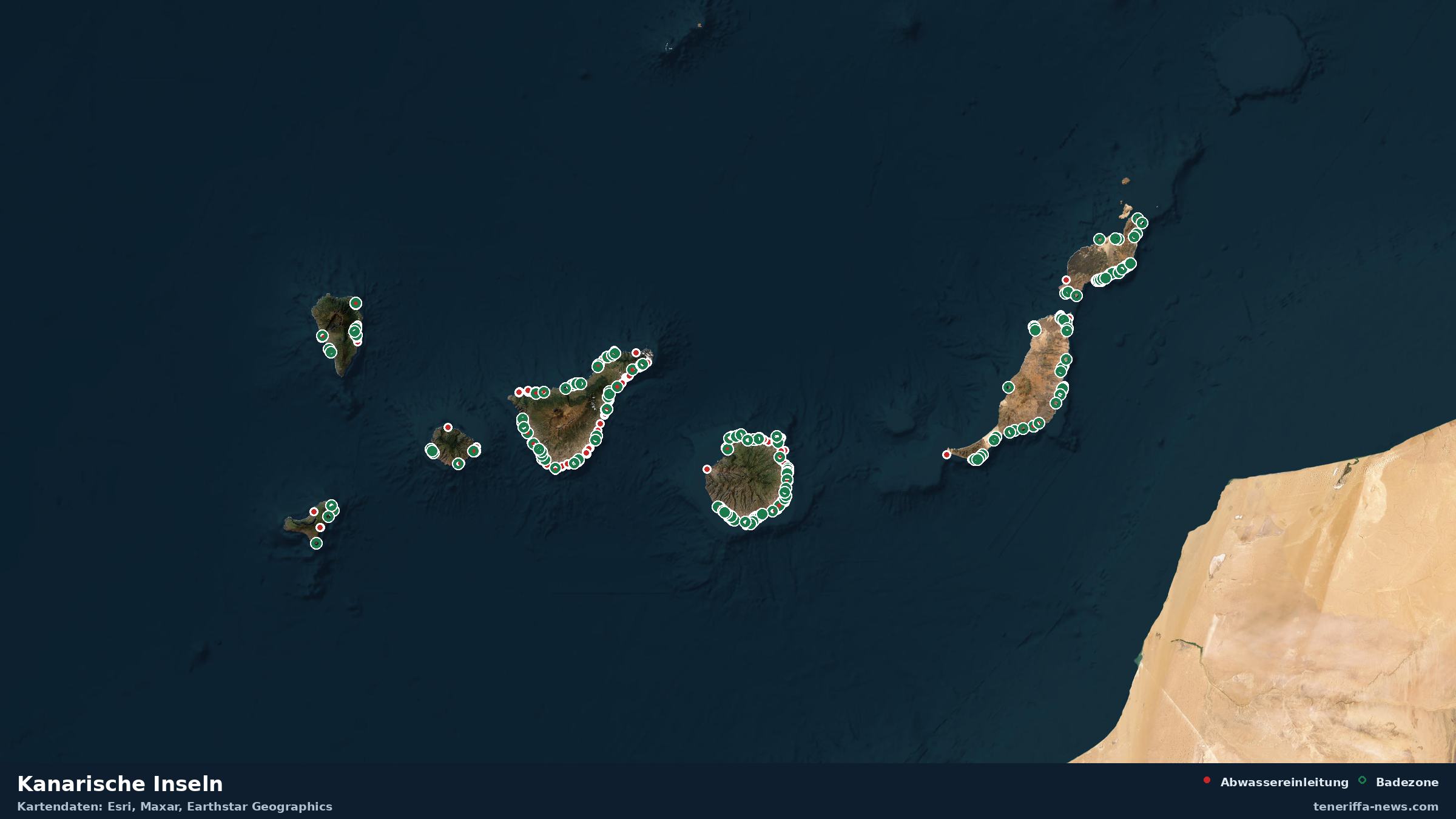
See now: Water quality at the beaches of the Canary Islands


«Tenerife needs around 600 million euros for new sewerage networks»
No comments on this article yet.