

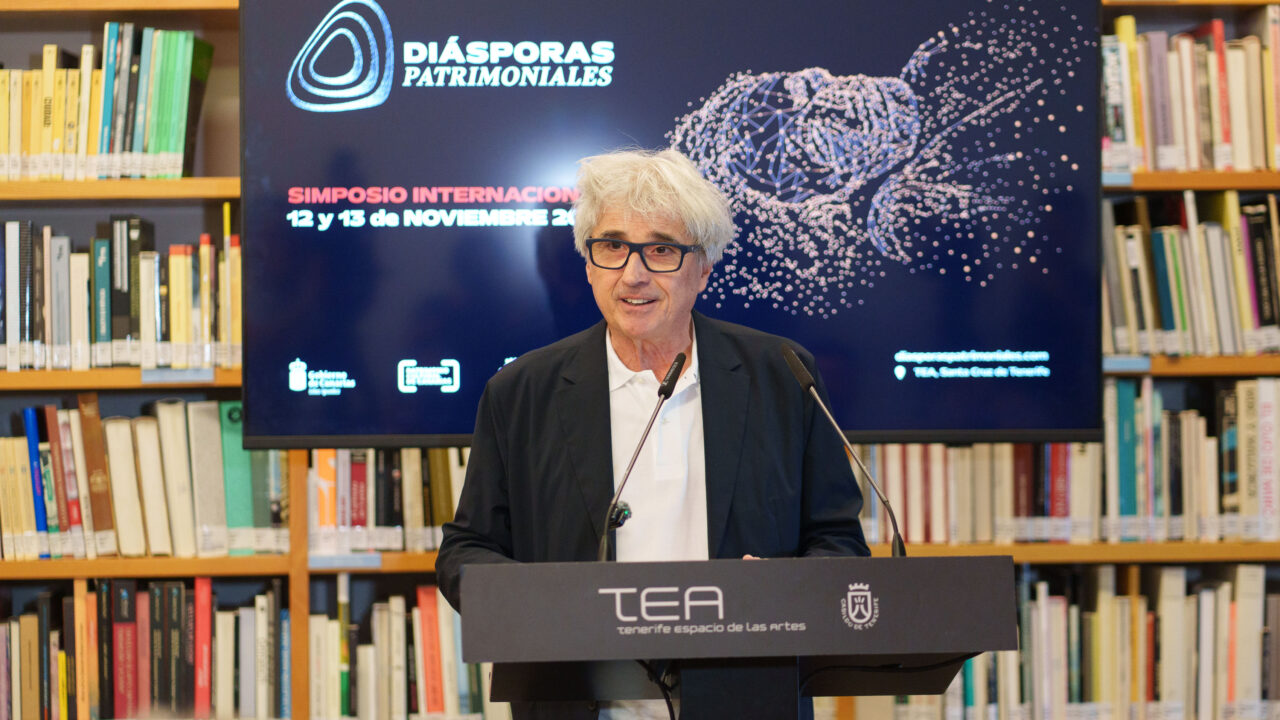
The Erques mummy will be the focus of the debate on the dispersal, reparation and restitution of archaeological heritage at a symposium to be held on 12 and 13 November in Tenerife, bringing together specialists from thirteen countries. The event will conclude with what has been termed the ‚Tenerife Declaration‘ on the treatment and return of cultural heritage.
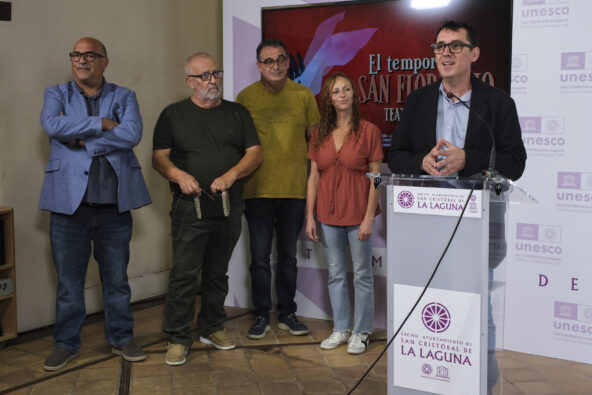
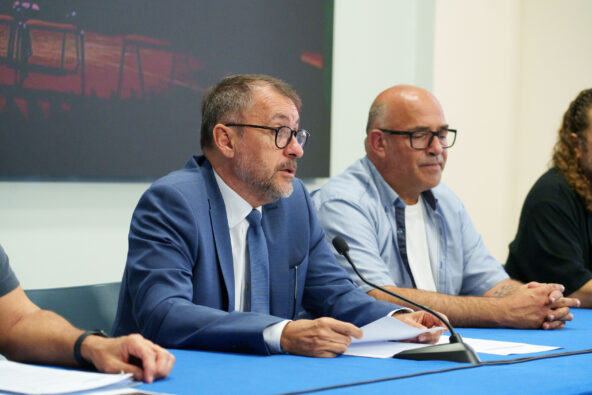
The President of the Tenerife Island Council, Rosa Dávila, explained at a press conference on Friday that the event aims to reflect on dispersed cultural and archaeological heritage, its provenance and possible ways of returning it, with the participation of representatives from universities, museums and institutions such as UNESCO and the British Museum.
Dávila has highlighted the case of the Erques mummy as one of particular significance; the Cabildo has been calling for its return for more than half a century, and it is currently held in storage at the National Archaeological Museum in Madrid.
The Erques mummy: its repatriation is intended to recognise the dignity of the indigenous people
«A person from our indigenous past is not merely an exhibit,» said Dávila, who argued that their return would represent a recognition of Tenerife’s history and «the dignity of the indigenous people».
The island’s president has emphasised that a restitution of this nature requires investigation, dialogue and conservation safeguards, and has stressed that Tenerife currently has the necessary resources to achieve this.
The Canary Islands Government is preparing an official application to the central government for the return of the property
The Director-General for Culture and Cultural Heritage of the Government of the Canary Islands, Miguel Ángel Clavijo, has stated that the regional government is in contact with the Ministry of Culture regarding the Erques mummy and has pointed out that the claim dates back to at least 1976, when Luis Diego Cuscoy submitted a written request for its return.
Clavijo explained that the Canary Islands Government has submitted documentation to the central government requesting that, as the owner of the artefact, it deposit the remains in Tenerife, on the grounds that the island has both professionals specialising in bioanthropology and the appropriate infrastructure for their conservation and study.
The Regional Minister for Universities, Science, Innovation and Culture, Migdalia Machín, has placed this claim in the context of the plundering of the Canary Islands‘ indigenous heritage between the 16th and 19th centuries, and has emphasised the significance of these artefacts in terms of identity and emotion, describing them as «part of our history, our roots and our very essence».
Machín also emphasised that when we talk about mummies, we are talking about human beings, and she revealed that the Canary Islands Government last week initiated the procedure to formally request their return from the Spanish State, given that the Canary Islands‘ archaeological heritage remains scattered across more than nine countries, she said.
Cultural heritage: Experts examine restitution, loans and joint conservation
Jorge Onrubia, director of the symposium’s scientific committee and a researcher, has placed the Erques case within the context of a wider debate on the historical dispersal of cultural artefacts and human remains, and has argued that in this field «legality, legitimacy and cultural justice have rarely gone hand in hand».
In his view, there is «a demand for truth, justice and redress» with regard to cultural heritage; the meeting will therefore provide an opportunity to compare international experiences and explore various solutions, ranging from joint conservation arrangements and loans to the return and restitution of cultural property.
Regarding the Erques mummy, Onrubia has stated his personal view that «that human being, who remains so, must return to the land of his birth», although he has cautioned that the manner in which human remains should be treated or displayed raises an ethical debate that will need to be addressed once his eventual return takes place.
Tenerife: Scientific debate to underpin the return of the mummy
The island’s Councillor for Culture, Museums and Sport, José Carlos Acha, has emphasised that the return of the mummy must be based on «an intensive, reasonable and in-depth scientific debate».
Acha has emphasised that Tenerife’s technical capabilities for conserving, studying and exhibiting this type of artefact have changed radically since the first requests for their return, and has argued that they are better understood when they can be displayed within their archaeological and cultural context.
The International Symposium ‚Heritage Diasporas: A Canarian Perspective on the Dispersal and Restitution of Archaeological Legacies‘ will bring together 24 specialists from countries including Austria, Brazil, Cuba, Egypt, France, Morocco, Mexico, the Netherlands, Peru and Senegal, amongst others.

Comments (0)
No comments on this article yet.