

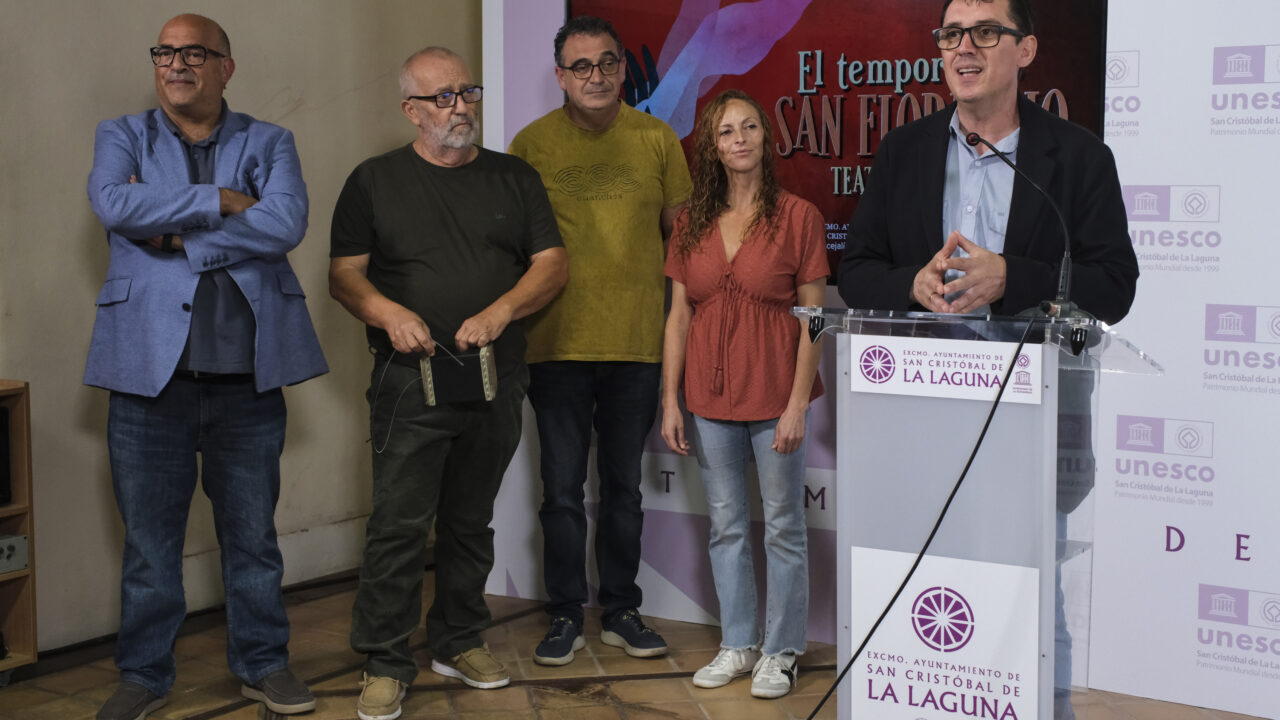
On Friday, La Laguna Town Council presented a new edition of ‚Teatro en Patrimonio‘, a cultural outreach project that combines historical research, theatrical performances and urban walking tours through the town’s streets, which will focus on the San Florencio storm (1826), considered the greatest documented natural disaster in the Canary Islands.
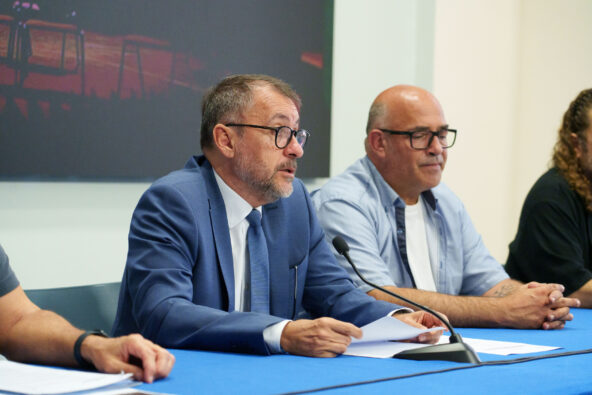
The initiative, which coincides with the 20th anniversary of this cultural outreach programme, was announced at a press conference by the Councillor for Citizen Participation, Francisco Hernández, alongside the historian Néstor Verona and the director of the Burka Teatro theatre company, Nacho Almenar, who is in charge of the production.
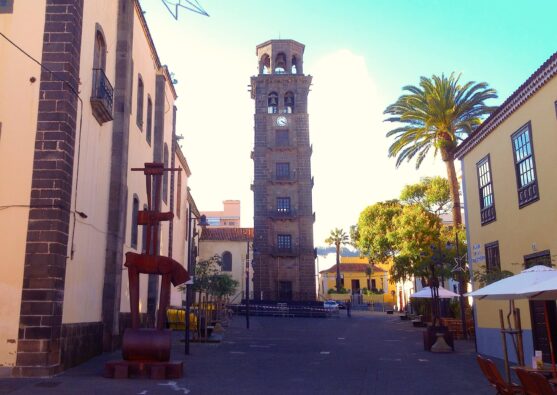
The dramatised tours will take place between 19 and 25 October, with daily morning and afternoon sessions setting off from the area around the former convent of Santa Clara. They are free of charge and there is no limit on the number of participants.
La Laguna: Theatre project brings history and cultural heritage to life
During his speech, Hernández explained that the ‚Teatro en Patrimonio‘ project began 20 years ago with the aim of «conveying, explaining and raising awareness of» the city’s heritage value in an «educational, engaging and entertaining» way, and that it has been a «resounding success» in every edition.
«When we talk about heritage, we often think of buildings, squares or churches. However, it is much more than that. Heritage also encompasses the events that have shaped us as a society, the stories that explain why we are the way we are, and the shared memories that have gradually built our collective identity,» said the councillor.
The storm of San Florencio transformed the economy and the townscape
In this regard, Verona pointed out that the storm of San Florencio had «incredible social and cultural consequences», as it was responsible for the loss of the ancient carving of the Virgin of Candelaria, but it also marked a change in the islands‘ economic cycle, as it led to the introduction of cochineal farming, which brought «enormous wealth» to the Canary Islands.
So much so, he went on to say, that thanks to the income generated by this activity, many of the 19th-century buildings, with their neoclassical architecture, were constructed; these are now characteristic of a large number of the cities across the archipelago.
The proposal will feature historical figures linked to the scientific, cultural and social context of the period, enabling the public to gain an insight into the events from complementary perspectives, as well as offering the opportunity to visit buildings such as the Convent of San Juan Bautista or the Viana 50 venue, which is run by the Vice-Chancellor’s Office of the University of La Laguna (ULL).


Comments (0)
No comments on this article yet.