

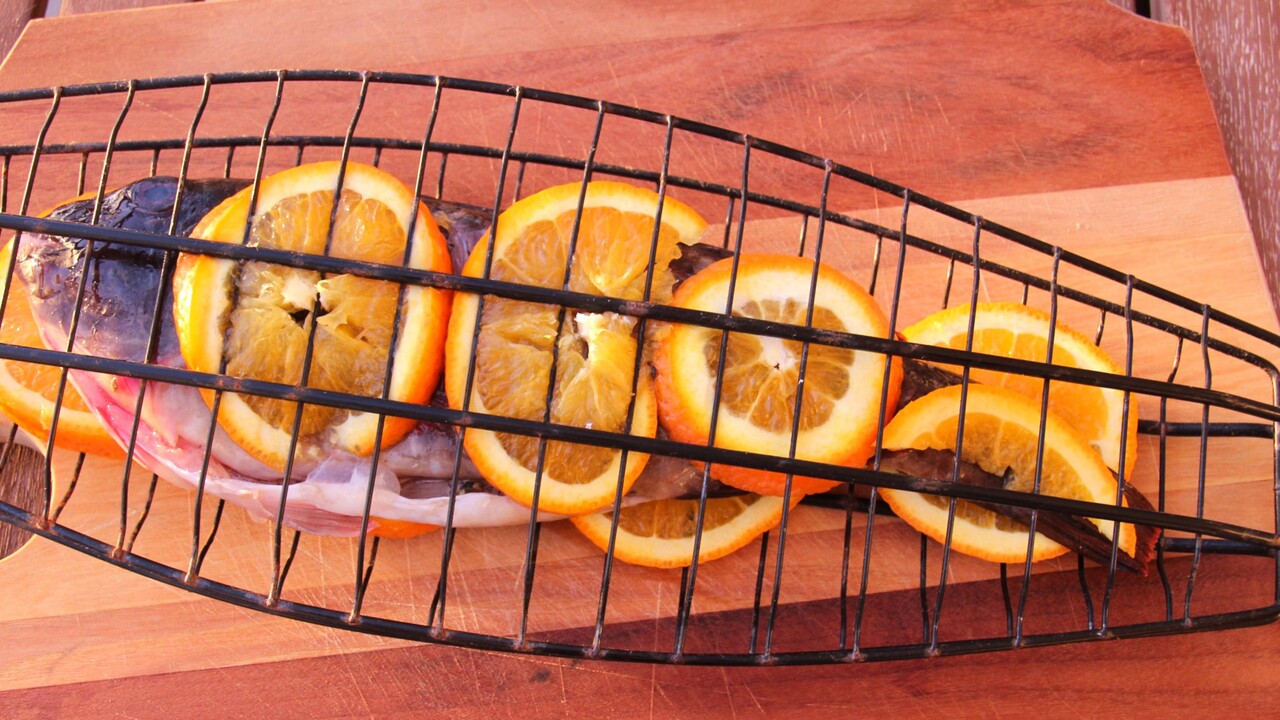
The vieja, also known as parrotfish, has a mild to slightly sweet flavour. It has firm, white flesh. The fish is so popular in cooking because it retains its texture even after cooking. Vieja is often pan-fried or baked and served with mojos, recipes for which you’ll find links below.
Of course, vieja can simply be grilled. But that would be a bit of a shame. The fish contains very little fat. With a fat content of just 0.8 per cent, the delicate flesh dries out quickly. In the Canary Islands, vieja is usually cooked as a fillet, either pan-fried in butter or steamed.
With our recipe, your Vieja is guaranteed to turn out perfectly. Here are our instructions:
Canary Islands Vieja with Orange, Grilled
- Rinse the fish – which is ready for cooking and has been thoroughly scaled – under running water and pat dry inside and out.
- Cut off the pectoral fins and make shallow cuts on both sides of the Vieja at intervals of two to three centimetres.
- Lightly season inside and out and brush with garlic oil. Important: Use the garlic sparingly so as not to overpower the fish’s delicate natural flavour (more on garlic oil below).
- Herbs of your choice can be placed inside the fish’s belly – for example, parsley, rosemary or sage. Our author used lemon pepper and was very pleased with the result.
- Wash an orange thoroughly and cut it into thin slices. Arrange the orange slices on both sides of the fish and grill it in a barbecue basket.
The grilling time is slightly longer than for other fish of the same size, as the orange slices shield the fish from the heat at the start. Five minutes on each side proved perfect in our test.
It’s easy to tell when the fish is cooked to perfection: as soon as the dorsal fin comes away easily, the fish is ready.
If you don’t have a barbecue: You can also follow the same recipe by wrapping the fish in aluminium foil and steaming it in the oven using top and bottom heat. Even when cooking in the oven, the fish should be turned halfway through the cooking time, as the orange juice seeps into the flesh from top to bottom.
Another tip: If you’re buying fish in a shop and ask for it ‚limpio‘ (i.e. gutted and scaled), make sure the dorsal fin isn’t cut off as well. It might raise a few eyebrows, but it’s important for determining when the fish is cooked.
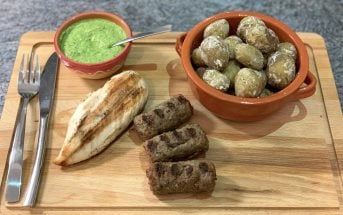
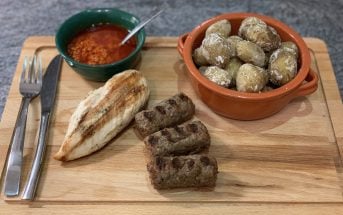
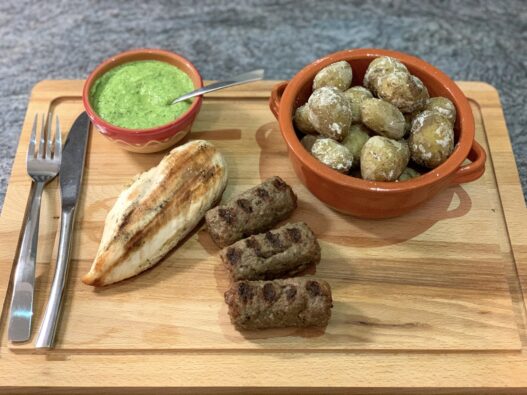
As a side dish, we naturally recommend Papas arrugadas – potatoes from the Canary Islands with a salt crust. You can find our recipe for them here.
Garlic oil or mojos to go with the Vieja
How to make your own garlic oil: Do not heat the olive oil too much and add one or more whole garlic cloves, which have been lightly crushed with the flat side of a knife. This makes it easy to remove the garlic cloves whilst they are toasting, before they turn dark brown and bitter.
Or alternatively:

No comments on this article yet.