

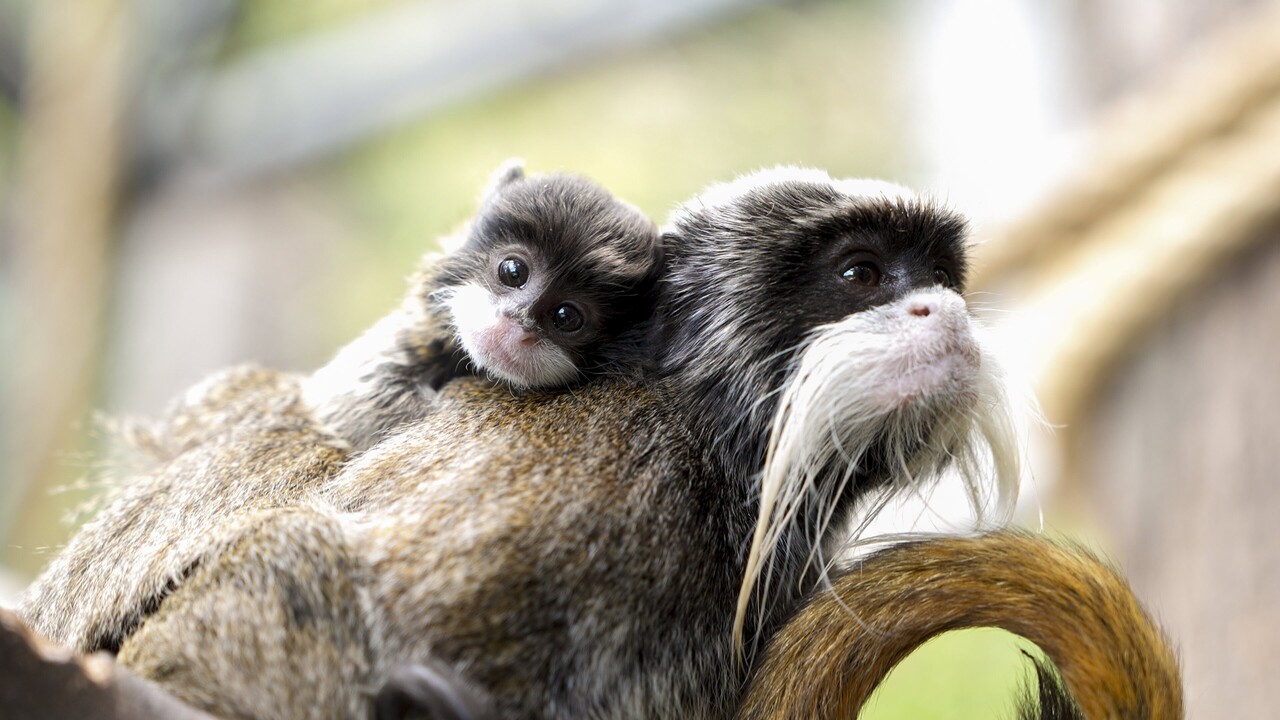
Puerto de la Cruz has several new residents, as a new litter has hatched at Loro Parque on Tenerife. Two new Tití Emperador cubs are adding to the excitement in the small primates‘ already lively enclosure. And that’s by no means all.
The crane population has also grown with the arrival of a new chick. At the breeding centre, the success rate for black cockatoos is also on the rise. And in the aquarium, there is a new generation of lion’s mane jellyfish.
The successful breeding of these animals is the result of intensive efforts which, according to the zoo, focus on animal welfare. These breeding strategies are said to be an essential tool for species conservation. The creation of suitable habitats that take into account diet, lighting conditions and temperatures plays a key role in breeding success, according to Loro Parque.
New life at Loro Parque on Tenerife
The new paradigms in species conservation include reintroduction into the wild, which encompasses the restoration of natural habitats and the return of animals to the wild. Facilities such as Loro Parque, home to the world’s largest parrot sanctuary, are leading the way in these efforts, it is further stated. Through breeding in captivity, endangered species such as the Lear’s macaw in Brazil are being saved and, in some cases, returned to the wild.
The little emperor tamarins, also known as Tití-Emperador, are the stars of their troop. The furry young cling to their mother’s back and are protected by other members of the troop. They eye the visitors warily. The primates share the task of rearing the young and display remarkable coordination.
Loro Parque sees itself as a saviour of certain populations
The young will soon begin to explore their territory. Weighing just around 500 grams, even the adults belong to one of the world’s smallest groups of primates. They are known for their agility and for climbing high into the treetops.
The Emperor tití populations are suffering from deforestation, forest fires and environmentally damaging agricultural practices. According to the zoo on Tenerife, the free-ranging breeding programme at Loro Parque provides an important safety net for this species. Their habitat spans the tropical rainforests of the Amazon in south-eastern Peru, north-western Bolivia and north-western Brazil.
Cranes at Loro Parque on Tenerife have had a new addition
The grey-crowned cranes at Loro Parque are benefiting from ideal living conditions to expand their family. Following the birth of two chicks last year, another chick has joined the family in 2024. This species forms lifelong pairs and performs impressive courtship dances.
The breeding season involves the joint incubation of the eggs for 50 to 60 days. The chicks are very fast immediately after hatching and are protected by their parents. When threatened, they display impressive physical abilities. Grey-crowned cranes are classified as endangered and suffer from human pressure and environmental changes.
Medusa Melena de León: The world’s largest jellyfish in the Canary Islands
New lion’s mane jellyfish have also been born at the Loro Parque aquarium. These can now be admired in „Aqua Viva“, as the aquarium is known. The young jellyfish currently have a diameter of less than ten centimetres, but can grow to a considerable size.
The largest known jellyfish of this species had a bell diameter of 3.70 metres and tentacles up to 37 metres long. These jellyfish require plenty of food and good rearing conditions in order to reach their full potential. Lion’s-mane jellyfish are also considered to be extremely efficient predators.






No comments on this article yet.